perceptions - Master This Word
Master this word with our 5-step learning method – Learn English in English
Train English Through Brain Routes, Not Translation.
This page helps you stop memorizing isolated translations and start understanding a word through its shared mental image, native-style thinking, and practical training steps.
Master this word with our 5-step learning method – Learn English in English
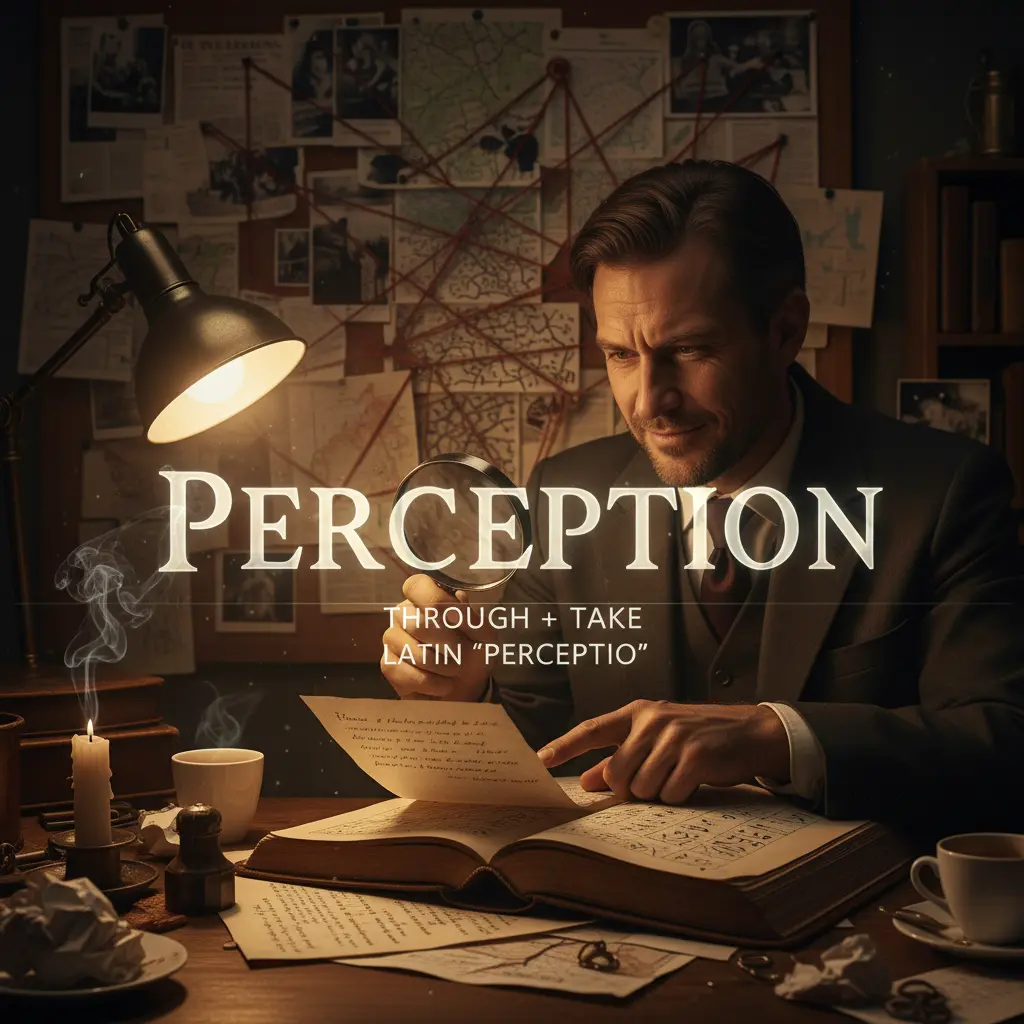
Example sentences are the start of understanding. Don't rush to memorize. First feel how the word works in a sentence.
per- = through + cept = take; Historical origin: Latin 'perceptio' → Old French 'perception' → English. Memory image: Imagine a film where a detective piecing together clues goes through each detail to gain insights—a vivid scene of discovery.
Note 1: These definitions and etymologies are not standard dictionary definitions, but extended explanations provided to help with memorization and understanding of the actual application of words. Through this background information, we strive to make words more vivid and easier to understand, and help you remember their meanings in real life.
Note 2: LexiTalk designs the learning flow around the linguistics principle of “Comprehensible Input.” When learners encounter material that is slightly above their level but still understandable from context, the brain naturally absorbs the language. That’s why we keep every word inside authentic contexts, using examples and associations to help you understand it and use it flexibly.
Read the FAQ explanation of Comprehensible InputI place my hand on the steering wheel and breathe, ready to move my attention. As I turn my head to the scene outside, perception shifts from blur to a clearer line of what I sense. The pull between what I expect and what I notice makes me push and pull my focus, adjusting until the image fits in my mind. I hold my gaze, let the moment settle, and keep what matters in view, letting meaning emerge from the feel of sight and sound.
Perception is the mental process of becoming aware of something through the senses and then interpreting or making sense of it. It includes not just what you literally sense, but how you organize, prioritize, and evaluate those sensations based on memory, culture, expectations, and mood. Because perception blends objective input with subjective judgment, two people can experience the same event very differently. In everyday use, perception can refer to beliefs about someone’s character, or to the way a scene is interpreted in media. Here the word highlights both sensation and interpretation, distinguishing it from simple data collection.
Perception in English often stresses interpretation and bias; learners may confuse it with sensation or awareness, so emphasize 'of' phrases and contrast with facts.
What does the word 'perceptions' mean?
Which of the following sentences uses 'perceptions' correctly?
Which word is most similar to 'perceptions'?
What is the opposite of 'perceptions'?
Can you think of a real-life context in which someone's perceptions play a crucial role?
Download LexiTalk app for personalized learning experience
Download AppCookies
We use cookies for essential site functions, analytics, and ads. You can accept, reject, or manage preferences. Privacy Policy