period - Master This Word
Master this word with our 5-step learning method – Learn English in English
Train English Through Brain Routes, Not Translation.
This page helps you stop memorizing isolated translations and start understanding a word through its shared mental image, native-style thinking, and practical training steps.
Master this word with our 5-step learning method – Learn English in English
Example sentences are the start of understanding. Don't rush to memorize. First feel how the word works in a sentence.
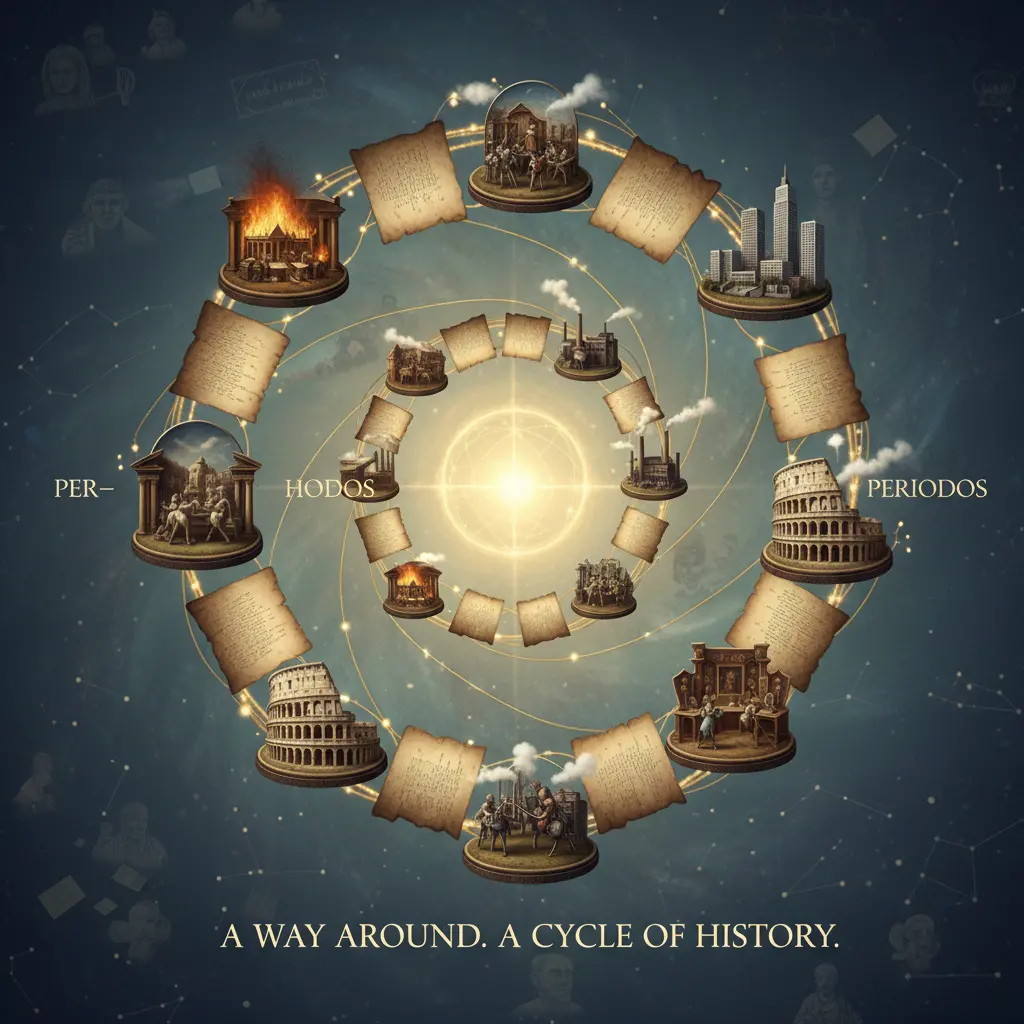
From Greek 'periodos' (per- = around, hodos = way) meaning a 'way around' or 'cycle'. Originated from Latin to Old French before entering English. Imagine a circle that keeps repeating, moving from one point (event) to the same point (end) again—symbolizing cycles in history.
Note 1: These definitions and etymologies are not standard dictionary definitions, but extended explanations provided to help with memorization and understanding of the actual application of words. Through this background information, we strive to make words more vivid and easier to understand, and help you remember their meanings in real life.
Note 2: LexiTalk designs the learning flow around the linguistics principle of “Comprehensible Input.” When learners encounter material that is slightly above their level but still understandable from context, the brain naturally absorbs the language. That’s why we keep every word inside authentic contexts, using examples and associations to help you understand it and use it flexibly.
Read the FAQ explanation of Comprehensible InputI place my finger on the keyboard and push the page forward, then I press the period key and watch the sentence settle. I hold the cursor steady, adjust the line, and move to the next thought as the scene shifts. I feel a small change in time as the page keeps turning, a new block of events rising in its own pace.
Period is a versatile noun with several related senses. First, it refers to a length of time with a clear start and end, such as a historical period or a study period at school. Second, it designates a distinct phase within a broader timeline or cycle, for example the colonial period or the volcanic period of activity. A third common use is menstrual period, a normal phase in many people's reproductive health. In writing, period also means the punctuation mark at the end of a sentence. In mathematics and science, period can describe a recurring cycle. Remember this variety when choosing translation; context will guide which sense is intended.
For English learners, period is highly context-dependent: it can mean time spans, eras, a menstrual cycle, or the sentence-ending punctuation. Pay attention to collocations like 'period of time', 'period piece', and 'period (menstruation)'; also distinguish between American English (period) and British English (full stop).
What is the meaning of the word 'period'?
How is the word 'period' commonly used in a sentence?
Which word is similar to 'period'?
What is the opposite of 'period'?
In what real-life context would you hear the word 'period'?
Parenting & Education
Listen NowDownload LexiTalk app for personalized learning experience
Download AppCookies
We use cookies for essential site functions, analytics, and ads. You can accept, reject, or manage preferences. Privacy Policy