
pestle - Master This Word
Master this word with our 5-step learning method – Learn English in English
Train English Through Brain Routes, Not Translation.
This page helps you stop memorizing isolated translations and start understanding a word through its shared mental image, native-style thinking, and practical training steps.
Master this word with our 5-step learning method – Learn English in English
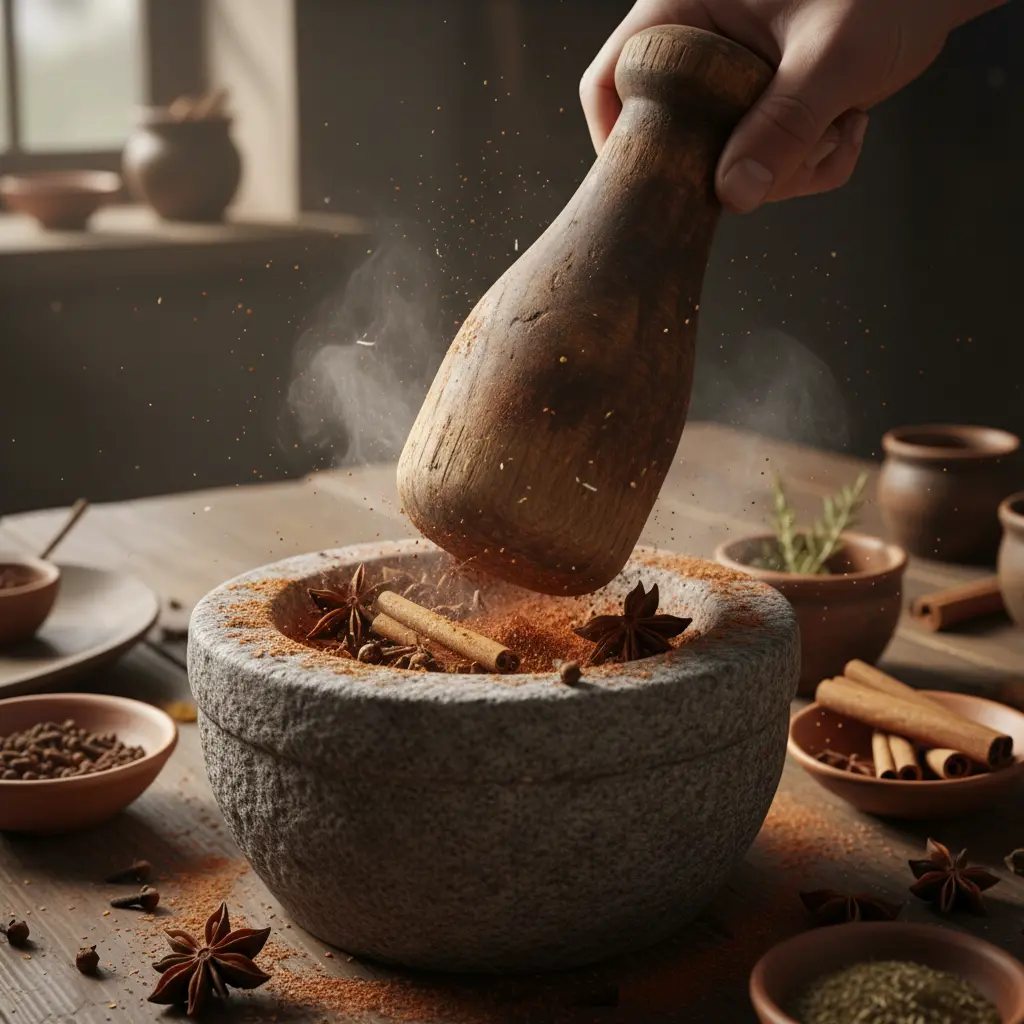
Example sentences are the start of understanding. Don't rush to memorize. First feel how the word works in a sentence.
root: pestle (from Latin 'pistillum' meaning 'pounder'); Historical origin: Latin → Old French 'pestil'; Memory image: Picture a heavy, rounded tool pounding spices into a fine powder, the sound echoing in a silent kitchen.
Note 1: These definitions and etymologies are not standard dictionary definitions, but extended explanations provided to help with memorization and understanding of the actual application of words. Through this background information, we strive to make words more vivid and easier to understand, and help you remember their meanings in real life.
Note 2: LexiTalk designs the learning flow around the linguistics principle of “Comprehensible Input.” When learners encounter material that is slightly above their level but still understandable from context, the brain naturally absorbs the language. That’s why we keep every word inside authentic contexts, using examples and associations to help you understand it and use it flexibly.
Read the FAQ explanation of Comprehensible InputA pestle is a hard, heavy tool used with a mortar to pound, crush, and grind ingredients into a paste or powder. In kitchens, cooks rely on it to break down spices, garlic, herbs, and seeds, releasing essential oils and intensifying flavor. In labs and workshops it may serve to grind samples or mix powders by hand. The word pestle comes from Latin pistillum, passed through Old French pestil to English, reflecting its long history as a pounding instrument. A typical pestle is rounded and blunt, made of stone, ceramic, wood, or metal, and paired with a sturdy mortar. Figuratively, to pestle can mean pounding away at a problem or argument, not just food.
Pestle in English is seen as part of a two-piece tool (mortar+pestle) used for manual grinding, spanning culinary and scientific contexts. Learners often mistake it for the whole device or confuse with similar words like pistil; they may also assume it only applies to dry spices. Emphasize the pair and the action (pounding/grinding) rather than a verb alone.
What is the meaning of the word 'pestle'?
Choose the correct usage of the word 'pestle' in a sentence.
Which word is most similar to 'pestle'?
What is the opposite of 'pestle'?
Can you think of a real-life context where someone might use a pestle?
Download LexiTalk app for personalized learning experience
Download AppCookies
We use cookies for essential site functions, analytics, and ads. You can accept, reject, or manage preferences. Privacy Policy