pilot - Master This Word
Master this word with our 5-step learning method – Learn English in English
Train English Through Brain Routes, Not Translation.
This page helps you stop memorizing isolated translations and start understanding a word through its shared mental image, native-style thinking, and practical training steps.
Master this word with our 5-step learning method – Learn English in English
Example sentences are the start of understanding. Don't rush to memorize. First feel how the word works in a sentence.
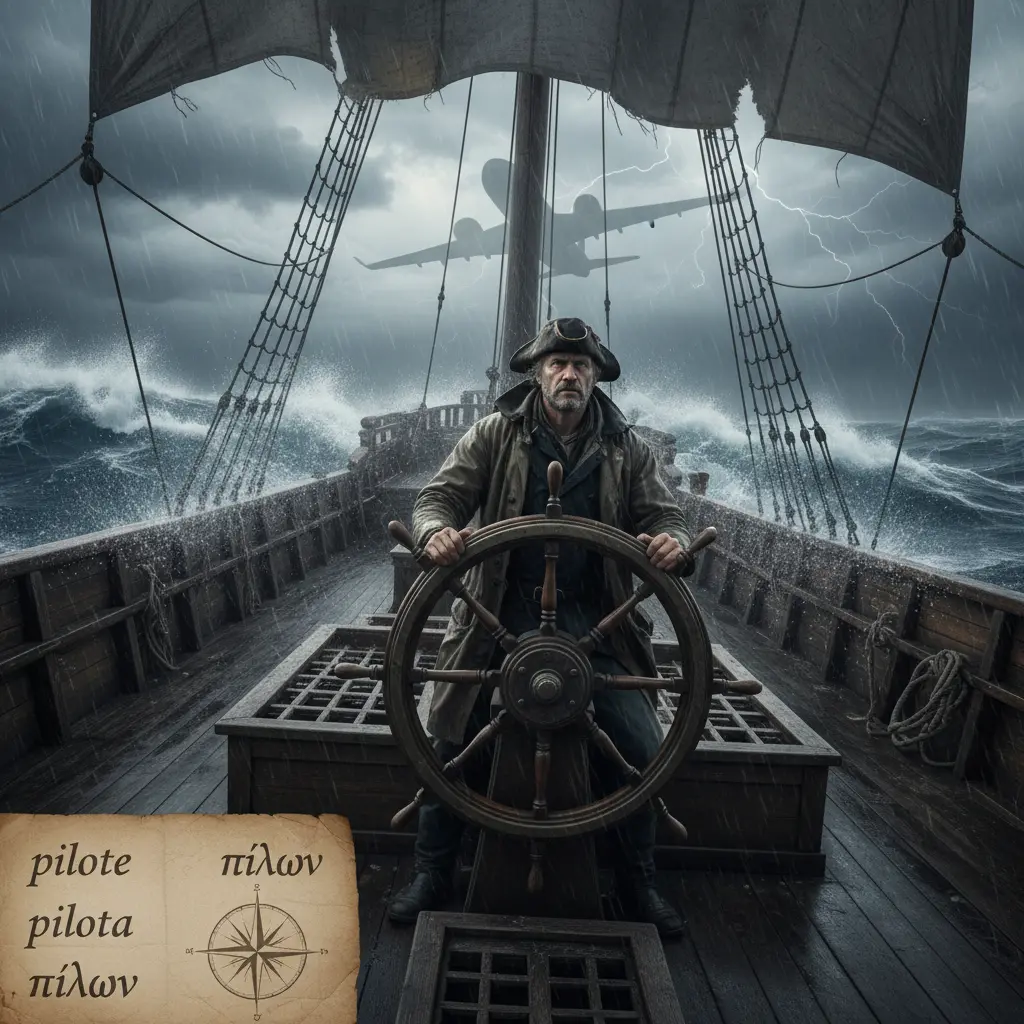
Pilot comes from the Old French 'pilote', from Latin 'pilota', derived from Greek 'pílōn' meaning 'oar'. Picture a skilled person steering a ship through stormy seas, symbolizing guidance and direction. In aviation, pilots guide aircraft safely to their destinations, much like they once did with ships.
Note 1: These definitions and etymologies are not standard dictionary definitions, but extended explanations provided to help with memorization and understanding of the actual application of words. Through this background information, we strive to make words more vivid and easier to understand, and help you remember their meanings in real life.
Note 2: LexiTalk designs the learning flow around the linguistics principle of “Comprehensible Input.” When learners encounter material that is slightly above their level but still understandable from context, the brain naturally absorbs the language. That’s why we keep every word inside authentic contexts, using examples and associations to help you understand it and use it flexibly.
Read the FAQ explanation of Comprehensible InputStarting with my hands on the controls, I move the yoke and feel the horizon tilt. I push and pull, shift my gaze between the sky and the gauges, and adjust the course step by step. Each decision to turn a little or hold steady echoes the work of a pilot guiding a plane through air and weather. In that small cockpit, the idea of pilot becomes clear: guiding a path through air and risk, a first test turned real.
Pilot is a versatile English word with three core senses: as a noun it names the person who navigates an aircraft, and as a verb it means to steer or guide something through a process; a third, more specialized noun sense refers to a preliminary trial or experiment, used to test feasibility before wider rollout. The word traces back to Old French pilote, Latin pilota, and Greek pílōn meaning 'oar', which evokes steering through challenging waters. In aviation, the pilot controls the flight from takeoff to landing, while to pilot a project means to steer it toward a cautious, successful launch. Learners should note the different collocations: pilot, pilots, pilot project, pilot study, and the verb form piloting.
English learners often rely on direct aviation imagery for pilot (the person guiding a plane) while missing the extended sense of guiding a project or testing something, which is common in business and research contexts.
What is the meaning of the word 'pilot'?
Which of the following sentences uses the word 'pilot' correctly?
Which word is most similar to the word 'pilot'?
What is the opposite of the word 'pilot'?
Can you think of a real-life scenario of a 'pilot'?
Download LexiTalk app for personalized learning experience
Download AppCookies
We use cookies for essential site functions, analytics, and ads. You can accept, reject, or manage preferences. Privacy Policy