
poverty - Master This Word
Master this word with our 5-step learning method – Learn English in English
Train English Through Brain Routes, Not Translation.
This page helps you stop memorizing isolated translations and start understanding a word through its shared mental image, native-style thinking, and practical training steps.
Master this word with our 5-step learning method – Learn English in English
Example sentences are the start of understanding. Don't rush to memorize. First feel how the word works in a sentence.
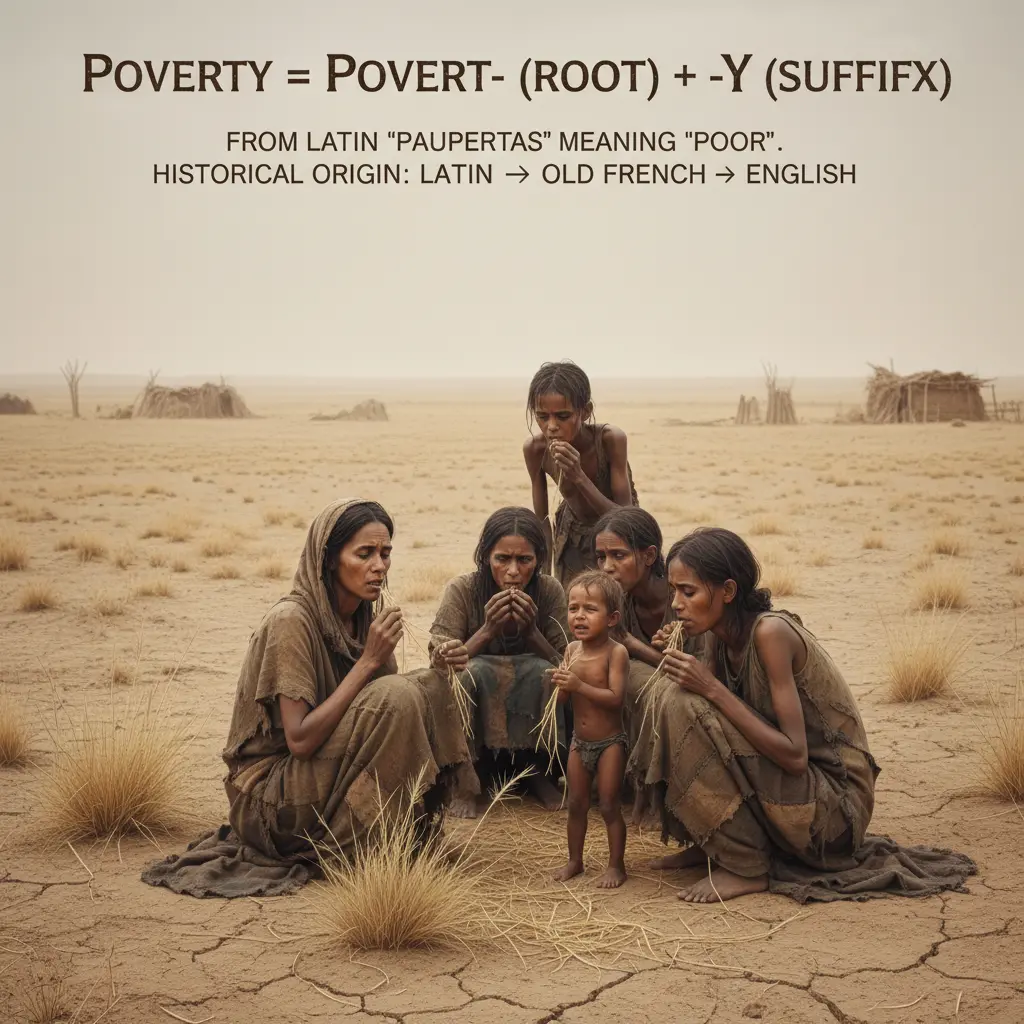
poverty = povert- (root) + -y (suffix) from Latin 'paupertas' meaning 'poor'. Historical origin: Latin → Old French → English. Imagine a barren landscape where the resources are scarce and people have only grass to eat, representing deprivation.
Note 1: These definitions and etymologies are not standard dictionary definitions, but extended explanations provided to help with memorization and understanding of the actual application of words. Through this background information, we strive to make words more vivid and easier to understand, and help you remember their meanings in real life.
Note 2: LexiTalk designs the learning flow around the linguistics principle of “Comprehensible Input.” When learners encounter material that is slightly above their level but still understandable from context, the brain naturally absorbs the language. That’s why we keep every word inside authentic contexts, using examples and associations to help you understand it and use it flexibly.
Read the FAQ explanation of Comprehensible InputI grip the strap of my bag and shift my weight, stepping into the crowded street. I move from corner to corner, weighing each choice with a careful breath and a quick glance at prices. I hold back a sigh, adjust my pace, and keep my plan steady as I map out what I can buy today. The rhythm of those small decisions shapes who I am, turning every moment into a test of what I can make last.
Poverty is the state of being extremely poor or lacking the means to meet basic needs such as food, shelter, and healthcare. It can describe an individual’s situation or a broader condition in a community or country. The word also covers the absence of opportunities and material deprivation that keep people from improving their lives. In everyday speech we distinguish poverty from simply being 'poor' in the moment; poverty implies a more persistent, structural hardship often measured by a poverty line or access to services. Etymologically, poverty comes from paupertas in Latin, via Old French into English, carrying a sense of lack and want. Imagine a barren landscape where resources are scarce, representing deprivation.
English tends to treat poverty as a formal, systemic condition rather than a personal trait. Learners often mix up 'poverty' with 'poor' and misapply phrases like 'in poverty' to individuals who are briefly short of money; focus on contexts like the poverty line and poverty alleviation.
What is the meaning of the word 'poverty'?
In which of the following sentences is 'poverty' used correctly?
Which word is most similar to 'poverty'?
What is the opposite of 'poverty'?
Can you think of a real-life example where poverty has affected a community?
Download LexiTalk app for personalized learning experience
Download AppCookies
We use cookies for essential site functions, analytics, and ads. You can accept, reject, or manage preferences. Privacy Policy