prepared - Master This Word
Master this word with our 5-step learning method – Learn English in English
Train English Through Brain Routes, Not Translation.
This page helps you stop memorizing isolated translations and start understanding a word through its shared mental image, native-style thinking, and practical training steps.
Master this word with our 5-step learning method – Learn English in English
Example sentences are the start of understanding. Don't rush to memorize. First feel how the word works in a sentence.
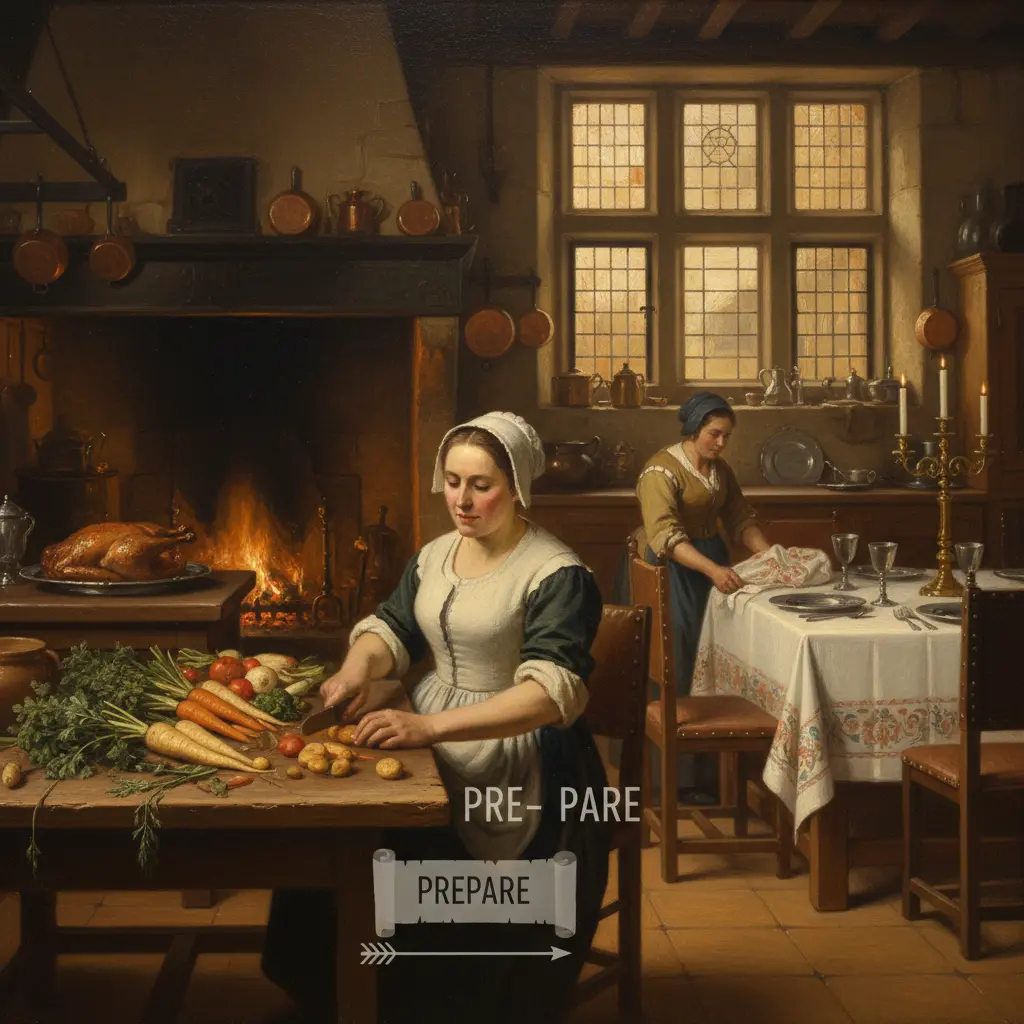
pre- = before, pare = to make ready. Historical origin: Latin → Old French → English. Memory image: Imagine preparing a feast before guests arrive by chopping vegetables and setting the table.
Note 1: These definitions and etymologies are not standard dictionary definitions, but extended explanations provided to help with memorization and understanding of the actual application of words. Through this background information, we strive to make words more vivid and easier to understand, and help you remember their meanings in real life.
Note 2: LexiTalk designs the learning flow around the linguistics principle of “Comprehensible Input.” When learners encounter material that is slightly above their level but still understandable from context, the brain naturally absorbs the language. That’s why we keep every word inside authentic contexts, using examples and associations to help you understand it and use it flexibly.
Read the FAQ explanation of Comprehensible InputFirst I move my hand to the counter and pull out a clean tray. I turn the stove knob, adjust the heat, and set the bowl in place as the room gathers a quiet energy. The little sequence feels like a shift from noise to readiness, a calm decision in motion. When the timer starts, I hold the pace, keep steady, and the scene carries me toward what I will use it for.
Prepare is a versatile verb focused on making something ready through deliberate steps, often involving planning, gathering materials, or rehearsing actions before a task or event. You can prepare for a trip, prepare a speech, or prepare food. The phrase prepare for X emphasizes readiness in advance, while prepare to do X centers on the action that will follow preparation. People sometimes mix it up with get ready; prepare implies a process, is somewhat formal, and frequently involves organization and effort. Common collocations include prepare for, prepare to, and make preparations for something.
In English, prepare often implies a planned sequence and can tag formal contexts (preparations, procedures). Learners may over-simplify it as simply 'getting ready' and confuse with 'get ready' or 'ready'.
What is the meaning of the word 'prepared'?
In which sentence is the word 'prepared' used correctly?
Which word is an antonym of 'prepared'?
In what real-life situation would someone need to be prepared?
Reflect on why being prepared is important and give an example.
Download LexiTalk app for personalized learning experience
Download AppCookies
We use cookies for essential site functions, analytics, and ads. You can accept, reject, or manage preferences. Privacy Policy