
prince - Master This Word
Master this word with our 5-step learning method – Learn English in English
Train English Through Brain Routes, Not Translation.
This page helps you stop memorizing isolated translations and start understanding a word through its shared mental image, native-style thinking, and practical training steps.
Master this word with our 5-step learning method – Learn English in English
Example sentences are the start of understanding. Don't rush to memorize. First feel how the word works in a sentence.
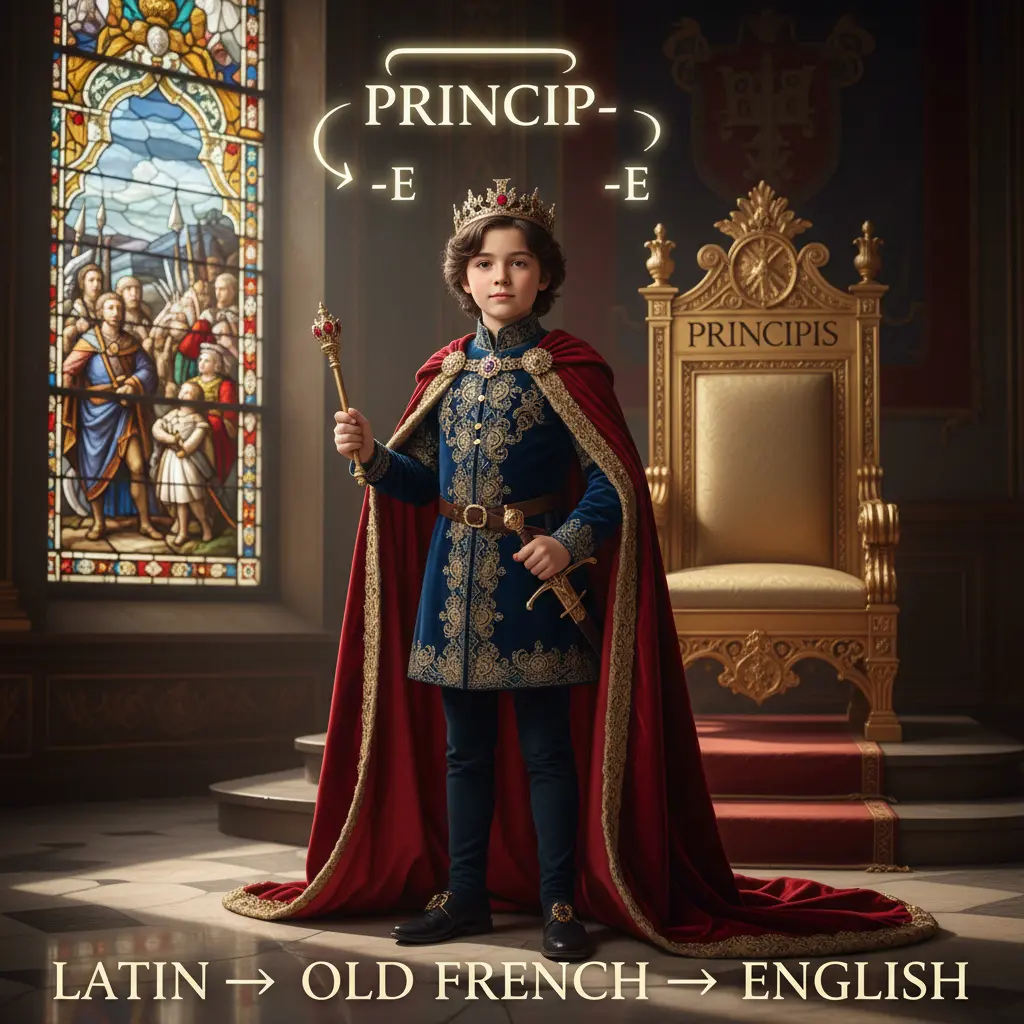
Root decomposition: prince = princip- (from Latin 'principis' meaning 'chief' or 'leader') + -e (suffix). Historical origin: Latin → Old French → English. Memory image: Imagine a young prince dressed in royal attire, standing tall with a crown, symbolizing leadership and nobility.
Note 1: These definitions and etymologies are not standard dictionary definitions, but extended explanations provided to help with memorization and understanding of the actual application of words. Through this background information, we strive to make words more vivid and easier to understand, and help you remember their meanings in real life.
Note 2: LexiTalk designs the learning flow around the linguistics principle of “Comprehensible Input.” When learners encounter material that is slightly above their level but still understandable from context, the brain naturally absorbs the language. That’s why we keep every word inside authentic contexts, using examples and associations to help you understand it and use it flexibly.
Read the FAQ explanation of Comprehensible InputI reach for a small crown and place it on the table, breathing slow to steady the moment. I push the chair closer, adjust the scene, and turn the page to reveal a room where eyes are watching. As I hold the crown, I feel the weight of voices and futures, choosing how the scene will move forward. In that quiet ritual, the idea of prince slips in not as a rule, but as a role someone might grow into.
Prince is a male member of a royal family, typically the son of a king or queen, and it can also function as a title for someone who is expected to inherit the throne or wield influence. In modern usage, princes may perform ceremonial duties or hold real political sway in constitutional monarchies, or appear as central figures in legends and fiction. The word conveys ideas of birthright, privilege, and leadership, but it does not mean the person is reigning as monarch. Learners should distinguish prince from king, and from other titles like princess or duke, and remember that possessives like the prince's castle are common.
For English learners, prince often signals birthright and ceremonial privilege as well as a role in succession. Learners may misinterpret it as a direct power holder like a king, or confuse it with princess due to gender. English contexts distinguish hereditary status from actual ruling power, so practice with varied time frames (past, present) and different monarch forms.
What is the meaning of the word 'prince'?
In which of the following sentences is the word 'prince' used correctly?
Which of the following is a synonym for 'prince'?
What would be the opposite of 'prince'?
In what real-life context would you most likely encounter a prince?
Download LexiTalk app for personalized learning experience
Download AppCookies
We use cookies for essential site functions, analytics, and ads. You can accept, reject, or manage preferences. Privacy Policy