protocol - Master This Word
Master this word with our 5-step learning method – Learn English in English
Train English Through Brain Routes, Not Translation.
This page helps you stop memorizing isolated translations and start understanding a word through its shared mental image, native-style thinking, and practical training steps.
Master this word with our 5-step learning method – Learn English in English
Example sentences are the start of understanding. Don't rush to memorize. First feel how the word works in a sentence.
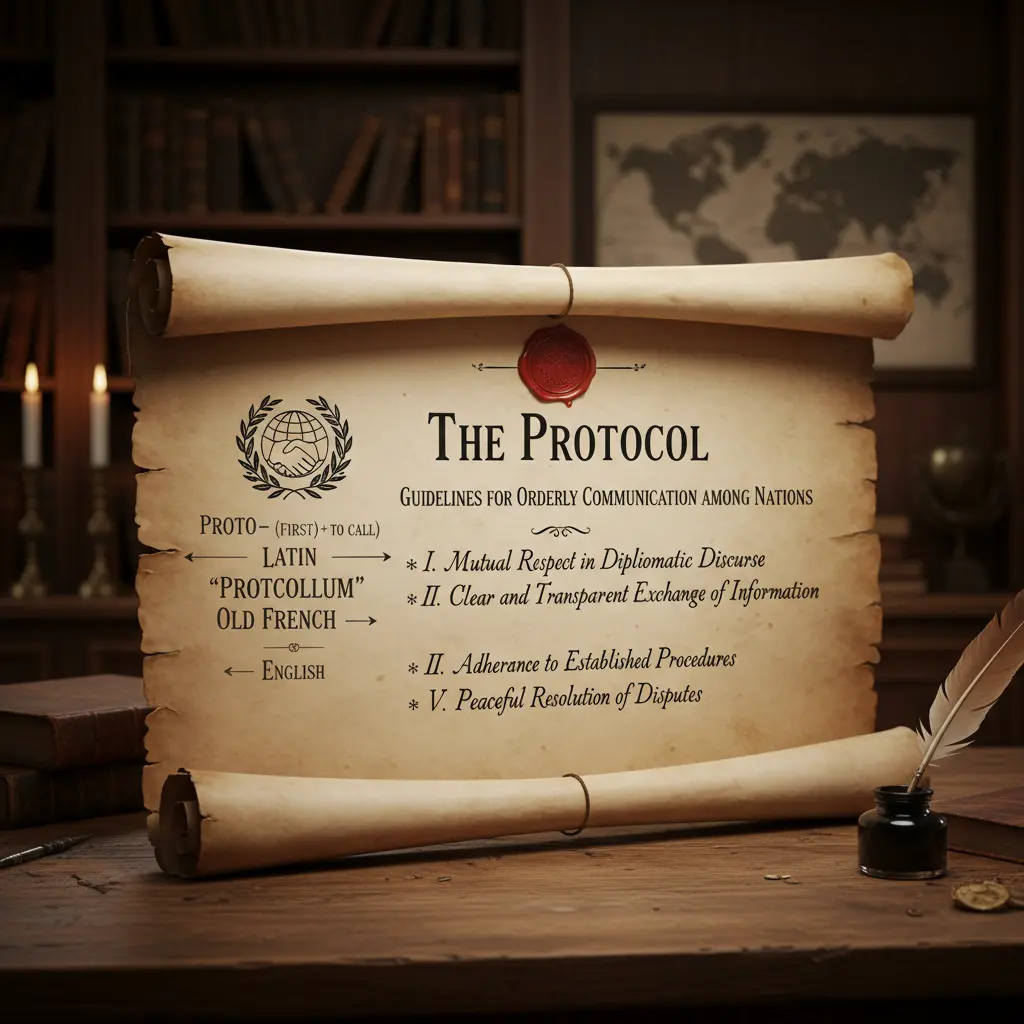
From 'proto-' (first) + 'col' (to call) → Latin 'protocollum' → Old French → English. Visualize a 'protocol' as a scroll with guidelines, first established to ensure orderly communication among nations.
Note 1: These definitions and etymologies are not standard dictionary definitions, but extended explanations provided to help with memorization and understanding of the actual application of words. Through this background information, we strive to make words more vivid and easier to understand, and help you remember their meanings in real life.
Note 2: LexiTalk designs the learning flow around the linguistics principle of “Comprehensible Input.” When learners encounter material that is slightly above their level but still understandable from context, the brain naturally absorbs the language. That’s why we keep every word inside authentic contexts, using examples and associations to help you understand it and use it flexibly.
Read the FAQ explanation of Comprehensible InputI set my coffee cup down, move the notebook toward me, and flip open the first page. The lines come into view and the page changes under my finger as I trace them with a slow, careful breath. It feels steady, a push of focus and a pull between what I remember and what I need to note. That small rhythm of arranging steps, setting out notes, and keeping a record follows me into work, helping groups share the same path without shouting.
A protocol is a formal set of rules and procedures that governs how people communicate, operate, or exchange information. It covers etiquette, sequencing, data formats, and security measures, depending on the field. In diplomacy, protocol defines the order of introductions and ceremonial steps; in technology, it dictates how data is formatted and transmitted; in business, it can refer to standardized recording of data and events. A protocol document records agreed practices in a consistent way, helping ensure reliability and professionalism. Learners should distinguish protocol from policy or contract, and pay attention to context to pick the right sense of the word.
In English, protocol strongly signals formal procedure or standardized rules, and the sense is often specialized by domain (diplomacy, computing, documentation). Learners tend to mix etiquette with formal procedures or assume protocol always implies a written contract.
What is the meaning of the word 'protocol'?
In which of the following sentences is the word 'protocol' used correctly?
Which of the following is a synonym for 'protocol'?
Which of the following is an antonym for 'protocol'?
How is the concept of 'protocol' applied in a real-world scenario?
Download LexiTalk app for personalized learning experience
Download AppCookies
We use cookies for essential site functions, analytics, and ads. You can accept, reject, or manage preferences. Privacy Policy