
protozoans - Master This Word
Master this word with our 5-step learning method – Learn English in English
Train English Through Brain Routes, Not Translation.
This page helps you stop memorizing isolated translations and start understanding a word through its shared mental image, native-style thinking, and practical training steps.
Master this word with our 5-step learning method – Learn English in English
Example sentences are the start of understanding. Don't rush to memorize. First feel how the word works in a sentence.
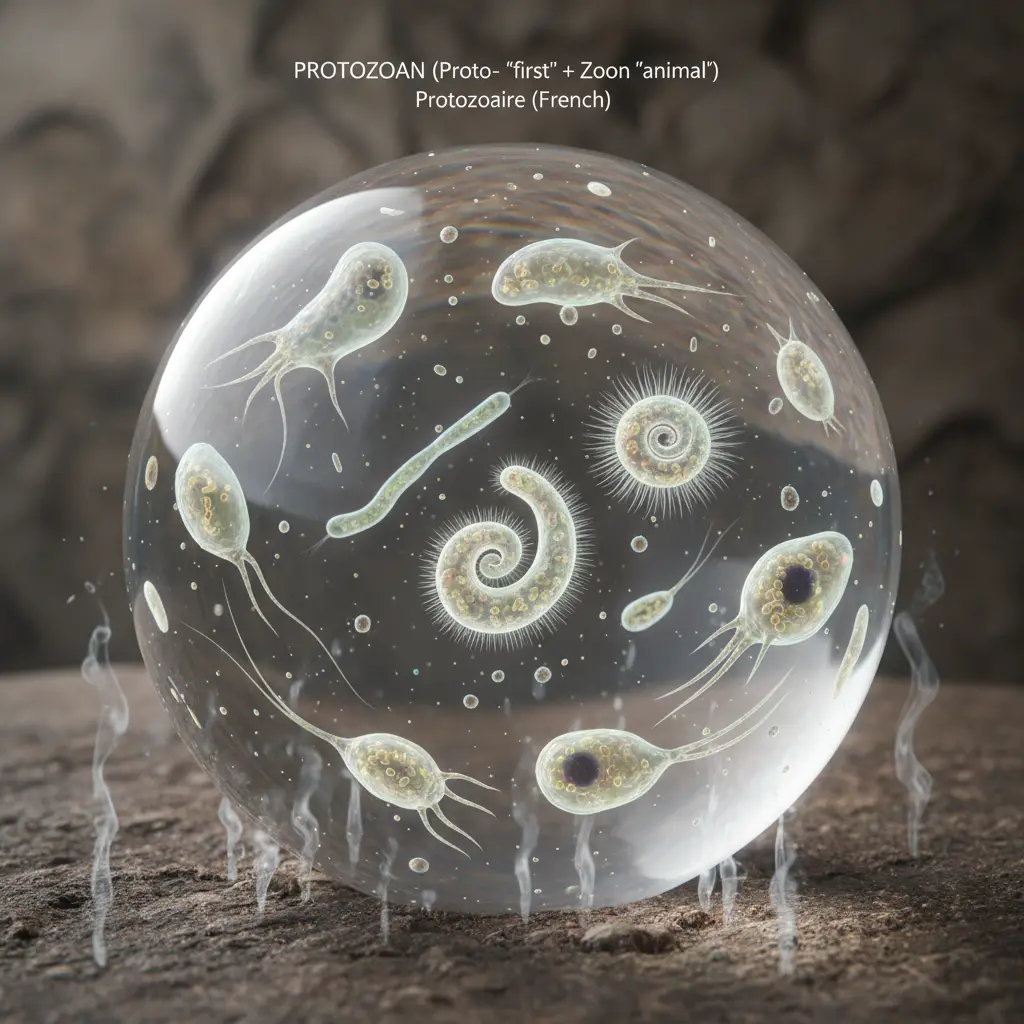
Protozoan comes from 'proto-' meaning 'first' and 'zoon' meaning 'animal'. It has French roots, derived from 'protozoaire'. Imagine tiny, primitive creatures floating in a drop of water, the very first forms of life on Earth.
Note 1: These definitions and etymologies are not standard dictionary definitions, but extended explanations provided to help with memorization and understanding of the actual application of words. Through this background information, we strive to make words more vivid and easier to understand, and help you remember their meanings in real life.
Note 2: LexiTalk designs the learning flow around the linguistics principle of “Comprehensible Input.” When learners encounter material that is slightly above their level but still understandable from context, the brain naturally absorbs the language. That’s why we keep every word inside authentic contexts, using examples and associations to help you understand it and use it flexibly.
Read the FAQ explanation of Comprehensible InputA protozoan is a single-celled organism that behaves like an animal in how it moves and feeds. Historically, protozoa were lumped together as one kingdom called Protozoa, and the term is still used in biology to describe animal-like protists that are usually microscopic. Protozoans include amoebae that crawl with pseudopods, paramecia that glide with cilia, and flagellates that swim with whiplike tails. Because they are mainly one cell, protozoans grow slowly, reproduce asexually by splitting or by simple division, and can be found in water, soil, and decaying matter. The etymology links proto- “first” and zoon “animal,” underlining their ancient, primitive look in the history of life.
Explain protozoan concept with emphasis on single-cell structure and historical biology usage; avoid confusing with bacteria or plants.
Download LexiTalk app for personalized learning experience
Download AppCookies
We use cookies for essential site functions, analytics, and ads. You can accept, reject, or manage preferences. Privacy Policy