provision - Master This Word
Master this word with our 5-step learning method – Learn English in English
Train English Through Brain Routes, Not Translation.
This page helps you stop memorizing isolated translations and start understanding a word through its shared mental image, native-style thinking, and practical training steps.
Master this word with our 5-step learning method – Learn English in English
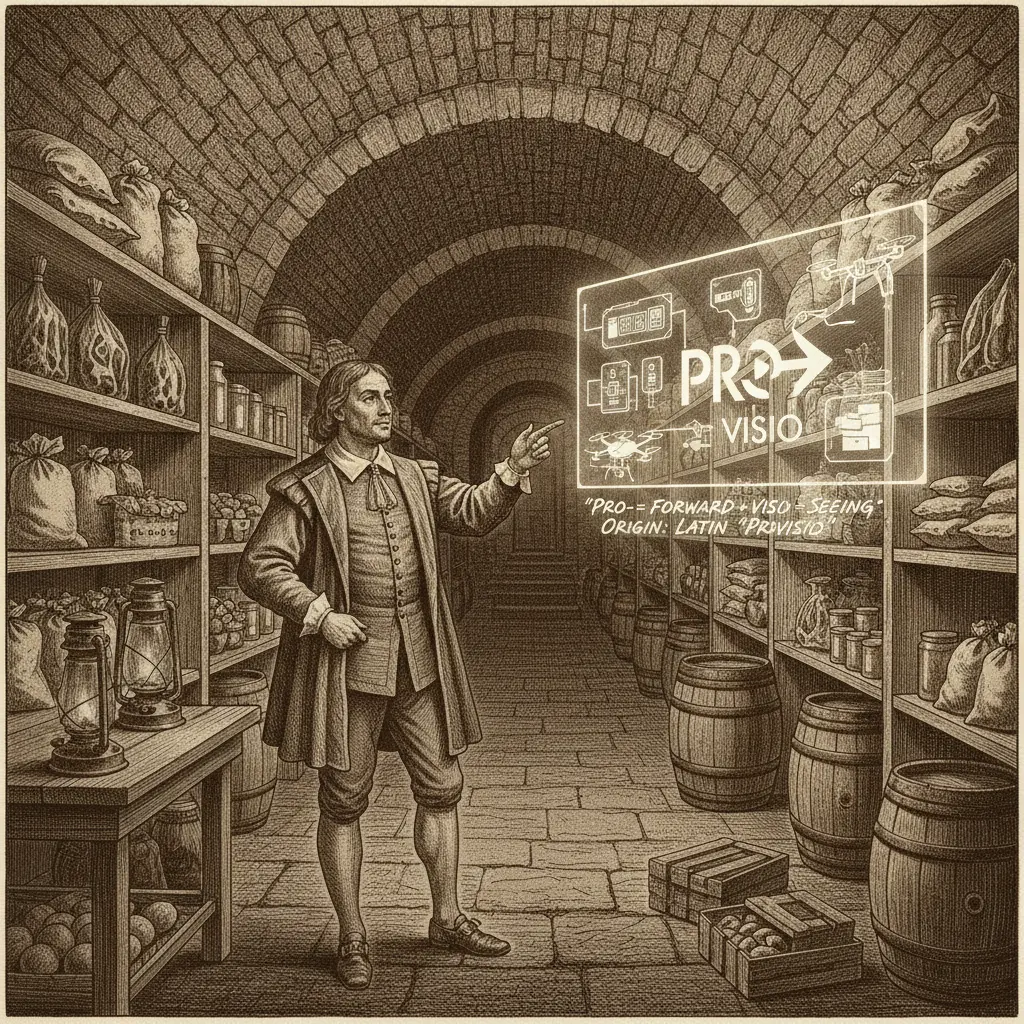
Example sentences are the start of understanding. Don't rush to memorize. First feel how the word works in a sentence.
pro- = forward + vision = seeing; Origin: Latin 'provisio' → Old French 'provision' → English. Remember envisioning a future with stocks of food stored forward in a cellar.
Note 1: These definitions and etymologies are not standard dictionary definitions, but extended explanations provided to help with memorization and understanding of the actual application of words. Through this background information, we strive to make words more vivid and easier to understand, and help you remember their meanings in real life.
Note 2: LexiTalk designs the learning flow around the linguistics principle of “Comprehensible Input.” When learners encounter material that is slightly above their level but still understandable from context, the brain naturally absorbs the language. That’s why we keep every word inside authentic contexts, using examples and associations to help you understand it and use it flexibly.
Read the FAQ explanation of Comprehensible InputI reach for the shelf, move the boxes around, and feel the rhythm of counting out what’s needed. Each item I pull into the cart is a little provision, a quiet promise that someone will have what they need. I turn and push the cart toward the door, sensing how the choice to provide is not just goods but trust. Later, when I hand over the bundle, the act becomes a lived rule, a provision that stays in use as schedules and needs shift.
Provision is a versatile English word with three common senses. As a noun, it often means materials kept for future use, such as food, tools, or funds—a stock or supply prepared in advance. It also refers to an obligation or condition stated in a contract or law, for example a provision requiring compliance or a provision for relocation. As a verb, provision means to supply or furnish what is needed, sometimes with a sense of planning ahead. Learners frequently mix up provision with provide or provide for; remember that a provision is the item or stipulation itself, while to provision is the act of supplying.
In English, provision often centers on a concrete item or a formal clause, while speakers in other languages may prefer different words for the same idea (e. g., clause vs. supply). Learners may overlay their native patterns, treating provision like a general verb or assuming every clause is a payment.
What is the meaning of the word 'provision'?
How is the word 'provision' used in a sentence?
Which word is most similar to 'provision'?
Which word is the opposite of 'provision'?
Can you think of a real-life context where the word 'provision' would be used?
English Learning Listening Content
Listen NowDownload LexiTalk app for personalized learning experience
Download AppCookies
We use cookies for essential site functions, analytics, and ads. You can accept, reject, or manage preferences. Privacy Policy