pupils - Master This Word
Master this word with our 5-step learning method – Learn English in English
Train English Through Brain Routes, Not Translation.
This page helps you stop memorizing isolated translations and start understanding a word through its shared mental image, native-style thinking, and practical training steps.
Master this word with our 5-step learning method – Learn English in English
Example sentences are the start of understanding. Don't rush to memorize. First feel how the word works in a sentence.
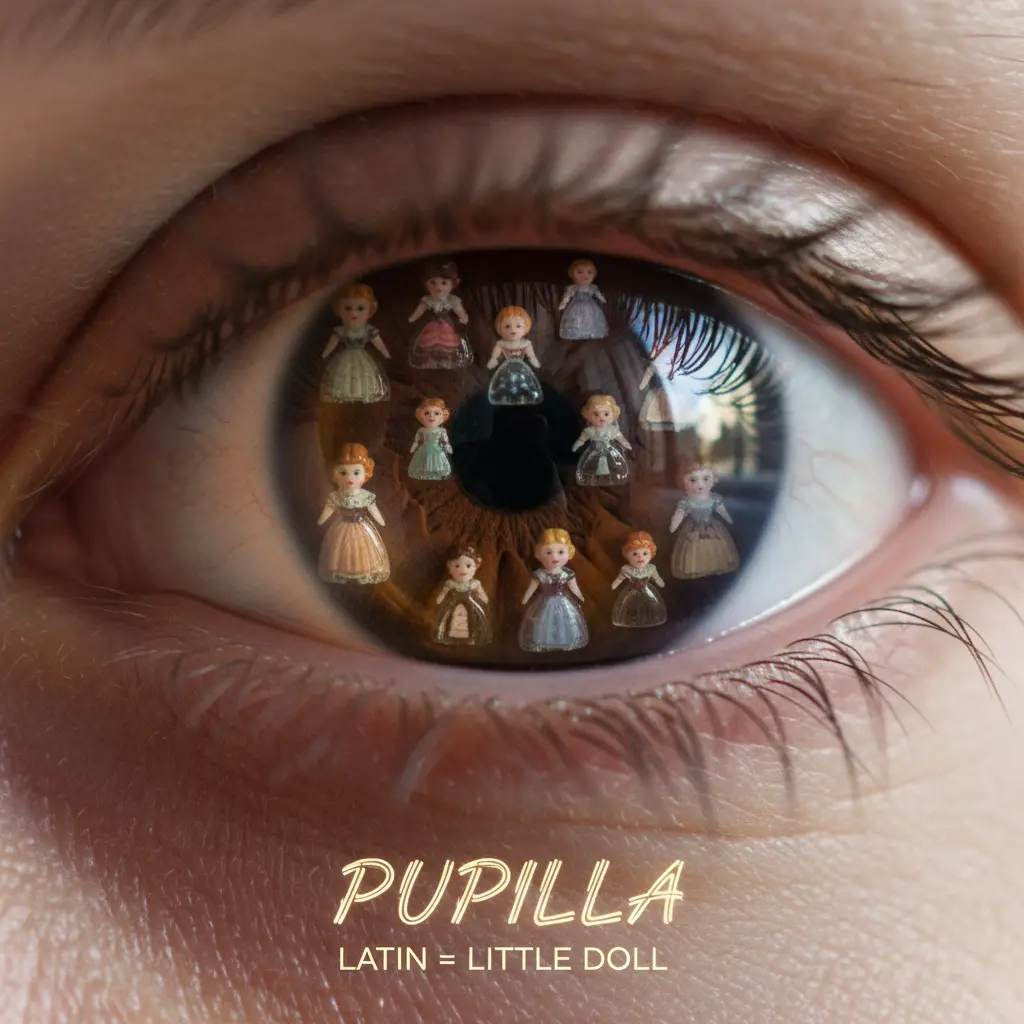
root: 'pupilla' (Latin) = 'little doll' (related to the small image seen in the eye); Origin: Latin → Old French → English. Imagine looking into someone's eyes and seeing tiny reflections that look like little dolls appearing, representing the pupil's function.
Note 1: These definitions and etymologies are not standard dictionary definitions, but extended explanations provided to help with memorization and understanding of the actual application of words. Through this background information, we strive to make words more vivid and easier to understand, and help you remember their meanings in real life.
Note 2: LexiTalk designs the learning flow around the linguistics principle of “Comprehensible Input.” When learners encounter material that is slightly above their level but still understandable from context, the brain naturally absorbs the language. That’s why we keep every word inside authentic contexts, using examples and associations to help you understand it and use it flexibly.
Read the FAQ explanation of Comprehensible InputI move closer to the page, shift my gaze between the lines and the teacher. As I draw a quick breath and adjust my grip on the pencil, the space between ideas tightens, like the pupil of an eye adjusting to light. The more I listen, the more the feeling of being a pupil under guidance settles in, and I keep my hand steady, letting questions push me forward. In the moment I notice how focus can turn a plain task into a map of possibilities, which I carry into class, study, and practice.
Pupil is a versatile noun with three main meanings. In education, it denotes a student who is taught by a teacher; the phrase is common in schools, reports, and conversations about progress. In anatomy, it names the circular opening in the center of the eye that lets light in and helps regulate vision. The rarely used sense describes a follower or apprentice under a mentor, though this usage is uncommon today. Etymology traces pupil to Latin pupilla, meaning little doll, carried into English via Old French pupille; the eye sense evokes the idea of a small image reflected in the pupil. The word is spelled the same for all three senses, so context is essential.
English uses pupil to cover three distinct ideas with the same spelling, so learners must rely on the surrounding words to decide meaning. In many languages, separate words exist for student, eye part, and follower, so the English ambiguity is a common pitfall.
Download LexiTalk app for personalized learning experience
Download AppCookies
We use cookies for essential site functions, analytics, and ads. You can accept, reject, or manage preferences. Privacy Policy