
puritanical - Master This Word
Master this word with our 5-step learning method – Learn English in English
Train English Through Brain Routes, Not Translation.
This page helps you stop memorizing isolated translations and start understanding a word through its shared mental image, native-style thinking, and practical training steps.
Master this word with our 5-step learning method – Learn English in English
Example sentences are the start of understanding. Don't rush to memorize. First feel how the word works in a sentence.
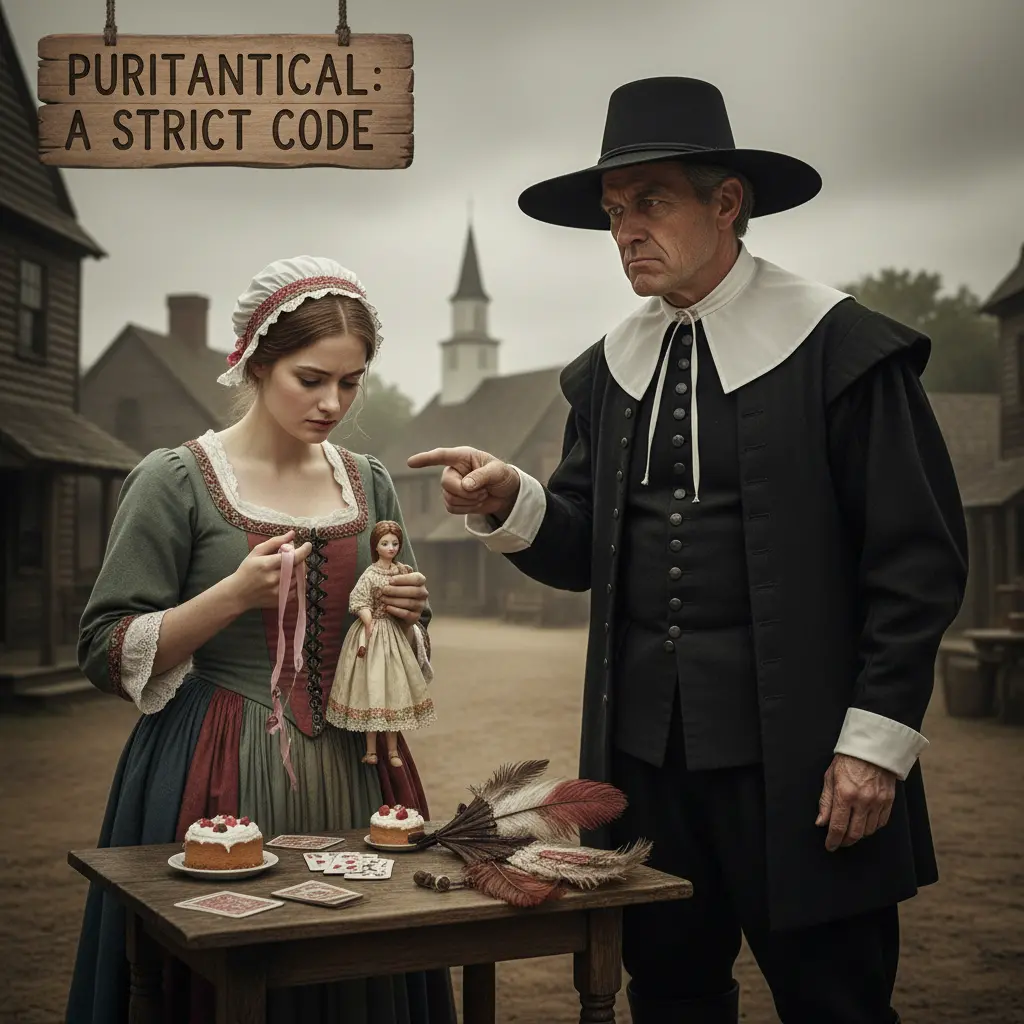
puritanical = puritan + -ical; came from Middle French 'puritain'→Late Latin 'puritanus'→Old English. Imagine a stern Puritan with a strict code of conduct, scolding someone for trivial indulgences.
Note 1: These definitions and etymologies are not standard dictionary definitions, but extended explanations provided to help with memorization and understanding of the actual application of words. Through this background information, we strive to make words more vivid and easier to understand, and help you remember their meanings in real life.
Note 2: LexiTalk designs the learning flow around the linguistics principle of “Comprehensible Input.” When learners encounter material that is slightly above their level but still understandable from context, the brain naturally absorbs the language. That’s why we keep every word inside authentic contexts, using examples and associations to help you understand it and use it flexibly.
Read the FAQ explanation of Comprehensible InputPuritanical means describing a person, policy, or attitude that is rigidly moral or strict in matters of morals and conduct. The sense is closely tied to the beliefs historically held by Puritans, but in modern use it extends beyond religion to describe any overbearing demand for self-denial or austere behavior. It often carries a critical or disapproving tone, implying that someone frowns on ordinary pleasures or tolerates very little indulgence. The nuance is less about virtue and more about policing others' choices, dress, speech, or social life. Because of its strong negative connotation, it is typically used to critique behavior rather than praise principled standing.
Puritanical in English often carries a morally judgmental edge; learners should note that it implies harsh scrutiny of indulgence, not merely prudence. It contrasts with neutral terms like strict or austere and is typically pejorative when describing people or policies.
What is the meaning of the word 'puritanical'?
In which sentence is 'puritanical' used correctly?
Which word is a synonym of 'puritanical'?
Which word is an antonym of 'puritanical'?
How could you use 'puritanical' in a real-life context?
Download LexiTalk app for personalized learning experience
Download AppCookies
We use cookies for essential site functions, analytics, and ads. You can accept, reject, or manage preferences. Privacy Policy