puts - Master This Word
Master this word with our 5-step learning method – Learn English in English
Train English Through Brain Routes, Not Translation.
This page helps you stop memorizing isolated translations and start understanding a word through its shared mental image, native-style thinking, and practical training steps.
Master this word with our 5-step learning method – Learn English in English
Example sentences are the start of understanding. Don't rush to memorize. First feel how the word works in a sentence.
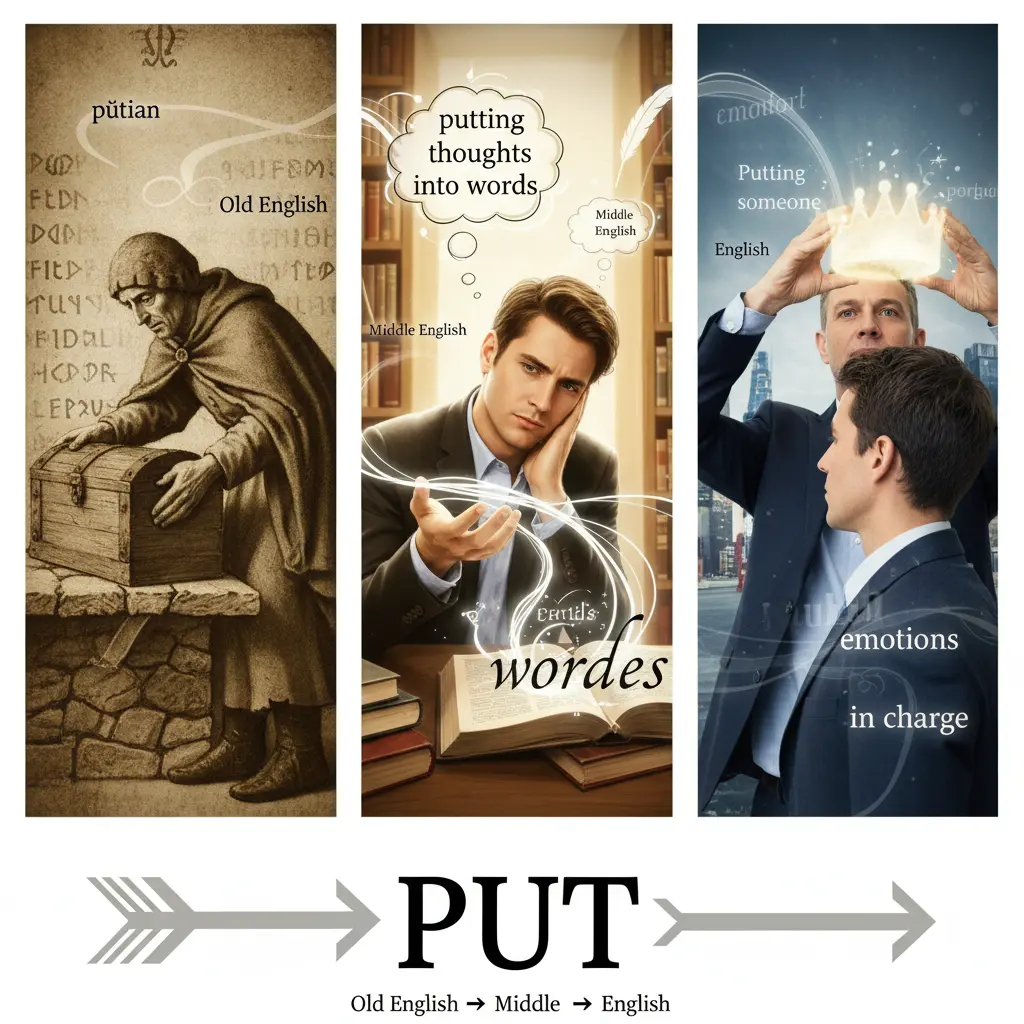
put = place (from Old English 'putian') + -ed (past tense) → Old English → Middle English → English. Imagine a person bending down to 'put' a box on the shelf, or visually 'putting' a thought into words. The act of putting can also extend to expressing emotions or assigning roles, like putting someone in charge.
Note 1: These definitions and etymologies are not standard dictionary definitions, but extended explanations provided to help with memorization and understanding of the actual application of words. Through this background information, we strive to make words more vivid and easier to understand, and help you remember their meanings in real life.
Note 2: LexiTalk designs the learning flow around the linguistics principle of “Comprehensible Input.” When learners encounter material that is slightly above their level but still understandable from context, the brain naturally absorbs the language. That’s why we keep every word inside authentic contexts, using examples and associations to help you understand it and use it flexibly.
Read the FAQ explanation of Comprehensible InputI reach out, move the mug a little, then set it down on the desk. I hold my breath for a beat, adjust my grip, and push the thought toward a sentence. The action feels calm and deliberate, like guiding a line from mind to page. I keep my focus steady, letting the word land where it belongs with another small move.
Put is a versatile English verb with three core senses: to place something in a specific position, to express something in words, and to assign something to a category or role. It covers physical movement like putting a book on a shelf, but also abstract acts such as putting your thoughts into words or putting a task in a folder. English also relies on many phrasal verbs with put, such as put on (wear), put off (delay), or put up with (tolerate). The past tense is put, identical to the base form, which learners often find surprising. Understanding these uses helps learners choose the right verb in context rather than defaulting to synonyms like place or set.
In English, put combines with many particles and phrasal verbs; learners often mix up physical placement with expressing ideas.
What does the word 'puts' mean?
Which sentence uses 'puts' correctly?
Which word is most similar to 'puts'?
What is the opposite of 'puts'?
Can you think of a real-life scenario where one might use 'puts'?
Download LexiTalk app for personalized learning experience
Download AppCookies
We use cookies for essential site functions, analytics, and ads. You can accept, reject, or manage preferences. Privacy Policy