
racism - Master This Word
Master this word with our 5-step learning method – Learn English in English
Train English Through Brain Routes, Not Translation.
This page helps you stop memorizing isolated translations and start understanding a word through its shared mental image, native-style thinking, and practical training steps.
Master this word with our 5-step learning method – Learn English in English
Example sentences are the start of understanding. Don't rush to memorize. First feel how the word works in a sentence.
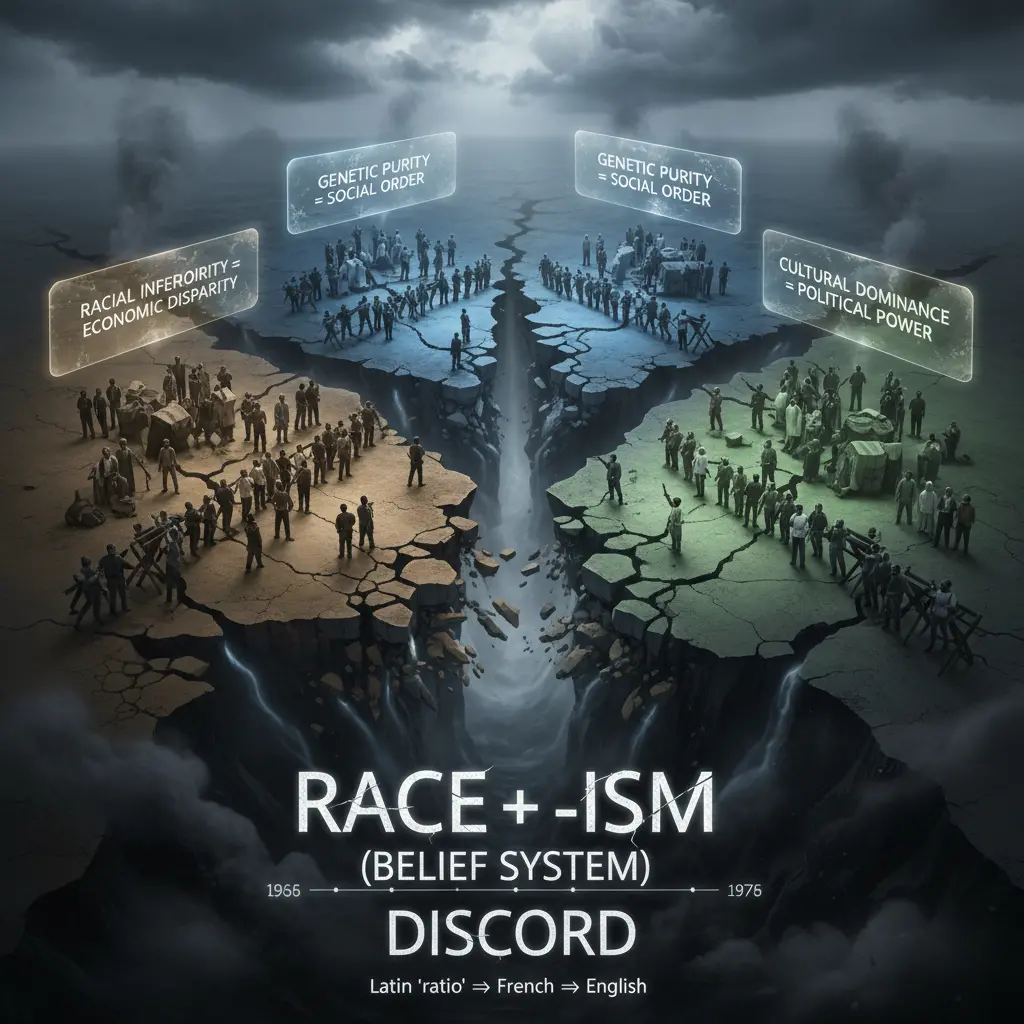
Racism = race + -ism (belief system). Origin: Latin 'ratio' → French 'race' → English. Imagine a divided world where people are categorized by race, leading to conflict and division.
Note 1: These definitions and etymologies are not standard dictionary definitions, but extended explanations provided to help with memorization and understanding of the actual application of words. Through this background information, we strive to make words more vivid and easier to understand, and help you remember their meanings in real life.
Note 2: LexiTalk designs the learning flow around the linguistics principle of “Comprehensible Input.” When learners encounter material that is slightly above their level but still understandable from context, the brain naturally absorbs the language. That’s why we keep every word inside authentic contexts, using examples and associations to help you understand it and use it flexibly.
Read the FAQ explanation of Comprehensible InputStanding in the hallway, I shift my weight and move my hands to open the door, watching a small crowd spill into the space. I hold my breath, then let it out as I choose who I step beside, who I invite into the circle, who I ignore. Change comes in the breath I take and the decision I make: to keep my judgment in check or to let bias push its way in. The word racism rises in the moment I notice a snap of distrust before the person even speaks, and I answer by choosing respect, by staying present, by adjusting my pace to include rather than label.
Racism is the belief that different races possess distinct abilities, qualities, or moral traits that make some groups inherently superior or inferior. The term covers both personal prejudice and systemic discrimination that shape laws, policies, and everyday interactions. Built from race and the suffix -ism, racism signals a belief system or ideology, and it frequently appears in discussions about civil rights, education, policing, housing, and immigration. Understanding racism involves recognizing implicit biases, challenging stereotypes, and supporting equal rights for people of all racial backgrounds.
English learners often separate racism as a social issue from personal prejudice, but in many contexts both interact. Distinguish structural discrimination from individual bias, and watch for collocations like racial discrimination versus simply prejudice.
What does the word 'racism' mean?
Which of the following sentences uses the word 'racism' correctly?
What is a synonym for 'racism'?
What is an antonym for 'racism'?
How does 'racism' manifest in our society today?
Download LexiTalk app for personalized learning experience
Download AppCookies
We use cookies for essential site functions, analytics, and ads. You can accept, reject, or manage preferences. Privacy Policy