
recourse - Master This Word
Master this word with our 5-step learning method – Learn English in English
Train English Through Brain Routes, Not Translation.
This page helps you stop memorizing isolated translations and start understanding a word through its shared mental image, native-style thinking, and practical training steps.
Master this word with our 5-step learning method – Learn English in English
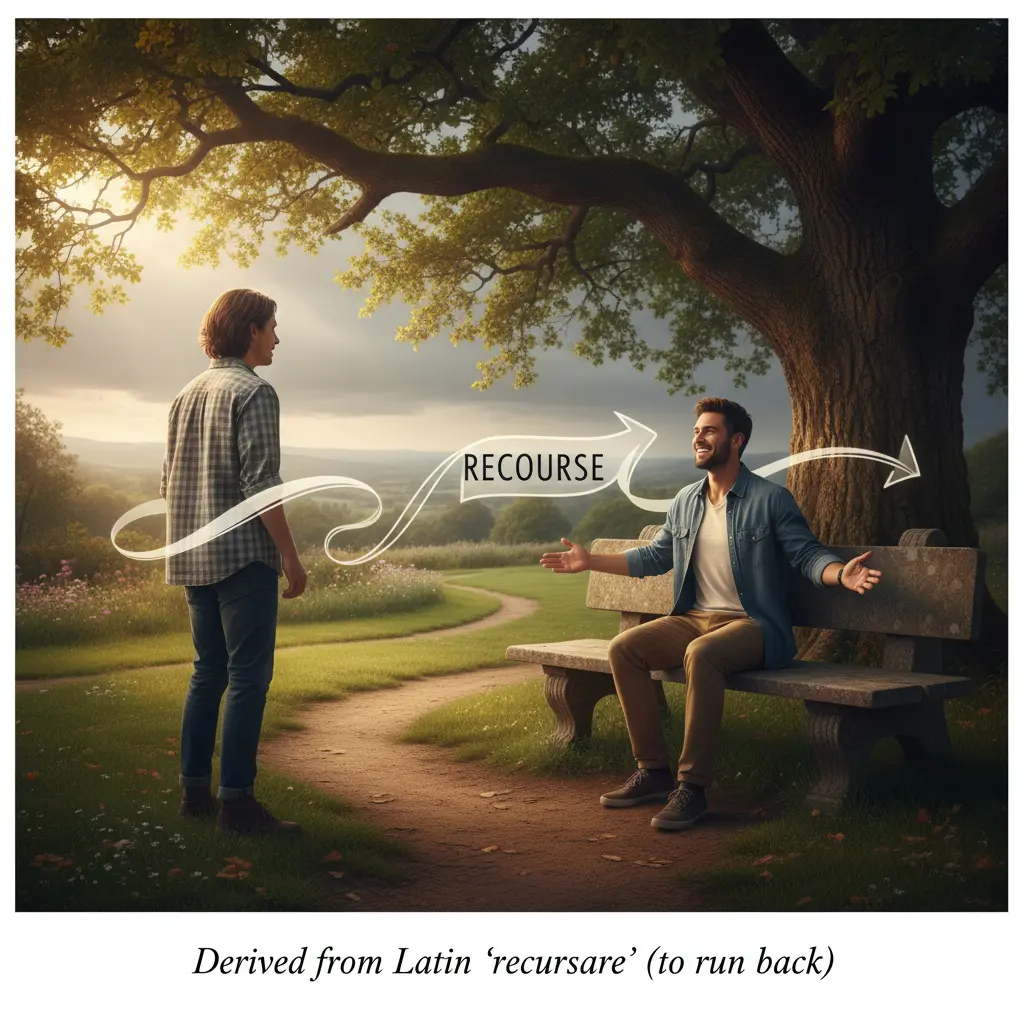
Example sentences are the start of understanding. Don't rush to memorize. First feel how the word works in a sentence.
The word 'recourse' is derived from the Latin 'recursare' (to run back), from 're-' (back) + 'cursus' (course). It evolved through Old French before making its way to English. Imagine a person turning back to a trusted friend in times of trouble, depicting a safe place to return for support.
Note 1: These definitions and etymologies are not standard dictionary definitions, but extended explanations provided to help with memorization and understanding of the actual application of words. Through this background information, we strive to make words more vivid and easier to understand, and help you remember their meanings in real life.
Note 2: LexiTalk designs the learning flow around the linguistics principle of “Comprehensible Input.” When learners encounter material that is slightly above their level but still understandable from context, the brain naturally absorbs the language. That’s why we keep every word inside authentic contexts, using examples and associations to help you understand it and use it flexibly.
Read the FAQ explanation of Comprehensible InputRecourse is a noun that points to a source of help when you are facing a problem, or to the act of turning to someone for assistance. It can refer to a friend or a professional you can rely on, or to a formal remedy in law or contract. People often say they have recourse to the courts or to legal counsel when a dispute cannot be resolved informally. In everyday life, recourse suggests a safe exit or a last option you can pursue to obtain a fair outcome. It is common in discussions of rights, remedies, and compensation, and you may encounter 'recourse to' or 'have recourse to' in both spoken and written English.
Recourse in English tends to emphasize formal remedies or turning to a specific party for help, often in a legal or contractual frame. Learners may overgeneralize it to mean just finding any solution, or confuse it with resource, which signals 'something available' rather than a course of action.
What does the word 'recourse' mean?
Which of the following sentences uses 'recourse' correctly?
Which word is most similar to 'recourse'?
What is the opposite of 'recourse'?
Can you think of a real-life context where someone might need support to resolve an issue?
Download LexiTalk app for personalized learning experience
Download AppCookies
We use cookies for essential site functions, analytics, and ads. You can accept, reject, or manage preferences. Privacy Policy