refugees - Master This Word
Master this word with our 5-step learning method – Learn English in English
Train English Through Brain Routes, Not Translation.
This page helps you stop memorizing isolated translations and start understanding a word through its shared mental image, native-style thinking, and practical training steps.
Master this word with our 5-step learning method – Learn English in English
Example sentences are the start of understanding. Don't rush to memorize. First feel how the word works in a sentence.
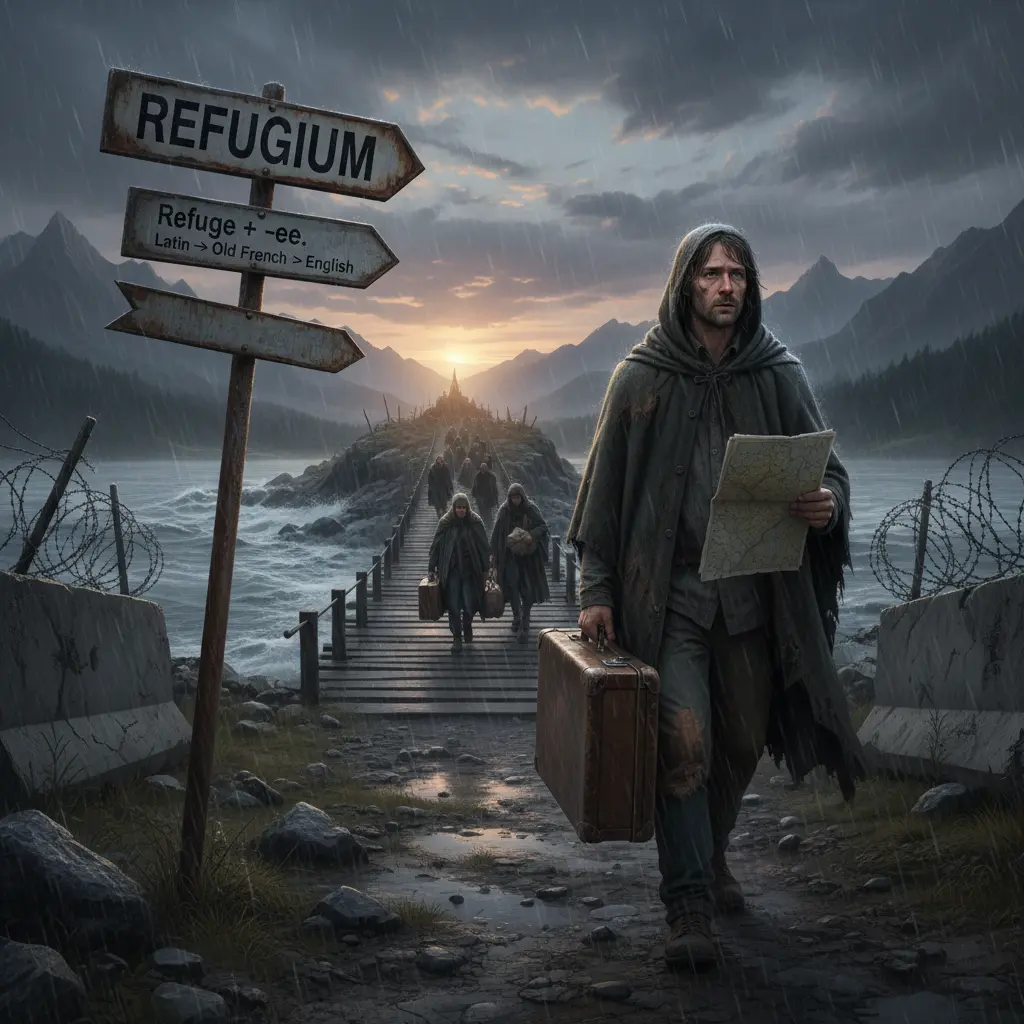
refugium = refuge + -ee; Latin → Old French → English. Imagine a person seeking a safe harbor, away from the storm, clutching a small suitcase as they cross borders for safety.
Note 1: These definitions and etymologies are not standard dictionary definitions, but extended explanations provided to help with memorization and understanding of the actual application of words. Through this background information, we strive to make words more vivid and easier to understand, and help you remember their meanings in real life.
Note 2: LexiTalk designs the learning flow around the linguistics principle of “Comprehensible Input.” When learners encounter material that is slightly above their level but still understandable from context, the brain naturally absorbs the language. That’s why we keep every word inside authentic contexts, using examples and associations to help you understand it and use it flexibly.
Read the FAQ explanation of Comprehensible InputI push through a crowded station, then move toward a quiet corner. I adjust my coat and keep my pace steady, eyes on the exit. The station hums around me, and the word refugee lands softly in my thoughts as I carry a life in limbo. I let the plan tighten, turn on a new route, and keep faith that someday I will reach safety.
Refugee is a person who flees to escape danger, persecution, or war in their home country. The term emphasizes a need for safety rather than a decision to leave for opportunities. In international contexts, a refugee may seek asylum and be protected by law in host countries, though the path to recognition can be lengthy and uncertain. Refugees differ from voluntary migrants who leave for study or work, and from asylum seekers who have not yet been granted protection. The word carries emotional weight, often associated with displacement, loss, and resilience, and it appears in news, humanitarian reports, and human rights discussions about dignity, access to shelter, and the right to seek safety.
English learners are often taught a clear legal vs humanitarian distinction (refugee vs immigrant vs asylum seeker). Keep in mind that in many contexts ‘refugee’ denotes protection needs, not just moving countries.
English Learning Listening Content
Listen NowDownload LexiTalk app for personalized learning experience
Download AppCookies
We use cookies for essential site functions, analytics, and ads. You can accept, reject, or manage preferences. Privacy Policy