regulation - Master This Word
Master this word with our 5-step learning method – Learn English in English
Train English Through Brain Routes, Not Translation.
This page helps you stop memorizing isolated translations and start understanding a word through its shared mental image, native-style thinking, and practical training steps.
Master this word with our 5-step learning method – Learn English in English
Example sentences are the start of understanding. Don't rush to memorize. First feel how the word works in a sentence.
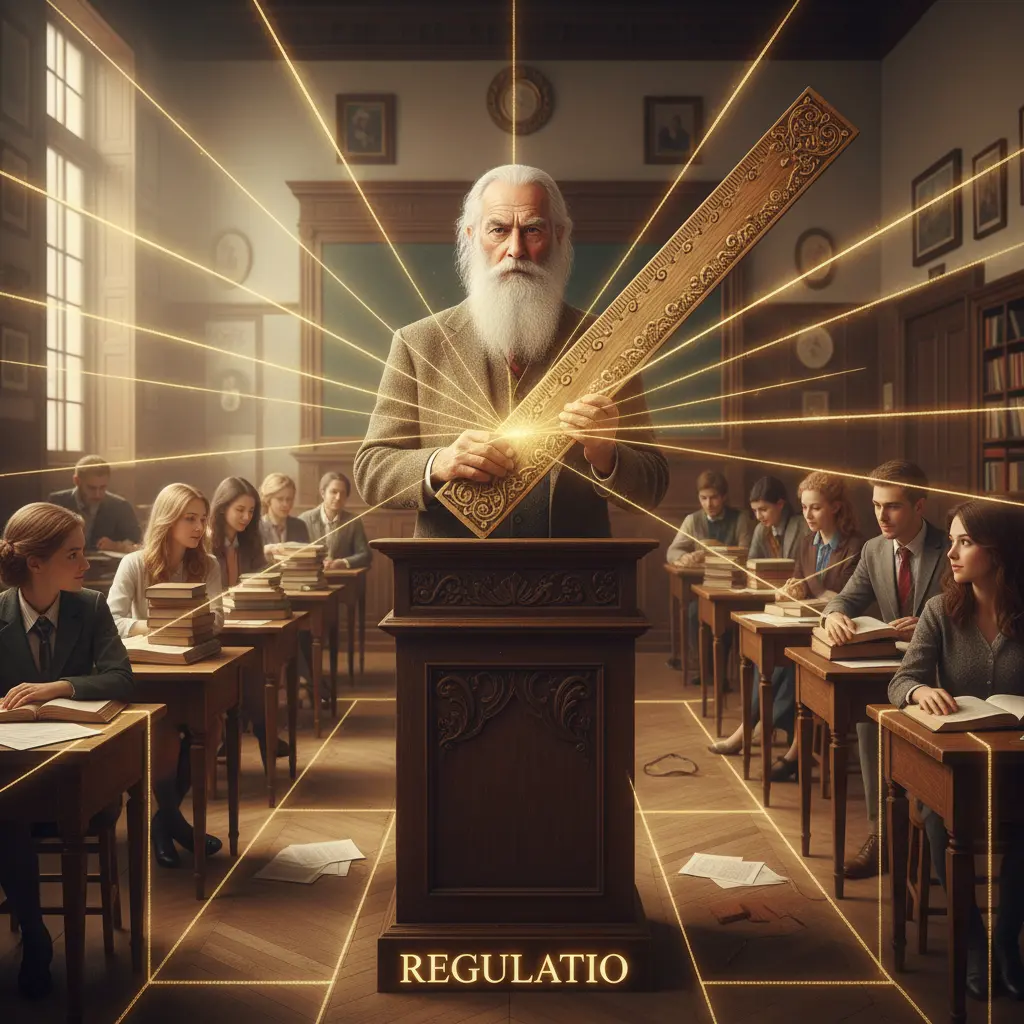
Root: reg- = to rule, -ulation = process of. Historical origin: Latin 'regulatio' → Old French 'regulation' → English. Memory image: Imagine a ruler creating guidelines for a group of students to follow, ensuring order and structure.
Note 1: These definitions and etymologies are not standard dictionary definitions, but extended explanations provided to help with memorization and understanding of the actual application of words. Through this background information, we strive to make words more vivid and easier to understand, and help you remember their meanings in real life.
Note 2: LexiTalk designs the learning flow around the linguistics principle of “Comprehensible Input.” When learners encounter material that is slightly above their level but still understandable from context, the brain naturally absorbs the language. That’s why we keep every word inside authentic contexts, using examples and associations to help you understand it and use it flexibly.
Read the FAQ explanation of Comprehensible InputI reach for the calendar, move a page, and a regulation catches my eye. I push back distractions, adjust my plan, and set a clear finish time. It feels like steering a small engine with careful hands, a push-pull between freedom and order. This mindset travels into real work, letting my daily choices stay steady within the rules.
Regulation is a noun used for rules imposed by authorities and the act of controlling something. In government and public policy, a regulation is an official rule or order that people, businesses, and agencies must follow, such as environmental regulations that limit pollution or safety regulations that govern product labeling. Regulation can also describe the process of guiding or managing a system to achieve consistency and safety, as when markets are regulated to prevent abuse or when a professional body regulates professional conduct. The term covers formal statutory rules as well as broader sets of standards or guidelines that shape how activities are carried out.
In English, regulation tends to be framed as a formal system with legal obligations. Learners often confuse regulation with informal rules or with policy; English uses regulation to emphasize enforceability and formal processes.
What is the meaning of the word 'regulation'?
Which sentence uses the word 'regulation' correctly?
Which word is most similar to 'regulation'?
What is the opposite of 'regulation'?
Can you give an example of a real-life scenario involving 'regulation'?
Download LexiTalk app for personalized learning experience
Download AppCookies
We use cookies for essential site functions, analytics, and ads. You can accept, reject, or manage preferences. Privacy Policy