relations - Master This Word
Master this word with our 5-step learning method – Learn English in English
Train English Through Brain Routes, Not Translation.
This page helps you stop memorizing isolated translations and start understanding a word through its shared mental image, native-style thinking, and practical training steps.
Master this word with our 5-step learning method – Learn English in English
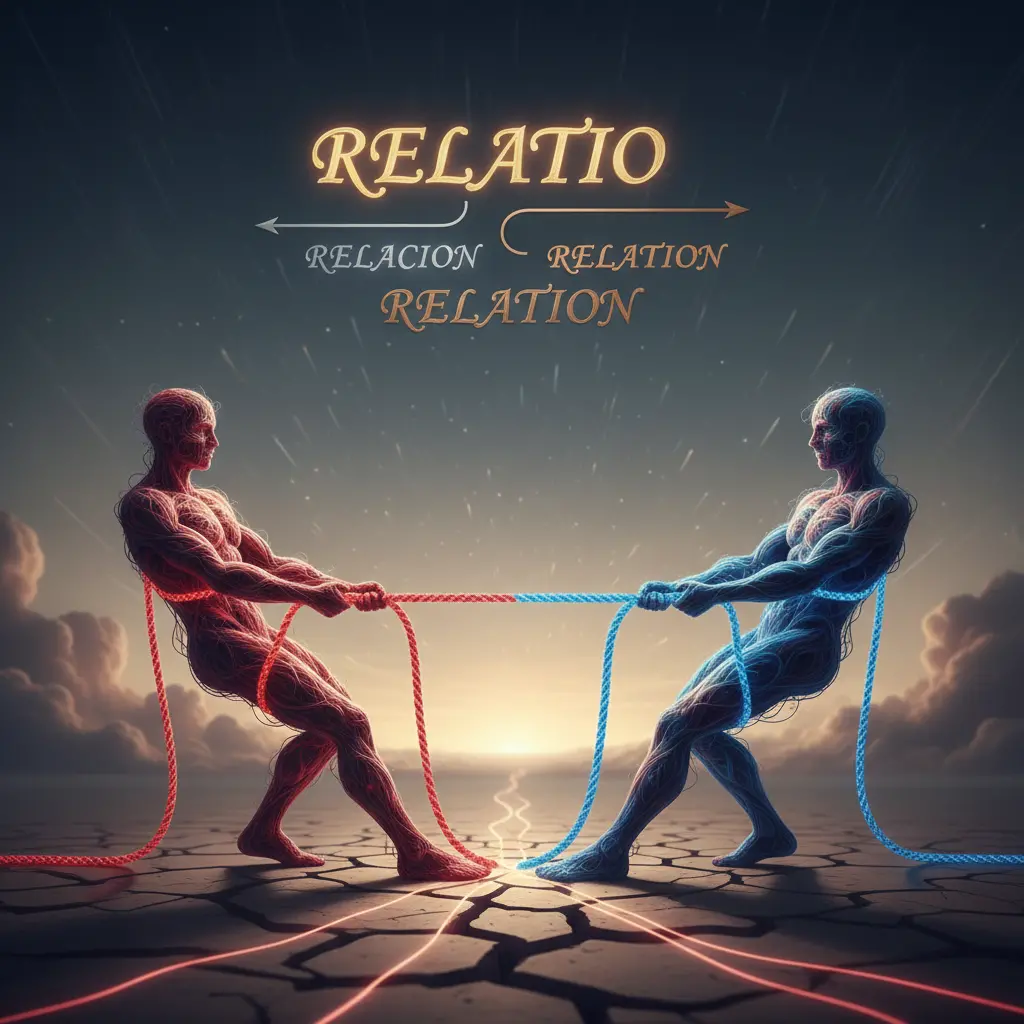
Example sentences are the start of understanding. Don't rush to memorize. First feel how the word works in a sentence.
From Latin 'relatio' (from 'referre' meaning 'to bring back') → Old French 'relacion' → English. Imagine two strings connecting people, each pulling on the other, symbolizing their relationship.
Note 1: These definitions and etymologies are not standard dictionary definitions, but extended explanations provided to help with memorization and understanding of the actual application of words. Through this background information, we strive to make words more vivid and easier to understand, and help you remember their meanings in real life.
Note 2: LexiTalk designs the learning flow around the linguistics principle of “Comprehensible Input.” When learners encounter material that is slightly above their level but still understandable from context, the brain naturally absorbs the language. That’s why we keep every word inside authentic contexts, using examples and associations to help you understand it and use it flexibly.
Read the FAQ explanation of Comprehensible InputI place my cup down, lean in, and let my attention move toward the other person. I adjust my posture, turning my shoulders a little, and the space between us shifts as we start to listen more closely. The little back-and-forth feels like a thread being pulled tighter, a push and pull that grows into a relation. In the end, I sense how we steer the moment together, not by words alone but by keeping the mood in sync.
Relation is a flexible noun with several closely related meanings. Primarily it refers to a connection or association between people or things, such as the relation between cause and effect, or family relations like mother and cousin. It also describes the way two or more people or groups regard and behave toward each other, as in diplomatic relations or social relations. In older or literary English, relation can mean a story or narrative about someone or something, or a report of events. Learners should note that relation often appears in either countable 'a relation' or plural 'relations' in formal language, and is frequently used in phrases like 'in relation to' or 'relation to'.
Think of relation as a lean, formal term that covers both connections and, in older or literary English, a narrative. Learners should notice it is not universally interchangeable with 'relationship' for people, and it often appears in technical phrases like 'in relation to' rather than casual speech.
What is the definition of 'relations'?
Which sentence correctly uses the word 'relations'?
Which word is most similar to 'relations'?
What is the opposite of 'relations'?
Can you think of a real-life scenario where knowing about relations is important?
English Learning Listening Content
Listen NowEnglish Learning Listening Content
Listen NowDownload LexiTalk app for personalized learning experience
Download AppCookies
We use cookies for essential site functions, analytics, and ads. You can accept, reject, or manage preferences. Privacy Policy