religions - Master This Word
Master this word with our 5-step learning method – Learn English in English
Train English Through Brain Routes, Not Translation.
This page helps you stop memorizing isolated translations and start understanding a word through its shared mental image, native-style thinking, and practical training steps.
Master this word with our 5-step learning method – Learn English in English
Example sentences are the start of understanding. Don't rush to memorize. First feel how the word works in a sentence.
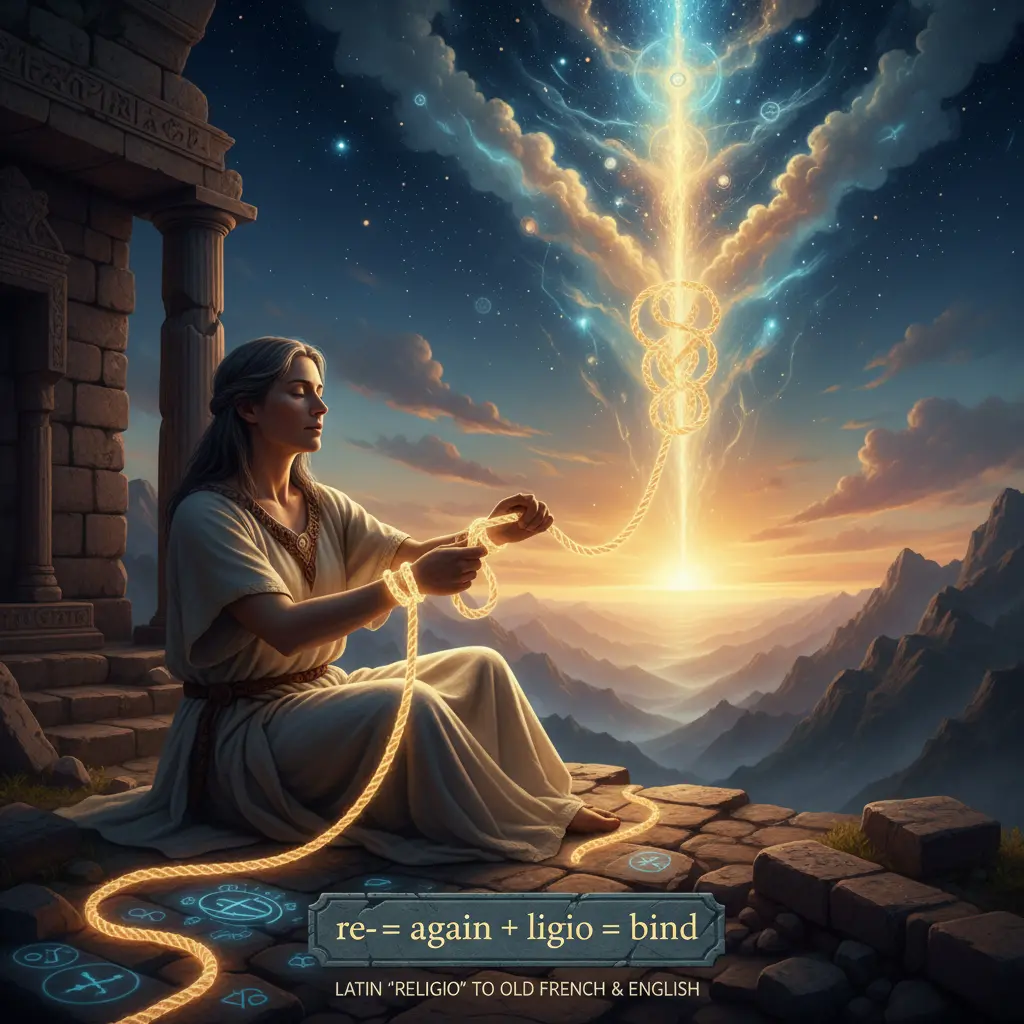
re- = again + ligio = bind; Latin 'religio' came to Old French and then to English. Imagine a person tying a knot to connect themselves to a higher power, thus forming a bond of faith.
Note 1: These definitions and etymologies are not standard dictionary definitions, but extended explanations provided to help with memorization and understanding of the actual application of words. Through this background information, we strive to make words more vivid and easier to understand, and help you remember their meanings in real life.
Note 2: LexiTalk designs the learning flow around the linguistics principle of “Comprehensible Input.” When learners encounter material that is slightly above their level but still understandable from context, the brain naturally absorbs the language. That’s why we keep every word inside authentic contexts, using examples and associations to help you understand it and use it flexibly.
Read the FAQ explanation of Comprehensible InputI set my shoulders, press forward, and turn toward a question I hold at the center. As I pull together beliefs and rituals in my mind, the room seems to shift and I feel the effort of choosing what matters most. The pull of tradition keeps me steady, guiding how I act with friends, family, and community. In daily life, I repeat this movement—adjusting how I live and what I value—so faith becomes something I carry, not something I merely study.
Religion is a system of beliefs and practices related to the divine, and it can also describe a pursuit or devotion that someone treats as supremely important. It includes organized faiths with communities, rituals, sacred texts, and moral codes, as well as more personal ways of seeking meaning, guidance, or consolation. People may describe their religion as a tradition they follow, a source of identity, or a framework for life choices. The word covers both formal institutions such as churches, mosques, temples, and synagogues, and informal commitments to a set of beliefs, values, or practices centered on spirituality or the divine.
English speakers often view religion as either an organized system or a personal quest, and may separate religion from spirituality or philosophy of life. Learners frequently mislabel secular beliefs as religion or assume all religions share the same practices.
Download LexiTalk app for personalized learning experience
Download AppCookies
We use cookies for essential site functions, analytics, and ads. You can accept, reject, or manage preferences. Privacy Policy