resources - Master This Word
Master this word with our 5-step learning method – Learn English in English
Train English Through Brain Routes, Not Translation.
This page helps you stop memorizing isolated translations and start understanding a word through its shared mental image, native-style thinking, and practical training steps.
Master this word with our 5-step learning method – Learn English in English
Example sentences are the start of understanding. Don't rush to memorize. First feel how the word works in a sentence.
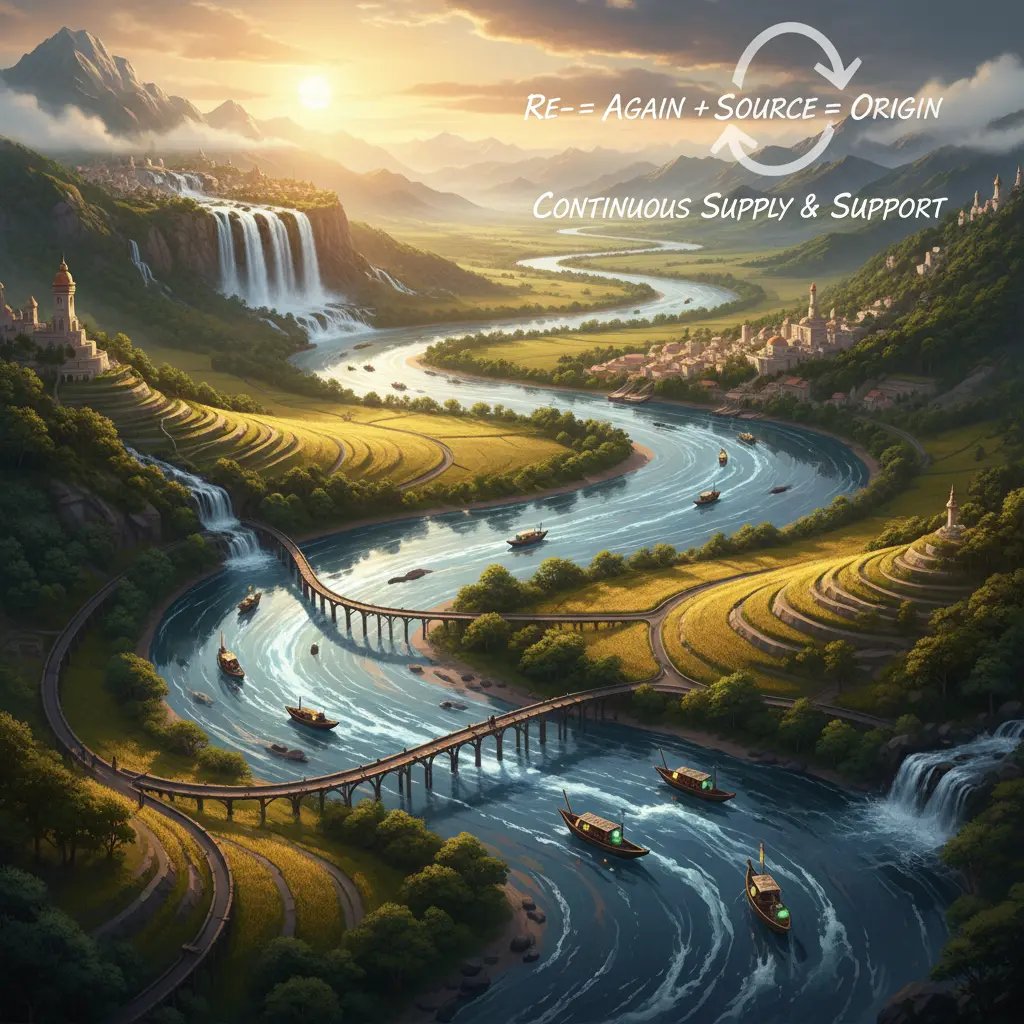
re- = again + source = origin; Latin → Old French → English. Imagine a flowing river that repeatedly brings water, symbolizing the continuous supply and support resources provide.
Note 1: These definitions and etymologies are not standard dictionary definitions, but extended explanations provided to help with memorization and understanding of the actual application of words. Through this background information, we strive to make words more vivid and easier to understand, and help you remember their meanings in real life.
Note 2: LexiTalk designs the learning flow around the linguistics principle of “Comprehensible Input.” When learners encounter material that is slightly above their level but still understandable from context, the brain naturally absorbs the language. That’s why we keep every word inside authentic contexts, using examples and associations to help you understand it and use it flexibly.
Read the FAQ explanation of Comprehensible InputI reach for a sturdy tool and set it on the bench, my fingers move with a clear plan. I pull out a spare part and push aside the clutter, deciding this resource will help me fix the snag. I turn screws, adjust pressure, and keep a steady pace as the situation slowly shifts toward a fix. When the task is done, the sense of control stays with me, and I feel how this resource is something I lean on in moments like this.
Resource as a noun covers three broad ideas: a source of supply or support, a valuable ability or quality that a person or system can draw on, and a means of dealing with a difficult situation. In business, people talk about natural resources, human resources, or financial resources; in personal life, being resourceful means using available tools creatively. The word is common in both concrete contexts (water, energy, materials) and abstract contexts (time, expertise, information). Learners should note collocations like resource pool, resource management, resourceful, and resourcefulness, and be careful not to confuse resource with source in some phrases.
In English, resource is broad and flexible, covering tangible supplies, personal abilities, and strategies for coping. Learners often confuse resource with source, or miss collocations like resource pool and resource management.
What is the definition of 'resources'?
Which sentence uses 'resources' correctly?
Which word is most similar to 'resources'?
What is the opposite of 'resources'?
Can you think of a real-life context where resources are important?
English Learning Listening Content
Listen NowDownload LexiTalk app for personalized learning experience
Download AppCookies
We use cookies for essential site functions, analytics, and ads. You can accept, reject, or manage preferences. Privacy Policy