
reverberate - Master This Word
Master this word with our 5-step learning method – Learn English in English
Train English Through Brain Routes, Not Translation.
This page helps you stop memorizing isolated translations and start understanding a word through its shared mental image, native-style thinking, and practical training steps.
Master this word with our 5-step learning method – Learn English in English
Example sentences are the start of understanding. Don't rush to memorize. First feel how the word works in a sentence.
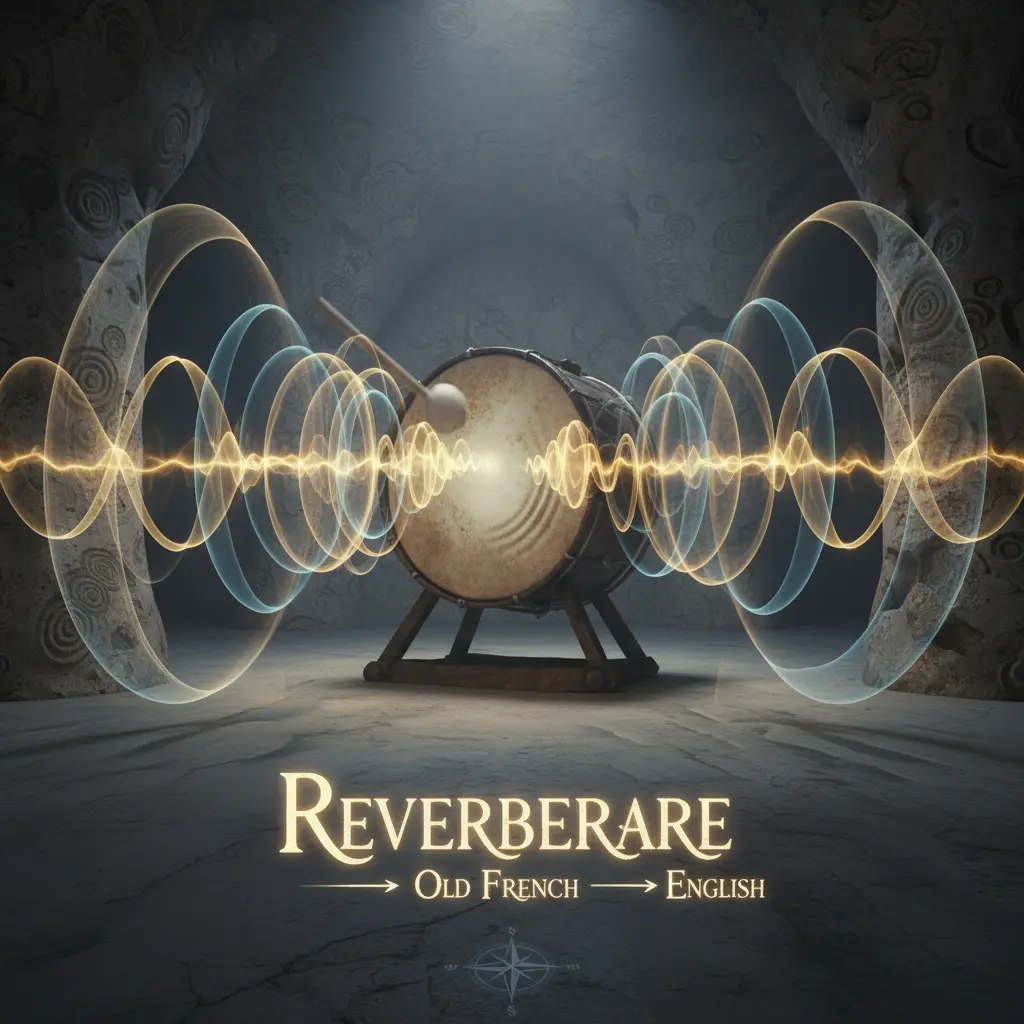
(re- + verberare) Originating from Latin, then borrowed into Old French and later English. Picture a drum that keeps thumping and sending echoes all around, illustrating how sounds reverberate endlessly.
Note 1: These definitions and etymologies are not standard dictionary definitions, but extended explanations provided to help with memorization and understanding of the actual application of words. Through this background information, we strive to make words more vivid and easier to understand, and help you remember their meanings in real life.
Note 2: LexiTalk designs the learning flow around the linguistics principle of “Comprehensible Input.” When learners encounter material that is slightly above their level but still understandable from context, the brain naturally absorbs the language. That’s why we keep every word inside authentic contexts, using examples and associations to help you understand it and use it flexibly.
Read the FAQ explanation of Comprehensible InputReverberate means to cause a sound to bounce and be heard again and again after the original source has stopped, as in a hall where footsteps or music echo and seem to linger. It can also describe ideas, events, or emotions that produce a strong, lasting impact that echoes beyond the initial moment. The word comes from re- + verberare in Latin, implying repeated striking, and it entered English through Old French. When you say something reverberates, you often imply a chain reaction or widespread influence, not just a single echo. In everyday usage, it works well for physical sound, memories, and reputational effects.
English speakers often reserve reverberate for situations with physical echoes or broad, lasting effects; it can feel grand or technical, depending on context.
What is the definition of 'reverberate'?
Choose the sentence that uses 'reverberate' correctly.
Which word is most similar to 'reverberate'?
What is the opposite of 'reverberate'?
Can you think of a real-life context where sound might reflect off surfaces?
Download LexiTalk app for personalized learning experience
Download AppCookies
We use cookies for essential site functions, analytics, and ads. You can accept, reject, or manage preferences. Privacy Policy