
riot - Master This Word
Master this word with our 5-step learning method – Learn English in English
Train English Through Brain Routes, Not Translation.
This page helps you stop memorizing isolated translations and start understanding a word through its shared mental image, native-style thinking, and practical training steps.
Master this word with our 5-step learning method – Learn English in English
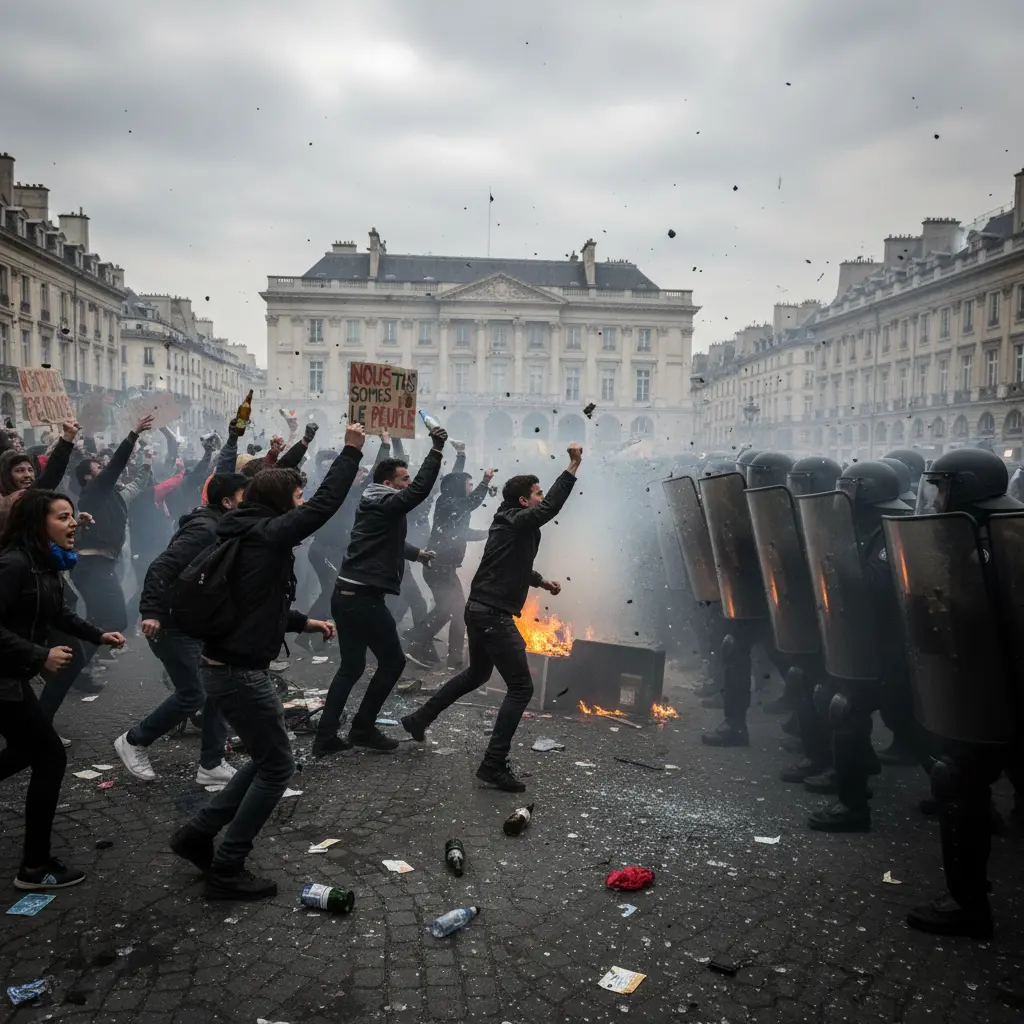
Example sentences are the start of understanding. Don't rush to memorize. First feel how the word works in a sentence.
Root: riot = from Latin 'riota' (a disturbance) → Old French 'rieote' → English. Memory: Imagine a crowd throwing objects and shouting, creating chaos, symbolizing rebellion against authority.
Note 1: These definitions and etymologies are not standard dictionary definitions, but extended explanations provided to help with memorization and understanding of the actual application of words. Through this background information, we strive to make words more vivid and easier to understand, and help you remember their meanings in real life.
Note 2: LexiTalk designs the learning flow around the linguistics principle of “Comprehensible Input.” When learners encounter material that is slightly above their level but still understandable from context, the brain naturally absorbs the language. That’s why we keep every word inside authentic contexts, using examples and associations to help you understand it and use it flexibly.
Read the FAQ explanation of Comprehensible InputI take a small step, move my feet along the curb, and let the street tense under my weight. Shouts rise and banners whip in the wind as the crowd seems to tighten, and something shifts in the air. I grip a railing, adjust my stance, and decide how long I will stay or where I will push back. The moment grows from a simple scene into a sense that something chaotic is happening, and I feel what a riot could imply in a crowded, boiling moment.
Riot is a noun and verb referring to a violent public disturbance or an outbreak of chaotic behavior, often involving crowds clashing with authorities, property damage, or loud, disruptive protests. It can describe a single event, like a riot in a city after a match, or a broader situation characterized by disorder and breakdown of order. In political or historical contexts, riot can imply rebellion or protest as a collective, sometimes organized response to perceived injustice. Beyond its literal sense, riot is occasionally used metaphorically to describe a person’s strong reaction or a scene that feels wildly out of control, though this figurative use is less common in formal writing.
Riot is a strong, documentary term in English that foregrounds violence and public disorder; learners may overgeneralize it to any protest or crowd, and may confuse it with 'uproar' or 'disturbance' in formal writing.
What is the meaning of the word 'riot'?
In which sentence is the word 'riot' used correctly?
Which word is a synonym of 'riot'?
What is the opposite of 'riot'?
In what real-life context might you hear the word 'riot'?
Download LexiTalk app for personalized learning experience
Download AppCookies
We use cookies for essential site functions, analytics, and ads. You can accept, reject, or manage preferences. Privacy Policy