
scare - Master This Word
Master this word with our 5-step learning method – Learn English in English
Train English Through Brain Routes, Not Translation.
This page helps you stop memorizing isolated translations and start understanding a word through its shared mental image, native-style thinking, and practical training steps.
Master this word with our 5-step learning method – Learn English in English
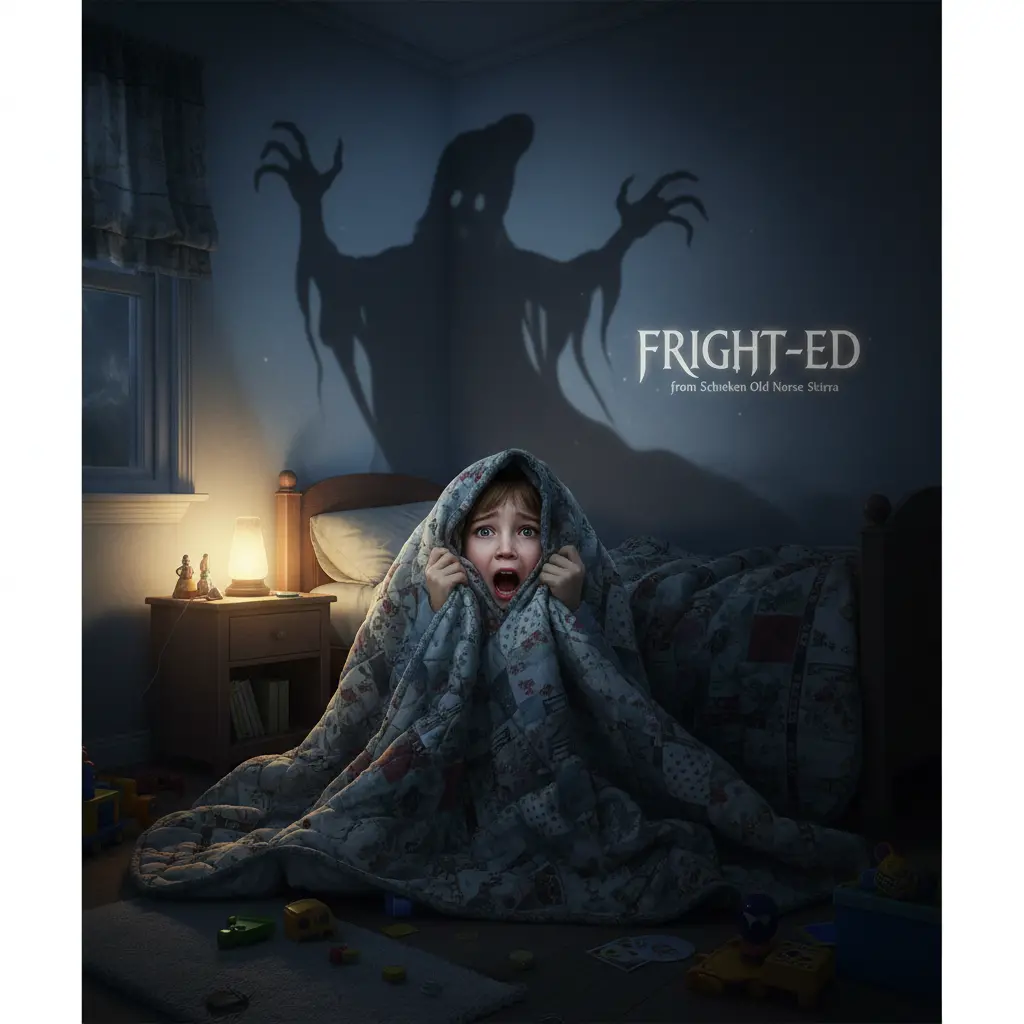
Example sentences are the start of understanding. Don't rush to memorize. First feel how the word works in a sentence.
scare = 'fright' + '-ed' (past participle); from Middle Dutch 'schreken' → Old Norse 'skirra' → English. Picture a child hiding under a blanket, scared by a ghostly shadow looming over them.
Note 1: These definitions and etymologies are not standard dictionary definitions, but extended explanations provided to help with memorization and understanding of the actual application of words. Through this background information, we strive to make words more vivid and easier to understand, and help you remember their meanings in real life.
Note 2: LexiTalk designs the learning flow around the linguistics principle of “Comprehensible Input.” When learners encounter material that is slightly above their level but still understandable from context, the brain naturally absorbs the language. That’s why we keep every word inside authentic contexts, using examples and associations to help you understand it and use it flexibly.
Read the FAQ explanation of Comprehensible InputI grip the door handle and push it a crack, a cold draft sliding along my skin. I shift my weight, keep my eyes on the corner, and breathe slow to steady myself. A floorboard creaks and my heart jumps; I turn my head toward the sound and set my shoulders for what might come. And then I realize the scare is not out there but in my own nerves, a pull I can ease with a steady exhale.
Scare is a transitive verb meaning to cause someone to feel frightened or worried. It is used with people and animals, and appears in phrases like 'scare someone to death' or 'scare away'. The related adjective 'scary' describes something that provokes fear, while 'scared' or 'afraid' describe a person’s feeling. Learners often confuse scare with the intransitive 'be scared' and mix up its use with 'frighten' or 'terrify'. In everyday speech you might say 'That movie scared me' or 'The loud noise frightened the dog'. Remember, scare emphasizes the action on the other person, not the person’s own fear state.
In English, scare emphasizes the action on another person or animal and can pair with aggressive connotations like 'scare away'. Speakers often overextend to describe slow anxiety, which would better be covered by frighten or worry. Learners also commonly mix up scare with be scared, which flips the subject’s role.
What is the best definition of the word scare?
Which sentence uses the word scare correctly?
Which word is most similar in meaning to scare?
Which word is the opposite of scare?
Which real-life scenario is one where the word scare would be used correctly?
Download LexiTalk app for personalized learning experience
Download AppCookies
We use cookies for essential site functions, analytics, and ads. You can accept, reject, or manage preferences. Privacy Policy