seed - Master This Word
Master this word with our 5-step learning method – Learn English in English
Train English Through Brain Routes, Not Translation.
This page helps you stop memorizing isolated translations and start understanding a word through its shared mental image, native-style thinking, and practical training steps.
Master this word with our 5-step learning method – Learn English in English
Example sentences are the start of understanding. Don't rush to memorize. First feel how the word works in a sentence.
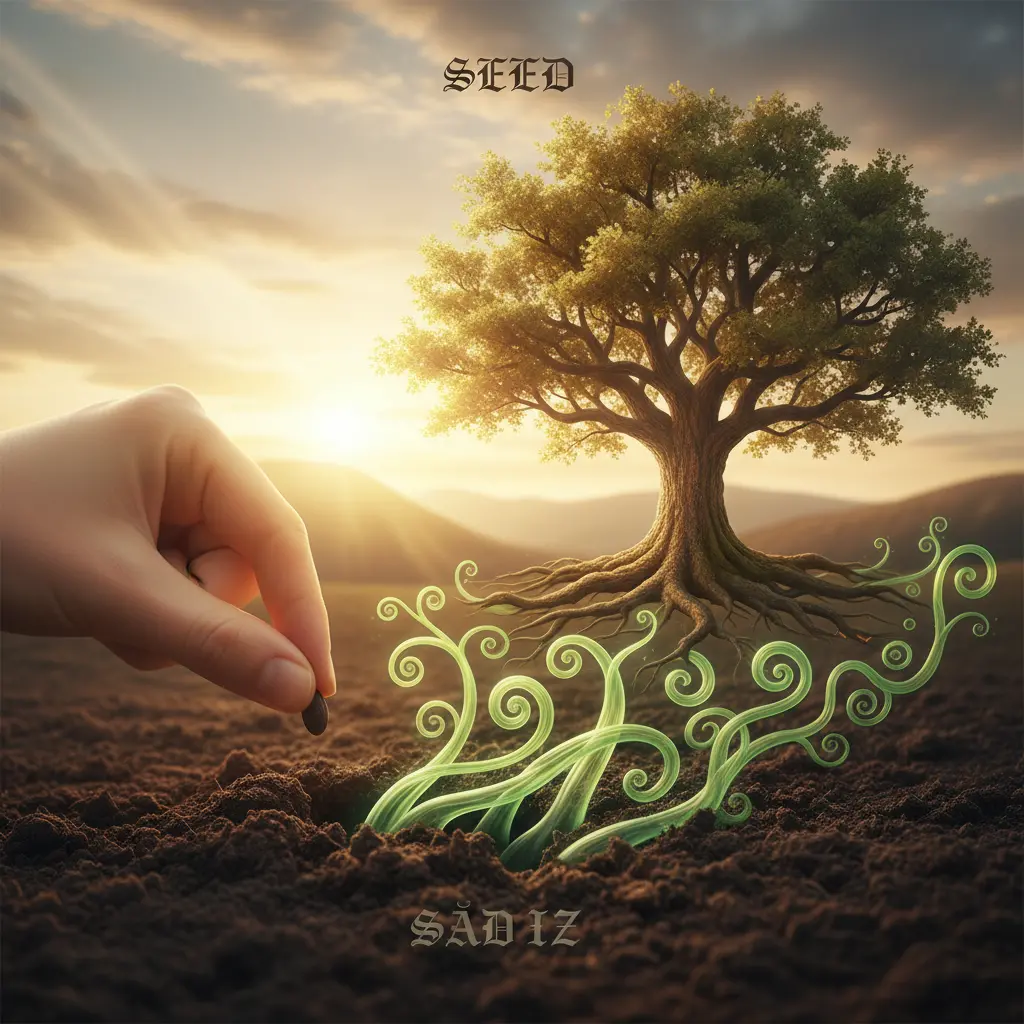
seed = seed; Historical origin: Old English 'sǣd' → Proto-Germanic 'saidiz' → Proto-Indo-European; Memory image: Imagine planting a seed in soil and watching it grow into a large tree, a symbol of growth and potential.
Note 1: These definitions and etymologies are not standard dictionary definitions, but extended explanations provided to help with memorization and understanding of the actual application of words. Through this background information, we strive to make words more vivid and easier to understand, and help you remember their meanings in real life.
Note 2: LexiTalk designs the learning flow around the linguistics principle of “Comprehensible Input.” When learners encounter material that is slightly above their level but still understandable from context, the brain naturally absorbs the language. That’s why we keep every word inside authentic contexts, using examples and associations to help you understand it and use it flexibly.
Read the FAQ explanation of Comprehensible InputI cup a seed in my palm and hold it there, feeling its cool weight. I move it toward a soft bed of soil, set it down, and push the earth back over it. I adjust the dirt a little, watching how warmth and moisture nudge a response. From this small action, the idea of growth quietly takes shape, like something ready to become more.
Seed is a small, often hard object produced by a plant that has the potential to grow into a new individual. As a noun, it refers to the plant’s reproductive unit, the thing gardeners sow to grow flowers, crops, or trees; it can also be used metaphorically to mean the starting point or origin of something, such as the seed of an idea. As a verb, seed means to plant seeds or to introduce something that will begin or jump-start a process, for example to seed a project with funding. In everyday English, you’ll see seed used in phrases like seed money, seed your plan, or seed future growth. The concept crosses science, farming, and imagination, which makes it a versatile word for learners.
In English, seed blends biology with metaphor, so learners must keep straight when it refers to literally growing plants versus starting ideas or ventures. New learners often mix up phrases like seed money with ordinary funding or misinterpret seed as only a noun, missing the verb sense.
What is the meaning of the word 'seed'?
In which of the following sentences is 'seed' used correctly?
Which of the following words is most similar to 'seed'?
What is the opposite of 'seed'?
Can you give an example of how 'seed' is used in a real-life context?
English Learning Listening Content
Listen NowDownload LexiTalk app for personalized learning experience
Download AppCookies
We use cookies for essential site functions, analytics, and ads. You can accept, reject, or manage preferences. Privacy Policy