seemed - Master This Word
Master this word with our 5-step learning method – Learn English in English
Train English Through Brain Routes, Not Translation.
This page helps you stop memorizing isolated translations and start understanding a word through its shared mental image, native-style thinking, and practical training steps.
Master this word with our 5-step learning method – Learn English in English
Example sentences are the start of understanding. Don't rush to memorize. First feel how the word works in a sentence.
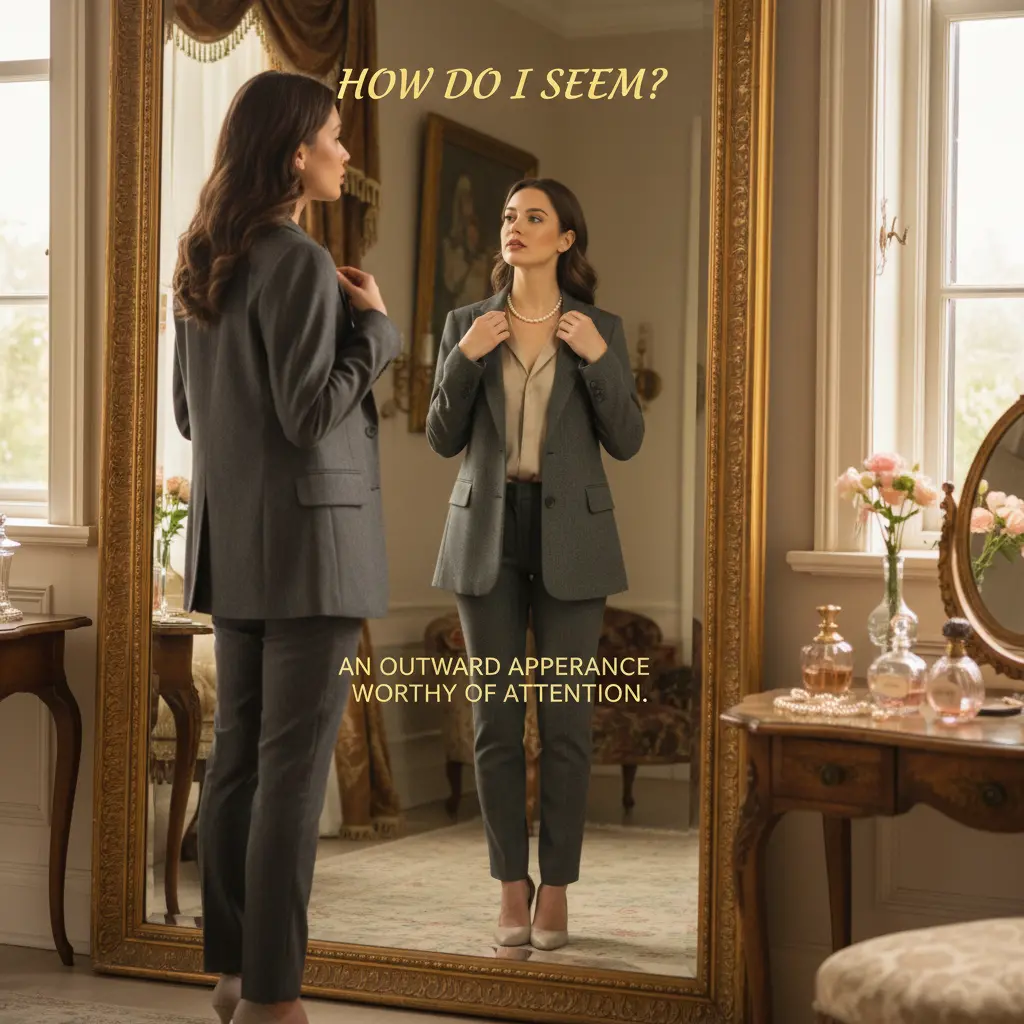
seem = appear + -ingly = a manner of. Origin: Old English ‘seman’ → Middle English ‘seemen’ → English. Imagine a person looking in a mirror and deciding how they seem to others, an outward appearance worthy of attention.
Note 1: These definitions and etymologies are not standard dictionary definitions, but extended explanations provided to help with memorization and understanding of the actual application of words. Through this background information, we strive to make words more vivid and easier to understand, and help you remember their meanings in real life.
Note 2: LexiTalk designs the learning flow around the linguistics principle of “Comprehensible Input.” When learners encounter material that is slightly above their level but still understandable from context, the brain naturally absorbs the language. That’s why we keep every word inside authentic contexts, using examples and associations to help you understand it and use it flexibly.
Read the FAQ explanation of Comprehensible InputI move my eyes from the screen to the corner of the room, then shift my weight toward the window. The light touches the wall and the scene seems softer, like a memory rather than a fact. I adjust my stance, push a little closer or pull back, and the impression keeps changing. That feeling of it seems true in the moment, guiding what I say or do next.
Seem is a verb describing how something appears to the observer, often signaling a subjective impression rather than an objective fact. It fits before adjectives (he seems tired) or before clauses (it seems that...), and its adverbial flavor comes through in forms like seemingly or phrases like as it seems. In everyday speech, using seem hedges what you say and can soften or distance a claim, which is useful when you aren't sure. Overusing it can weaken statements, while omitting it can sound overly confident. Remember that seem concerns perception, not proof, and is commonly paired with probability rather than certainty.
English learners often map seem to a binary judgment (true/false) due to translations that rely on appear or prove. In many languages, perception verbs carry stronger certainty or are used differently with mood, leading to overuse or misplacement. Teach learners to hedge appropriately and to distinguish perceptual stance from factual assertion.
What does the word 'seemed' mean?
Select the sentence that uses 'seemed' correctly.
Which word is most similar to 'seemed'?
What is the opposite of 'seemed'?
Can you think of a real-life context where the word 'seemed' can be applied?
Download LexiTalk app for personalized learning experience
Download AppCookies
We use cookies for essential site functions, analytics, and ads. You can accept, reject, or manage preferences. Privacy Policy