
sexuality - Master This Word
Master this word with our 5-step learning method – Learn English in English
Train English Through Brain Routes, Not Translation.
This page helps you stop memorizing isolated translations and start understanding a word through its shared mental image, native-style thinking, and practical training steps.
Master this word with our 5-step learning method – Learn English in English
Example sentences are the start of understanding. Don't rush to memorize. First feel how the word works in a sentence.
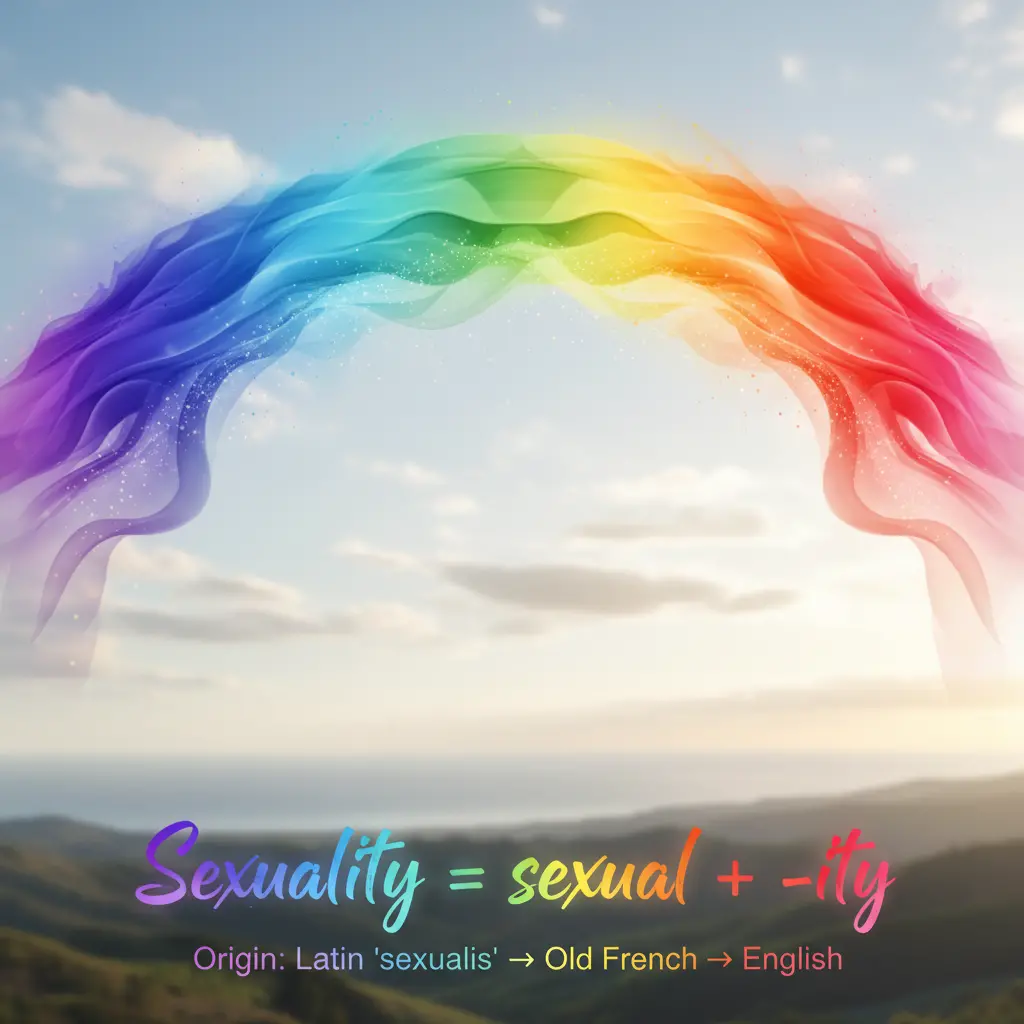
Sexuality = sexual + -ity; Origin: Latin 'sexualis' → Old French → English. Imagine a vibrant rainbow symbolizing different sexual orientations, each color merging into another, representing the diversity of human experiences.
Note 1: These definitions and etymologies are not standard dictionary definitions, but extended explanations provided to help with memorization and understanding of the actual application of words. Through this background information, we strive to make words more vivid and easier to understand, and help you remember their meanings in real life.
Note 2: LexiTalk designs the learning flow around the linguistics principle of “Comprehensible Input.” When learners encounter material that is slightly above their level but still understandable from context, the brain naturally absorbs the language. That’s why we keep every word inside authentic contexts, using examples and associations to help you understand it and use it flexibly.
Read the FAQ explanation of Comprehensible InputI breathe in, and move my attention inward. A small shift runs through me as I sort what I care about and who it touches. I adjust my posture, hold steady, and let the feeling settle. In everyday talk and choices about attraction, relationships, and boundaries, sexuality becomes part of how I act.
Sexuality is a broad, evolving aspect of human experience that describes how people experience and express attraction, desire, and intimacy. In English, sexuality can refer to the general state of being sexual, a person’s sexual orientation (whom they are attracted to), and the capacity for sexual feelings that may change over time. It also encompasses cultural, social, and personal dimensions—how societies frame sexuality, how individuals understand their bodies, and how identities intersect with gender, health, and relationships. Learners should recognize that sexuality is not only about acts but about feelings, identities, and the diversity of human experiences. Understanding this diversity helps in clear communication about education, health, and relationships.
English speakers often separate biological aspects from identity and culture when talking about sexuality, which helps learners see its social dimensions but may miss nuance in contexts where biology and identity are tightly linked.
What is the meaning of the word 'sexuality'?
In which sentence is 'sexuality' used correctly?
Which of the following is a synonym for 'sexuality'?
How does 'sexuality' apply in real-world situations?
How would you explain 'sexuality' to someone who is unfamiliar with the term?
Download LexiTalk app for personalized learning experience
Download AppCookies
We use cookies for essential site functions, analytics, and ads. You can accept, reject, or manage preferences. Privacy Policy