shortage - Master This Word
Master this word with our 5-step learning method – Learn English in English
Train English Through Brain Routes, Not Translation.
This page helps you stop memorizing isolated translations and start understanding a word through its shared mental image, native-style thinking, and practical training steps.
Master this word with our 5-step learning method – Learn English in English
Example sentences are the start of understanding. Don't rush to memorize. First feel how the word works in a sentence.
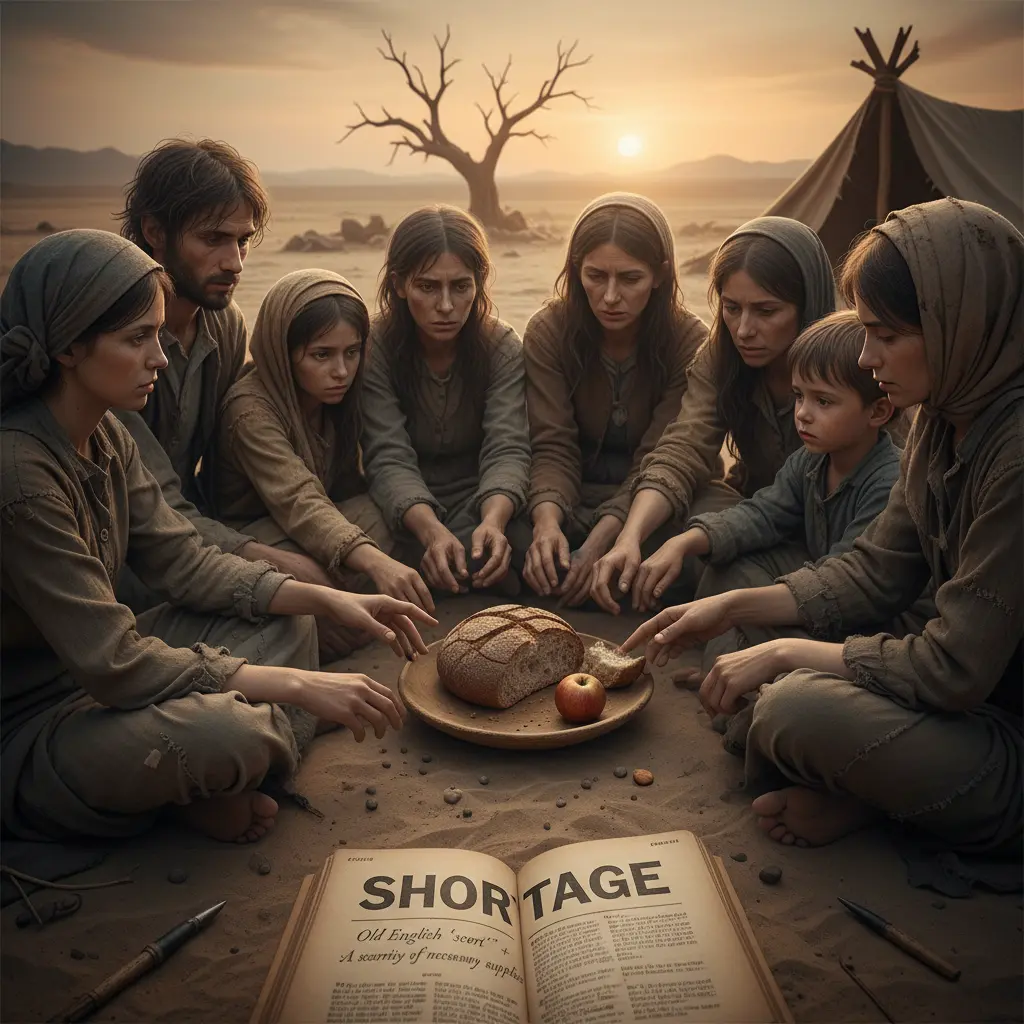
shortage = short + -age. Historical origin: Old English scort + -age. Memory image: Imagine a short supply of food, where people gather around a small plate to share what little there is.
Note 1: These definitions and etymologies are not standard dictionary definitions, but extended explanations provided to help with memorization and understanding of the actual application of words. Through this background information, we strive to make words more vivid and easier to understand, and help you remember their meanings in real life.
Note 2: LexiTalk designs the learning flow around the linguistics principle of “Comprehensible Input.” When learners encounter material that is slightly above their level but still understandable from context, the brain naturally absorbs the language. That’s why we keep every word inside authentic contexts, using examples and associations to help you understand it and use it flexibly.
Read the FAQ explanation of Comprehensible InputI reach for the last loaf and my hand moves, stopping as the shelf looks thin. A quiet shortage sits in the air and my plan shifts as options fall away. I adjust by choosing a different item, pushing the cart toward the next aisle. This small moment makes me keep a mental list and decide fast when supplies run low.
Shortage is a noun used to describe a situation where there is not enough of a resource to meet demand. It can refer to tangible items like food, water, or medication, as well as more abstract supplies such as time or staff. Shortages often occur due to disruptions in production, distribution, or sudden increases in use. In everyday language we talk about a shortage of something and we often compare it to the usual or adequate level. The word implies a temporary or ongoing deficit that prompts people to ration, seek alternatives, or invest in additional supply.
Learners in English often treat shortage as a simple deficit opposite to plenty; it carries nuance of temporariness and remedy-seeking.
What is the meaning of 'shortage'?
Which sentence uses 'shortage' correctly?
What is a synonym for 'shortage'?
What is an antonym for 'shortage'?
In what real-life context would one encounter a shortage?
Download LexiTalk app for personalized learning experience
Download AppCookies
We use cookies for essential site functions, analytics, and ads. You can accept, reject, or manage preferences. Privacy Policy