site - Master This Word
Master this word with our 5-step learning method – Learn English in English
Train English Through Brain Routes, Not Translation.
This page helps you stop memorizing isolated translations and start understanding a word through its shared mental image, native-style thinking, and practical training steps.
Master this word with our 5-step learning method – Learn English in English
Example sentences are the start of understanding. Don't rush to memorize. First feel how the word works in a sentence.
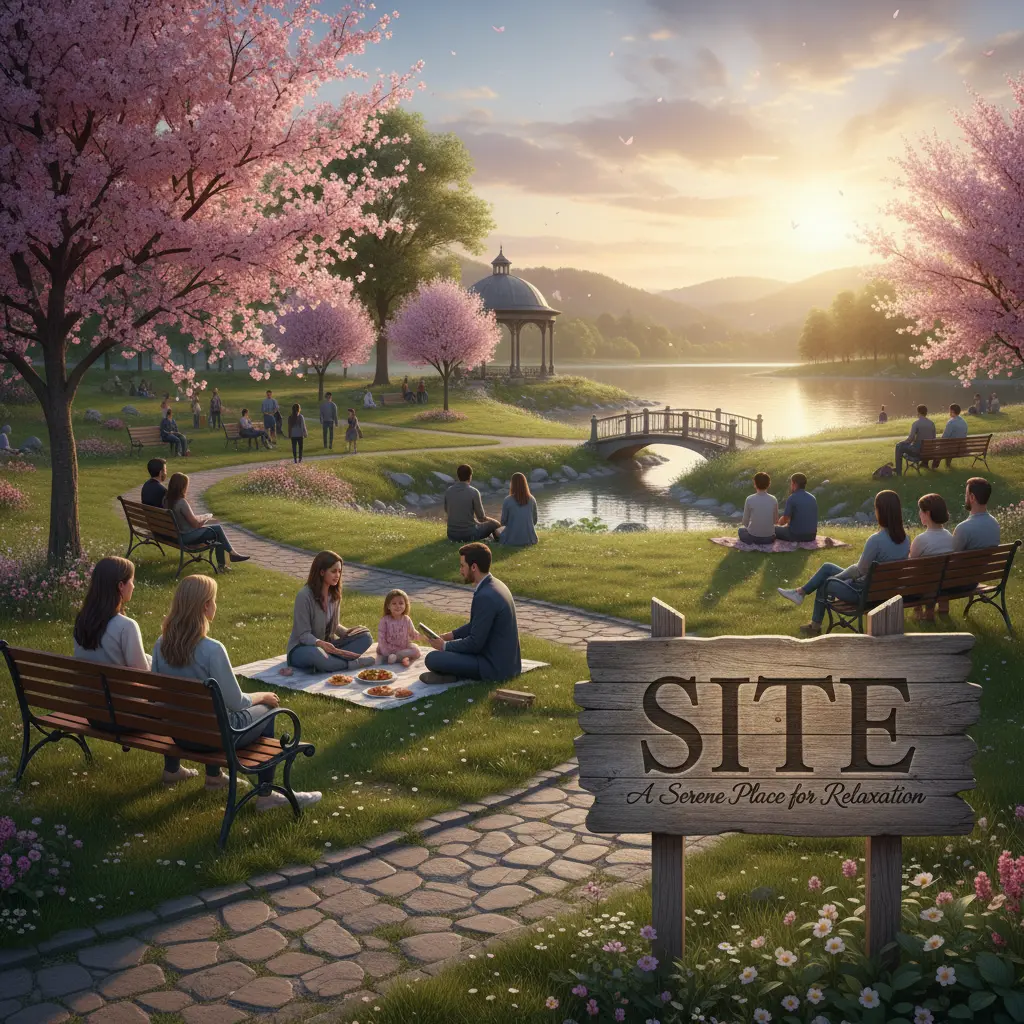
Root decomposition: sit (to be in a position) + -e (suffix forming nouns). Historical origin: Latin 'situs' (situation/place) → Old French 'site' → English 'site'. Memory image: Imagine a beautiful park where people sit peacefully, representing a serene site for relaxation.
Note 1: These definitions and etymologies are not standard dictionary definitions, but extended explanations provided to help with memorization and understanding of the actual application of words. Through this background information, we strive to make words more vivid and easier to understand, and help you remember their meanings in real life.
Note 2: LexiTalk designs the learning flow around the linguistics principle of “Comprehensible Input.” When learners encounter material that is slightly above their level but still understandable from context, the brain naturally absorbs the language. That’s why we keep every word inside authentic contexts, using examples and associations to help you understand it and use it flexibly.
Read the FAQ explanation of Comprehensible InputI reach for a map and move my finger toward a spot. I push a little, then pull back to adjust, watching the cursor settle on the site. Holding steady, I feel the motion slow and the idea of a place grow clear in my mind. The word lands there, like a mark on a map, a place you can visit.
A site is a location or place where something is located or planned to be. It can refer to a physical place, such as a construction site, a campsite, or an archaeological site, but it can also mean the setting for a particular activity, like a study site or a film site. The word emphasizes position in space and context, helping describe where things happen or will happen. In modern English, site appears in many compound terms, such as site plan or site map. Note that 'site' is not the same as 'website'—the latter refers to a location on the internet and is usually called a website. Etymology: from Latin situs (position, place).
English speakers typically treat site as a broad noun for places or settings, with a clear distinction from website; learners may mix up with sight/cite or use site as a verb.
What is the meaning of the word 'site'?
In what context would you use the word 'site'?
Which word is similar to 'site'?
What is the opposite of 'site'?
Can you give an example of a real-life context where you would use the word 'site'?
Download LexiTalk app for personalized learning experience
Download AppCookies
We use cookies for essential site functions, analytics, and ads. You can accept, reject, or manage preferences. Privacy Policy