
skittish - Master This Word
Master this word with our 5-step learning method – Learn English in English
Train English Through Brain Routes, Not Translation.
This page helps you stop memorizing isolated translations and start understanding a word through its shared mental image, native-style thinking, and practical training steps.
Master this word with our 5-step learning method – Learn English in English
Example sentences are the start of understanding. Don't rush to memorize. First feel how the word works in a sentence.
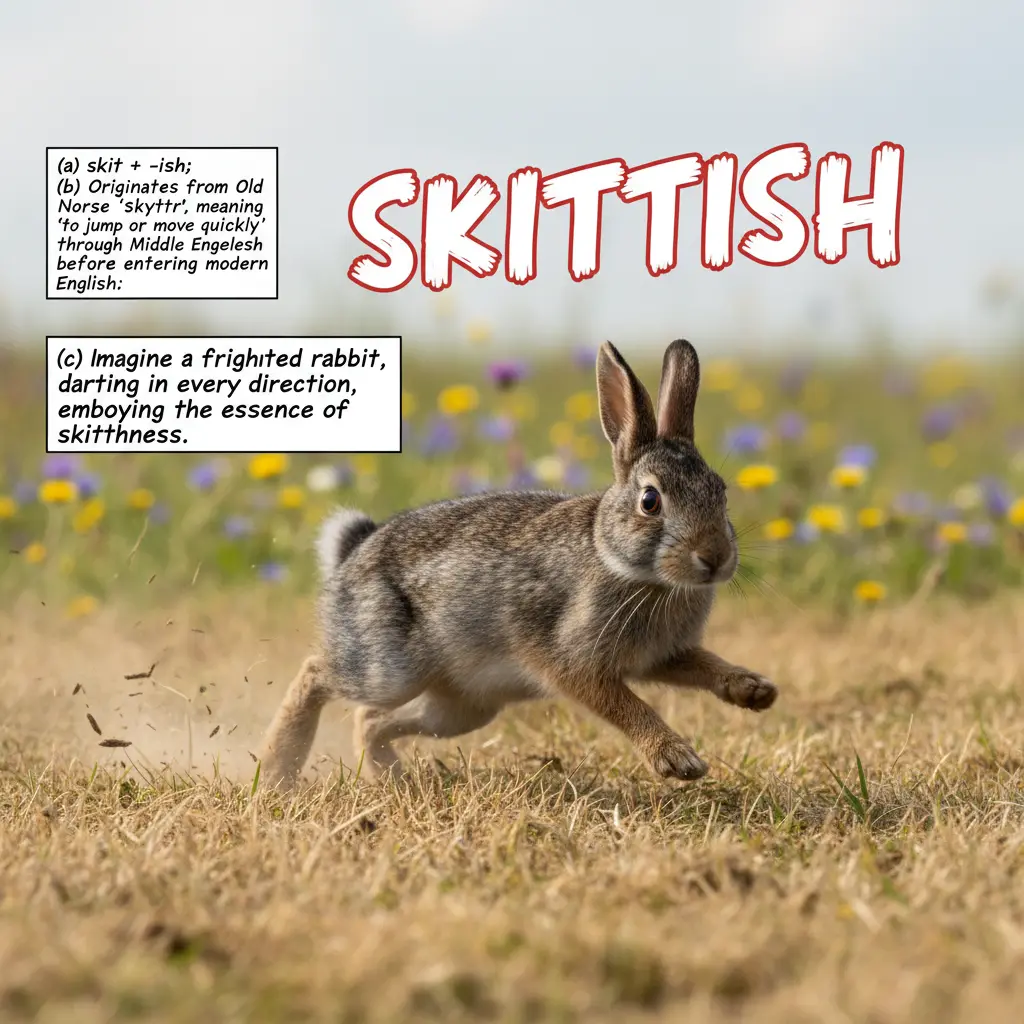
(a) skit + -ish; (b) Originates from Old Norse 'skyttr', meaning ‘to jump or move quickly’, through Middle English before entering modern English.; (c) Imagine a frightened rabbit, darting in every direction, embodying the essence of skittishness.
Note 1: These definitions and etymologies are not standard dictionary definitions, but extended explanations provided to help with memorization and understanding of the actual application of words. Through this background information, we strive to make words more vivid and easier to understand, and help you remember their meanings in real life.
Note 2: LexiTalk designs the learning flow around the linguistics principle of “Comprehensible Input.” When learners encounter material that is slightly above their level but still understandable from context, the brain naturally absorbs the language. That’s why we keep every word inside authentic contexts, using examples and associations to help you understand it and use it flexibly.
Read the FAQ explanation of Comprehensible InputSkittish describes someone or something that reacts quickly to small stimuli because of fear, uncertainty, or high sensitivity. A skittish animal may start at shadows, bolts at noises, or shift away from unfamiliar people. A skittish person may hesitate in new situations, jump at loud sounds, or become jumpy in crowds. The word blends movement with caution, implying nervous energy and an unstable or unpredictable temperament, not laziness or malice. It often carries a visual image: a creature darting about, staying on edge. In everyday use, it signals temperament rather than a fixed trait; context matters for whether the person or animal is simply temporarily worried or genuinely anxious.
In English, skittish often paints a quick, image-rich mood of nervous alertness; learners should avoid equating it with constant fear and instead focus on situational reactivity.
What does the word 'skittish' mean?
Which sentence uses 'skittish' correctly?
Which word is most similar to 'skittish'?
What is the opposite of 'skittish'?
Can you think of a real-life context where someone might feel 'skittish'?
Download LexiTalk app for personalized learning experience
Download AppCookies
We use cookies for essential site functions, analytics, and ads. You can accept, reject, or manage preferences. Privacy Policy