sleeping - Master This Word
Master this word with our 5-step learning method – Learn English in English
Train English Through Brain Routes, Not Translation.
This page helps you stop memorizing isolated translations and start understanding a word through its shared mental image, native-style thinking, and practical training steps.
Master this word with our 5-step learning method – Learn English in English
Example sentences are the start of understanding. Don't rush to memorize. First feel how the word works in a sentence.
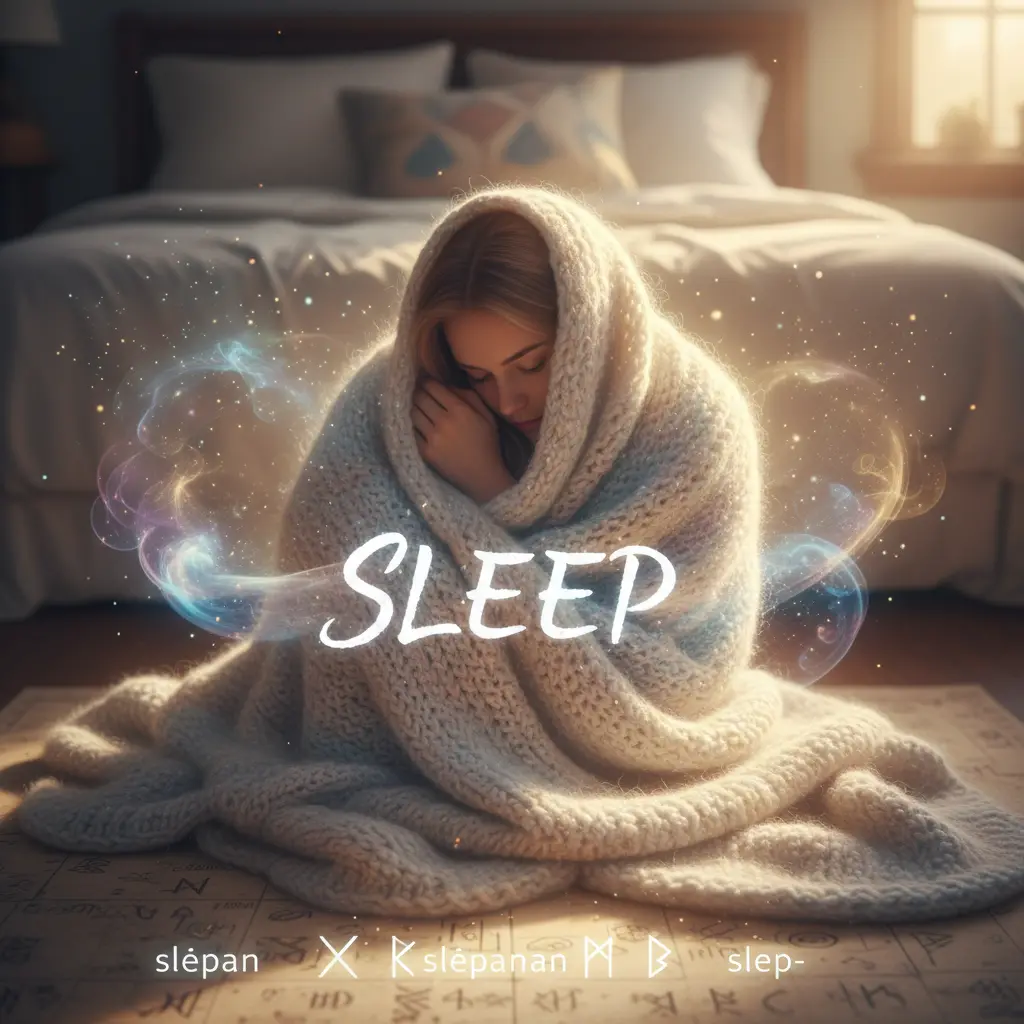
The word 'sleep' comes from Old English 'slæpan', which has roots in Proto-Germanic *slēpanan and Proto-Indo-European *slep-. Imagine a cozy blanket wrapping around you as you gently drift into dreamland, representing the essence of sleep.
Note 1: These definitions and etymologies are not standard dictionary definitions, but extended explanations provided to help with memorization and understanding of the actual application of words. Through this background information, we strive to make words more vivid and easier to understand, and help you remember their meanings in real life.
Note 2: LexiTalk designs the learning flow around the linguistics principle of “Comprehensible Input.” When learners encounter material that is slightly above their level but still understandable from context, the brain naturally absorbs the language. That’s why we keep every word inside authentic contexts, using examples and associations to help you understand it and use it flexibly.
Read the FAQ explanation of Comprehensible InputI settle into a chair, adjust my posture, and close my eyes. The room grows quiet as I let my breath slow and drift, a slow move from busy thoughts to a softer space. I hold still for a moment, then ease, turn away from sounds, and feel sleep pull me toward a lighter, less awake place. In that soft drift, the mind rests, the body loosens, and I ride the turning wave into sleep.
Sleep is a natural, recurring state of rest for the mind and body during which consciousness is suspended and the senses are less responsive. As a verb, sleep describes the act of entering this state, either at night or during a nap. As a noun, sleep refers to the period of rest itself. In English, sleep also features common phrases like sleep well, sleep on it, or lose sleep over something, which carry nuanced meanings about health, decision making, and worry. The etymology traces to Old English slæpan, rooted in Proto-Germanic and Proto-Indo-European words for weakness or cessation.
English tends to separate 'to sleep' (the act) from 'sleep' (the state) via clear verb-noun use; learners often mix up 'sleep' and 'nap' and confuse 'sleep through' vs 'sleep in'.
Download LexiTalk app for personalized learning experience
Download AppCookies
We use cookies for essential site functions, analytics, and ads. You can accept, reject, or manage preferences. Privacy Policy