smoke - Master This Word
Master this word with our 5-step learning method – Learn English in English
Train English Through Brain Routes, Not Translation.
This page helps you stop memorizing isolated translations and start understanding a word through its shared mental image, native-style thinking, and practical training steps.
Master this word with our 5-step learning method – Learn English in English
Example sentences are the start of understanding. Don't rush to memorize. First feel how the word works in a sentence.
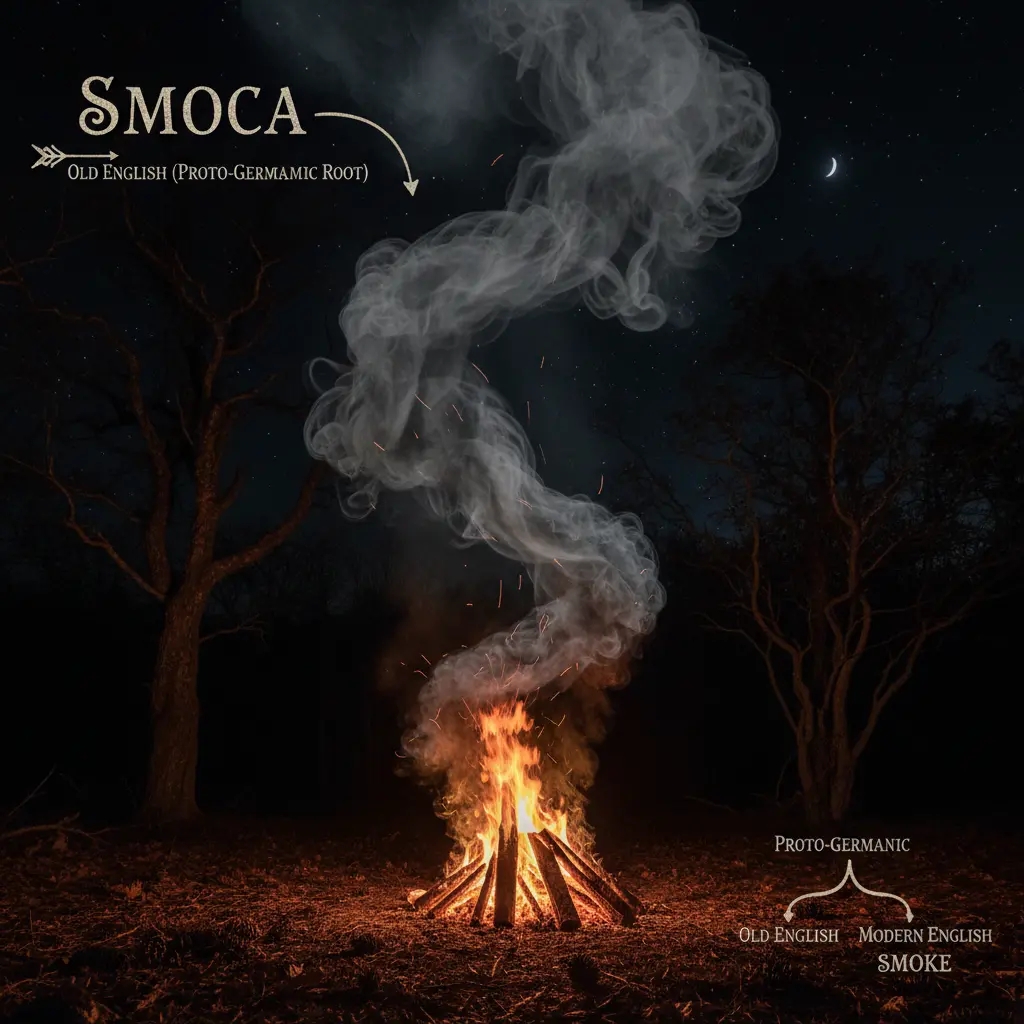
Root: smoke = smocca in Old English (from Proto-Germanic) Historical Origin: Proto-Germanic → Old English → Modern English Memory Image: Imagine a campfire producing swirling gray smoke, enveloping and rising into the night sky.
Note 1: These definitions and etymologies are not standard dictionary definitions, but extended explanations provided to help with memorization and understanding of the actual application of words. Through this background information, we strive to make words more vivid and easier to understand, and help you remember their meanings in real life.
Note 2: LexiTalk designs the learning flow around the linguistics principle of “Comprehensible Input.” When learners encounter material that is slightly above their level but still understandable from context, the brain naturally absorbs the language. That’s why we keep every word inside authentic contexts, using examples and associations to help you understand it and use it flexibly.
Read the FAQ explanation of Comprehensible InputI strike a match, hold the flame near the wick, and watch the smoke rise in a pale column. I step back a little, adjust my posture to keep the draft from blowing it sideways. The smoke curls and shifts with the air as I move around the room. I let the moment settle, keep my eyes on the gray thread and feel the space around me quiet a little.
Smoke is the visible gaseous product of burning material. As a noun it refers to the cloud of tiny particles and gases that rises from a fire, or to smoke in everyday settings such as kitchen smoke or cigarette smoke. As a verb, to smoke means to inhale and exhale the smoke from tobacco, or more broadly to emit smoke or vapor from a fire, engine, or appliance. The word appears in common phrases like 'smoke rises from the chimney' and 'quit smoking'. The etymology traces from Proto-Germanic through Old English to Modern English, with a memorable image of a campfire producing swirling gray smoke rising into the night. Mastering both senses helps in safety, health, and lifestyle contexts.
Explain to an English speaker: English strongly uses smoke as both a tangible cloud and a verb; learners must not flip the meanings, and should note common collocations.
What is the meaning of the word 'smoke'?
In which of the following sentences is 'smoke' used correctly?
Which word is similar to 'smoke'?
Which word is the opposite of 'smoke'?
In what real-life context would you most likely encounter 'smoke'?
Download LexiTalk app for personalized learning experience
Download AppCookies
We use cookies for essential site functions, analytics, and ads. You can accept, reject, or manage preferences. Privacy Policy