LexiTalk LexiTalk

Train English Through Brain Routes, Not Translation.

This page helps you stop memorizing isolated translations and start understanding a word through its shared mental image, native-style thinking, and practical training steps.

🎙️ Daily Listening📚 Example Sentences & Scenarios🧠 Vocabulary Learning

snacks - Master This Word

Master this word with our 5-step learning method – Learn English in English
snacks Word Meanings

  • a small amount of food eaten between meals
  • a quick bite or refreshment
  • to eat a small portion of food
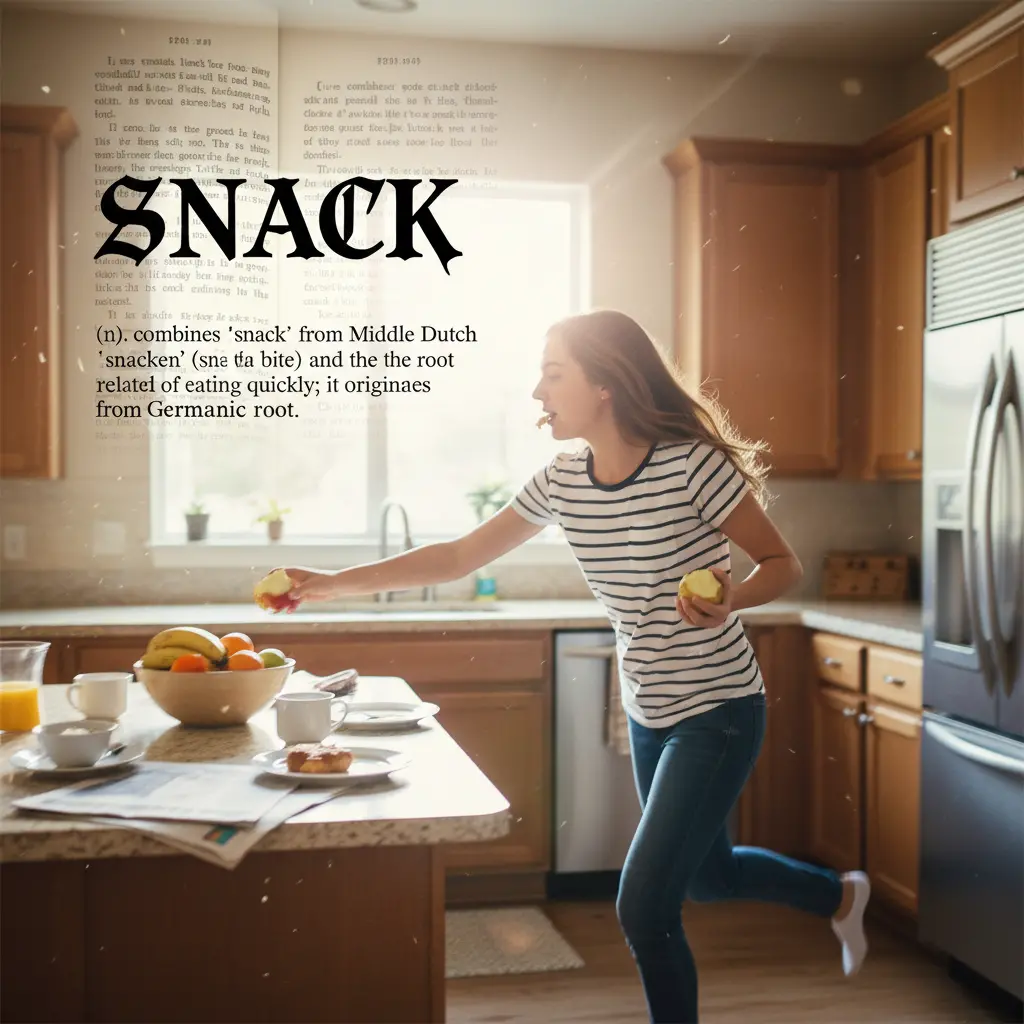
Illustration for this word

snacks Example Sentences

Example sentences are the start of understanding. Don't rush to memorize. First feel how the word works in a sentence.

snacks Phonetic & Pronunciation

Pronunciation
UK /snæk/
US /snæk/
Syllables
snack

snacks Word Etymology

snack (n.) combines 'snack' from Middle Dutch 'snacken' (to bite) and the root related to eating quickly; it originates from a Germanic root. Imagine someone quickly grabbing a bite of food as they rush in the kitchen.

Note 1: These definitions and etymologies are not standard dictionary definitions, but extended explanations provided to help with memorization and understanding of the actual application of words. Through this background information, we strive to make words more vivid and easier to understand, and help you remember their meanings in real life.

Note 2: LexiTalk designs the learning flow around the linguistics principle of “Comprehensible Input.” When learners encounter material that is slightly above their level but still understandable from context, the brain naturally absorbs the language. That’s why we keep every word inside authentic contexts, using examples and associations to help you understand it and use it flexibly.

Read the FAQ explanation of Comprehensible Input

Real Context

Snack is a versatile English word with two core uses. As a noun, it denotes a small amount of food eaten between meals, often chosen for quick energy or flavor. Snacks can be sweet or savory, homemade or store-bought, and they come in many forms from fruit to chips. As a verb, to snack means to eat a small portion of food, usually without the intention of a full meal; you can say you snack on fruit, nuts, or crackers. In everyday speech you’ll find phrases like 'afternoon snack', 'snack break', and 'snack time', signaling a casual, relaxed eating moment.

Usage Reminders

  • Use snack for a small bite between meals
  • Say 'snack on' when you mean to eat something casually
  • Pair with adjectives like 'healthy' or 'junk' to show quality or type
  • Avoid treating snacks as meals or making them too formal
  • Recognize common collocations: 'afternoon snack', 'late-night snack'

Common Misconceptions

  • Snacks are always unhealthy or junk food
  • Snacks replace meals
  • A snack is only something sweet
  • All snacks are processed or packaged
  • Snack is not appropriate in formal writing

Thinking Differences

Explain snack as a casual, flexible term tied to a moment between meals and a small bite; emphasize 'snack on' as a common collocation.

Learning Tips

  • Learn at least 6 common collocations with snack (healthy, junk, time, break, on)
  • Practice distinguishing noun vs verb usage in sentences
  • Listen to native speech to hear natural timing (between meals)
  • Use 'snack on' with foods you actually eat as snacks
  • Record yourself using 'snack' in different contexts
  • Read recipes or menus to see snack examples in context

5-Step Learning Method - Learn English in English

Step 1: Meaning

What is the meaning of the word 'snacks'?

A.Heavy dinners served for special occasions
B.Light meals eaten between main meals
C.Main courses usually found in restaurants
D.Desserts served at the end of meals
Step 2: Usage

Select the sentence that uses the word 'snacks' correctly.

A.I enjoy snacks when I go to bed.
B.He brought snacks to the party.
C.We use snacks to build a house.
D.Snacks are typically eaten in the morning.
Step 3: Similar Words

Which word is most similar to 'snacks'?

A.Meals
B.Desserts
C.Appetizers
D.Drinks
Step 4: Opposite Words

What is the opposite of 'snacks'?

A.Fasts
B.Meals
C.Hunger
D.Appetite
Step 5: Mastery

Can you think of a real-life context that involves 'snacks'?

A.He prepared a five-course dinner for his guests.
B.Children often bring small items to school for lunch.
C.During the movie, everyone enjoyed light food during the intermission.
D.They chose a restaurant for their anniversary dinner.

Related Listening

🌱 Lite (Beginner)

🌱 Lite
Shopping for Shirt and Snacks

Shopping in Store

2026.05.03 · 0:34 · A1 · Dialogue
Listen Now
🌱 Lite
Bus Ride Conversation

Public Transport

2026.03.29 · 0:31 · A1 · Dialogue
Listen Now
🌱 Lite
Morning Hello and Plans

Daily Greetings

2026.03.14 · 0:30 · A1 · Dialogue
Listen Now

🔥 Advanced

🔥 Advanced
Volunteer Prep for Community Outreach

Volunteering

2026.01.18 · 1:11 · B1 · IELTS · Dialogue
Listen Now
🔥 Advanced
Returning Apples Bought at a School Annual Event

Shopping & Refunds

2025.12.09 · 1:14 · A2 · IELTS · Dialogue
Listen Now
🔥 Advanced
Parent-Teacher Chat About a Child's Transition

Parenting & Education

2025.11.01 · 1:05 · B2 · IELTS · Dialogue
Listen Now

Want to practice more words?

Download LexiTalk app for personalized learning experience

Download App

Cookies

We use cookies for essential site functions, analytics, and ads. You can accept, reject, or manage preferences. Privacy Policy
Support