spark - Master This Word
Master this word with our 5-step learning method – Learn English in English
Train English Through Brain Routes, Not Translation.
This page helps you stop memorizing isolated translations and start understanding a word through its shared mental image, native-style thinking, and practical training steps.
Master this word with our 5-step learning method – Learn English in English
Example sentences are the start of understanding. Don't rush to memorize. First feel how the word works in a sentence.
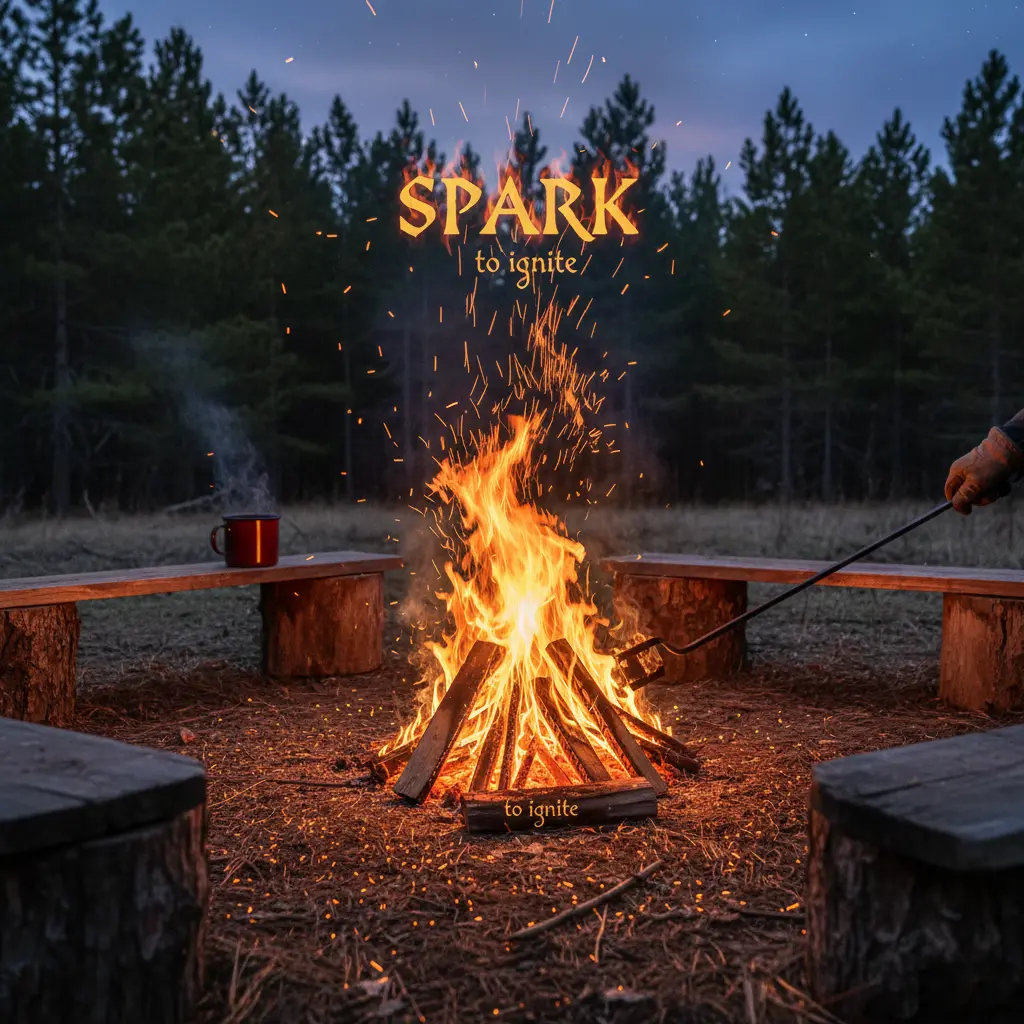
spark = 'to ignite' (related to 'spark') from Old English 'spearca', connected to imagery of igniting kindling, reminiscent of a warm campfire where sparks fly.
Note 1: These definitions and etymologies are not standard dictionary definitions, but extended explanations provided to help with memorization and understanding of the actual application of words. Through this background information, we strive to make words more vivid and easier to understand, and help you remember their meanings in real life.
Note 2: LexiTalk designs the learning flow around the linguistics principle of “Comprehensible Input.” When learners encounter material that is slightly above their level but still understandable from context, the brain naturally absorbs the language. That’s why we keep every word inside authentic contexts, using examples and associations to help you understand it and use it flexibly.
Read the FAQ explanation of Comprehensible InputI flick the lighter, move my thumb until a tiny spark pops free. I hold my breath, adjust my grip, and let the glow rise a notch. The spark catches and the flame changes the room from dim to bright, a quick shift in mood. I set the flame where I need it and keep control as I use the light to focus my work.
Spark is a versatile English word with both literal and figurative meanings. As a noun it denotes a tiny fiery particle created by friction or a flame, something you might see at a campfire or when striking a match. As a verb, to spark means to ignite or stimulate: you can spark a flame, spark an idea, spark interest or a conversation. There is also a sense of brightness or a brief flash, a spark of light or brilliance that makes something stand out. Common phrases include spark a curiosity, spark a movement, or spark plug in engines. Its etymology ties to ignition and the image of kindling, with sparks dancing in warm air.
Learners often extend spark to abstract ideas only after seeing a small physical spark. English uses spark both for ignition and for moments of inspiration, which can be tricky when your language uses a single word for both but with fewer metaphorical uses. Pay attention to collocations like spark curiosity or spark a debate, which signal active engagement, not just light.
What does the word 'spark' mean?
In which sentence is the word 'spark' used correctly?
Which word is most similar to 'spark'?
What is the opposite of 'spark'?
How would you use the word 'spark' in a real-life situation?
Download LexiTalk app for personalized learning experience
Download AppCookies
We use cookies for essential site functions, analytics, and ads. You can accept, reject, or manage preferences. Privacy Policy