
specification - Master This Word
Master this word with our 5-step learning method – Learn English in English
Train English Through Brain Routes, Not Translation.
This page helps you stop memorizing isolated translations and start understanding a word through its shared mental image, native-style thinking, and practical training steps.
Master this word with our 5-step learning method – Learn English in English
Example sentences are the start of understanding. Don't rush to memorize. First feel how the word works in a sentence.
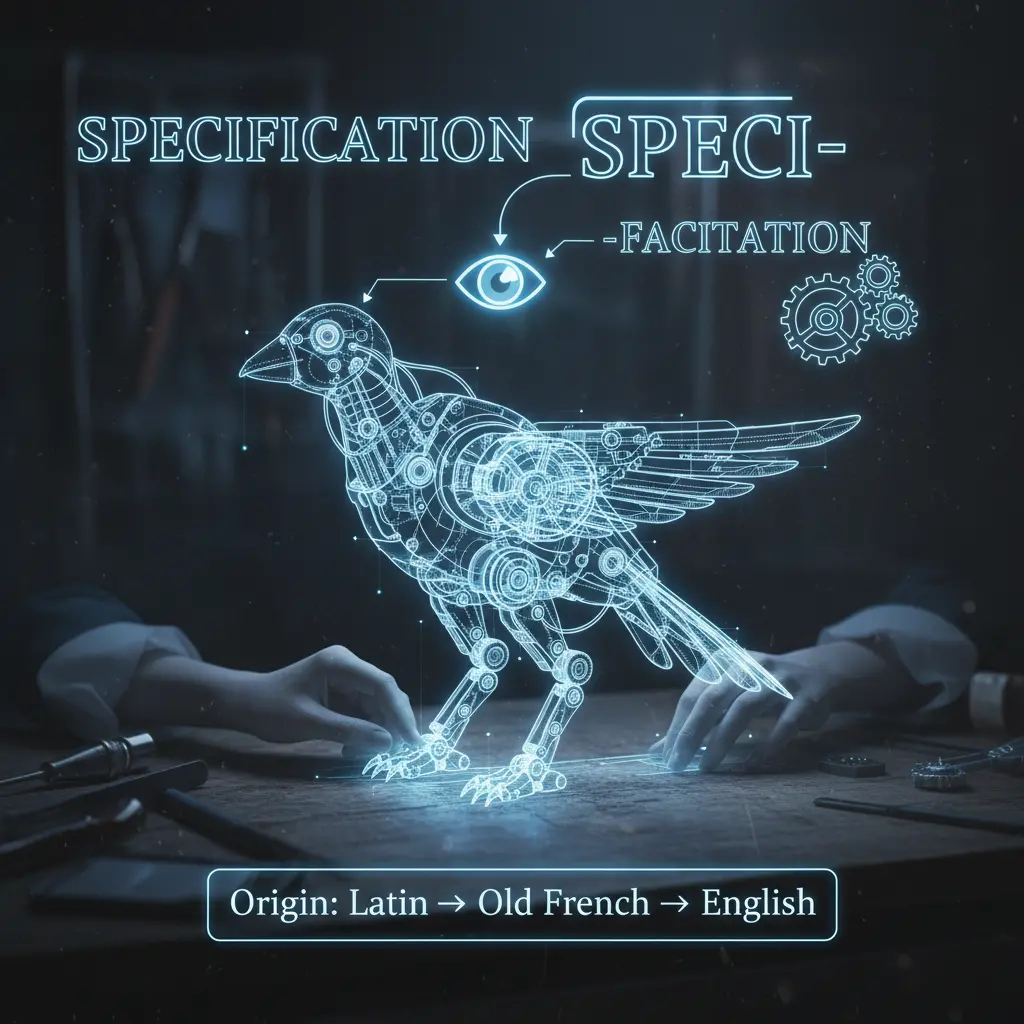
specification = speci- (from Latin 'specere', meaning 'to look or see') + -fication (action or process). Origin: Latin → Old French → English. Imagine a detailed blueprint with outlines you look at to follow while building something intricately.
Note 1: These definitions and etymologies are not standard dictionary definitions, but extended explanations provided to help with memorization and understanding of the actual application of words. Through this background information, we strive to make words more vivid and easier to understand, and help you remember their meanings in real life.
Note 2: LexiTalk designs the learning flow around the linguistics principle of “Comprehensible Input.” When learners encounter material that is slightly above their level but still understandable from context, the brain naturally absorbs the language. That’s why we keep every word inside authentic contexts, using examples and associations to help you understand it and use it flexibly.
Read the FAQ explanation of Comprehensible InputI lean over the desk, move a stack of notes, and push the draft forward until it sits in front of me. I hold steady, adjust the margins, and shift from big ideas to exact asks. The page seems to change as I turn pages, letting the details settle like a plan you can actually follow. In the end I set down a clear, practical outline—a guide you can rely on when you build, test, or use something.
Specification is a formal, detailed description of the requirements, features, and constraints for a project, product, or system. It serves as a guide for designers, developers, and testers, outlining what must be built, how it should perform, and under what conditions. A specification can be a written document with sections for scope, functions, interfaces, quality criteria, and acceptance tests. In practice, teams use specifications to reduce ambiguity, set measurable goals, and align stakeholders. Different types exist, such as functional specifications describing behavior, technical specifications detailing architecture, and product specifications listing features and use cases. Precision matters; vague specs lead to misinterpretation, scope creep, and rework.
In English, specification conveys formal, contract-like precision; learners often conflate it with design or user manuals and may skip sections like acceptance criteria.
What is the meaning of the word 'specification'?
In which sentence is 'specification' used correctly?
Which word is most similar to 'specification'?
What is the opposite meaning of 'specification'?
How is the concept of 'specification' important in software development?
Download LexiTalk app for personalized learning experience
Download AppCookies
We use cookies for essential site functions, analytics, and ads. You can accept, reject, or manage preferences. Privacy Policy