
stimulus - Master This Word
Master this word with our 5-step learning method – Learn English in English
Train English Through Brain Routes, Not Translation.
This page helps you stop memorizing isolated translations and start understanding a word through its shared mental image, native-style thinking, and practical training steps.
Master this word with our 5-step learning method – Learn English in English
Example sentences are the start of understanding. Don't rush to memorize. First feel how the word works in a sentence.
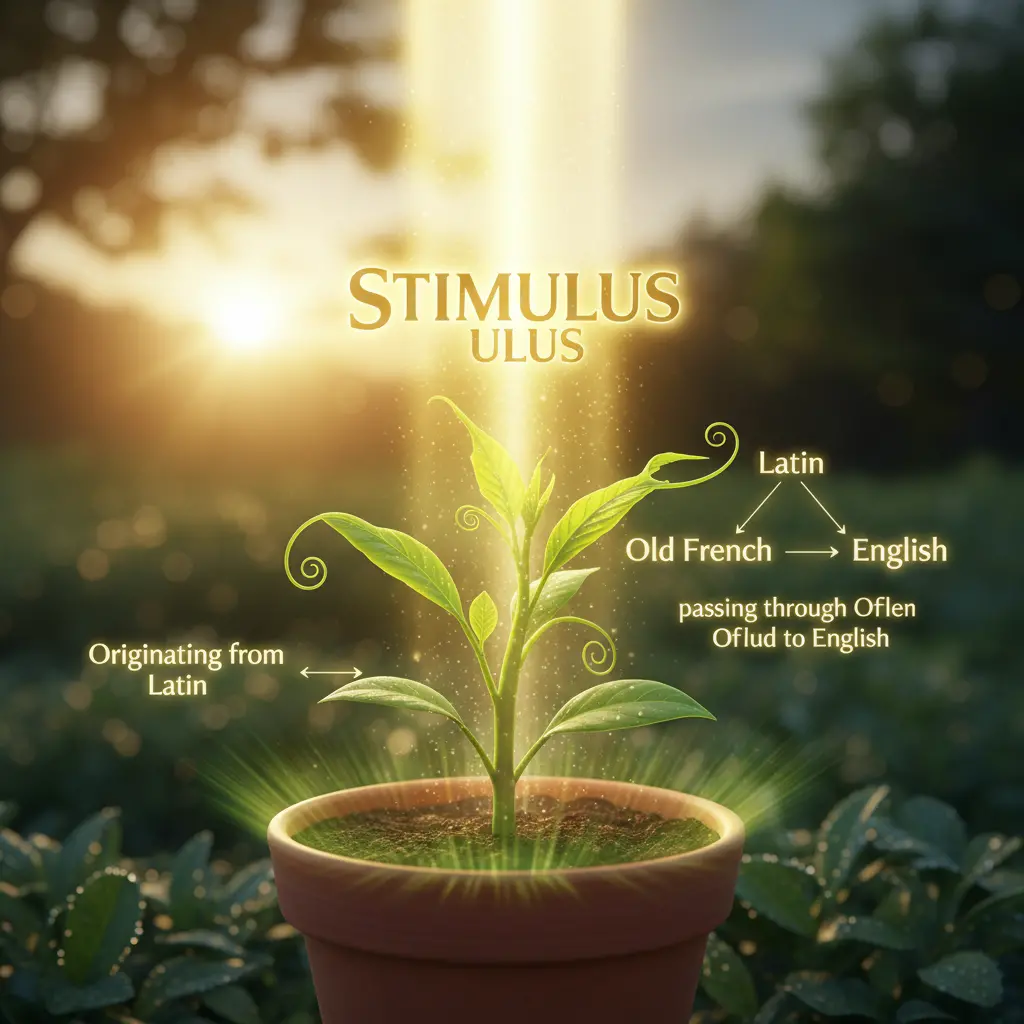
stimulus = stim (to incite) + ulus (suffix forming nouns). Originating from Latin, passing through Old French to English. Visualize a bright light shining on a plant, causing it to grow and respond energetically, symbolizing how stimuli provoke reactions.
Note 1: These definitions and etymologies are not standard dictionary definitions, but extended explanations provided to help with memorization and understanding of the actual application of words. Through this background information, we strive to make words more vivid and easier to understand, and help you remember their meanings in real life.
Note 2: LexiTalk designs the learning flow around the linguistics principle of “Comprehensible Input.” When learners encounter material that is slightly above their level but still understandable from context, the brain naturally absorbs the language. That’s why we keep every word inside authentic contexts, using examples and associations to help you understand it and use it flexibly.
Read the FAQ explanation of Comprehensible InputI set my hand on the door and push it open a crack, feeling the wood give. With that small move, the room's light shifts and a sound outside pulls my attention. I steady my breath, adjust my stance, and turn my body toward the sound, keeping my pace calm. That push, the shift of air, and the attention it draws become a simple cue—something that makes me react.
Stimulus is a versatile noun describing something that triggers a reaction. In psychology, a stimulus is any event that evokes a response from a person or animal. In everyday use, you might call a new idea, a loud noise, or a striking image a stimulus that catches your attention. In economics, a stimulus refers to measures intended to spark growth, such as government spending or tax cuts. The word comes from Latin roots, passing through Old French to English. Picture a bright light shining on a plant, prompting it to bend toward the source—an image that captures how stimuli provoke movement and change.
In English, stimulus is a neutral academic term used across psychology, economics, and everyday talk. Learners often mix up stimulus with motivation or inspiration and forget the plural stimuli, or assume it always implies positive effects.
What is the meaning of the word 'stimulus'?
Which sentence uses the word 'stimulus' correctly?
Which word is most similar to 'stimulus'?
What is the opposite of 'stimulus'?
Can you give an example of a real-life scenario involving motivation?
Download LexiTalk app for personalized learning experience
Download AppCookies
We use cookies for essential site functions, analytics, and ads. You can accept, reject, or manage preferences. Privacy Policy