storage - Master This Word
Master this word with our 5-step learning method – Learn English in English
Train English Through Brain Routes, Not Translation.
This page helps you stop memorizing isolated translations and start understanding a word through its shared mental image, native-style thinking, and practical training steps.
Master this word with our 5-step learning method – Learn English in English
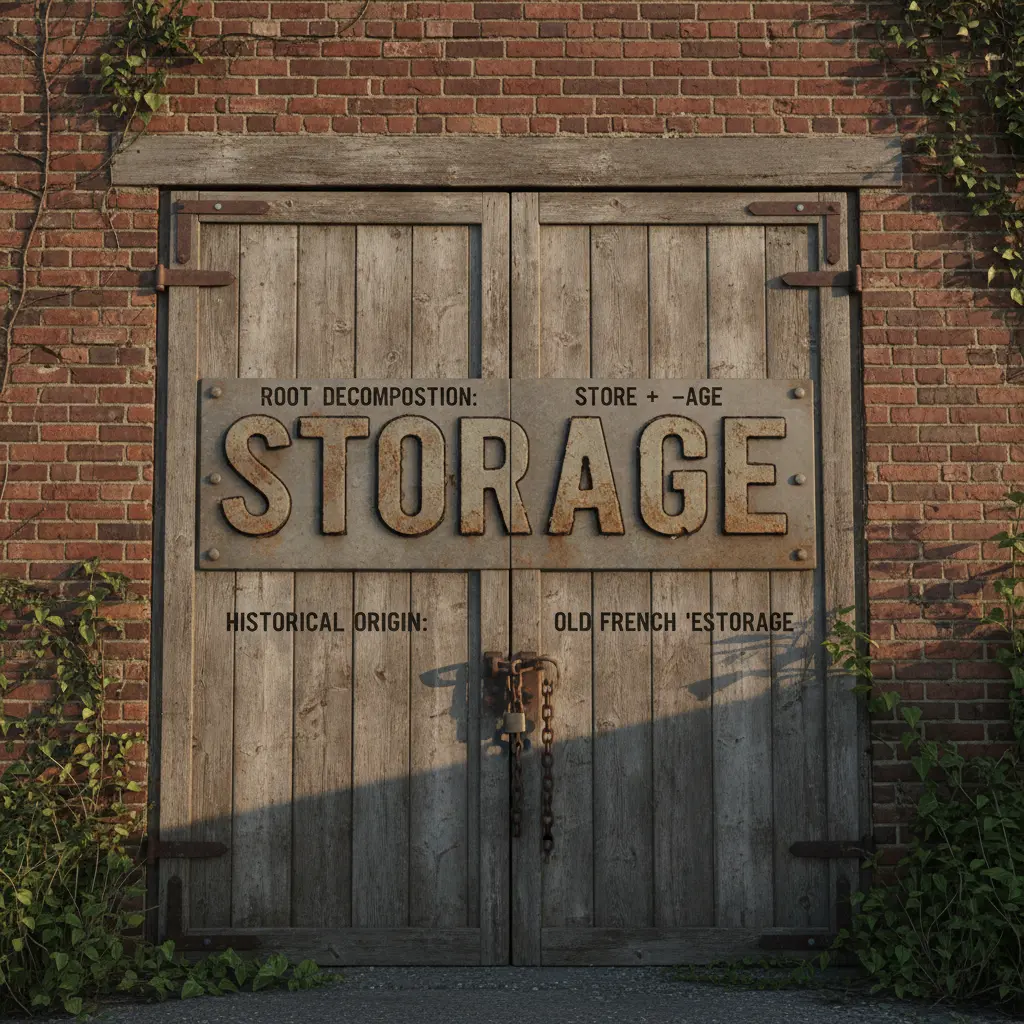
Example sentences are the start of understanding. Don't rush to memorize. First feel how the word works in a sentence.
Root decomposition: store + -age; Historical origin: from Old French estorage via Middle English, ultimately from store; Memory image: picture a warehouse door stamped with storage.
Note 1: These definitions and etymologies are not standard dictionary definitions, but extended explanations provided to help with memorization and understanding of the actual application of words. Through this background information, we strive to make words more vivid and easier to understand, and help you remember their meanings in real life.
Note 2: LexiTalk designs the learning flow around the linguistics principle of “Comprehensible Input.” When learners encounter material that is slightly above their level but still understandable from context, the brain naturally absorbs the language. That’s why we keep every word inside authentic contexts, using examples and associations to help you understand it and use it flexibly.
Read the FAQ explanation of Comprehensible InputI open the closet and move a stack of boxes to clear a path. I shift items around, change their places, and push and pull until the space feels right. The effort tightens my breath as I decide what to keep and what to let go, how to place things so they don’t topple. In that moment the idea of storage starts to feel real, a place you can reach when you need it.
Storage refers to the act or process of keeping something for future use, and to the place where such items are kept, whether a warehouse, a closet, a storage room, or cloud space. It covers physical containment as well as data preservation in computers and servers. In everyday life you think about storage capacity on devices, the best storage solutions for a home, and how businesses manage inventory storage and logistics. In technology discussions storage often means memory, disks, or cloud storage with performance considerations and data safety. Knowing how storage differs from storing as a verb, and from words like conserve or retain, helps choose the right collocations and examples.
For English speakers, storage is a broad noun that covers both a place (storage room) and a capacity (storage space). Learners often try to use storage where a verb or a more specific term is needed, and confuse IT data storage with memory. Collocations like cloud storage, storage capacity, and storage room tend to appear in tech or organizational contexts, so practice with both everyday and technical sentences.
What is the meaning of the word 'storage'?
Which sentence below uses the word 'storage' correctly?
Which word is most similar to 'storage'?
What is the opposite of 'storage'?
Can you think of a real-life context for the word 'storage'?
Download LexiTalk app for personalized learning experience
Download AppCookies
We use cookies for essential site functions, analytics, and ads. You can accept, reject, or manage preferences. Privacy Policy