
supernovae - Master This Word
Master this word with our 5-step learning method – Learn English in English
Train English Through Brain Routes, Not Translation.
This page helps you stop memorizing isolated translations and start understanding a word through its shared mental image, native-style thinking, and practical training steps.
Master this word with our 5-step learning method – Learn English in English
Example sentences are the start of understanding. Don't rush to memorize. First feel how the word works in a sentence.
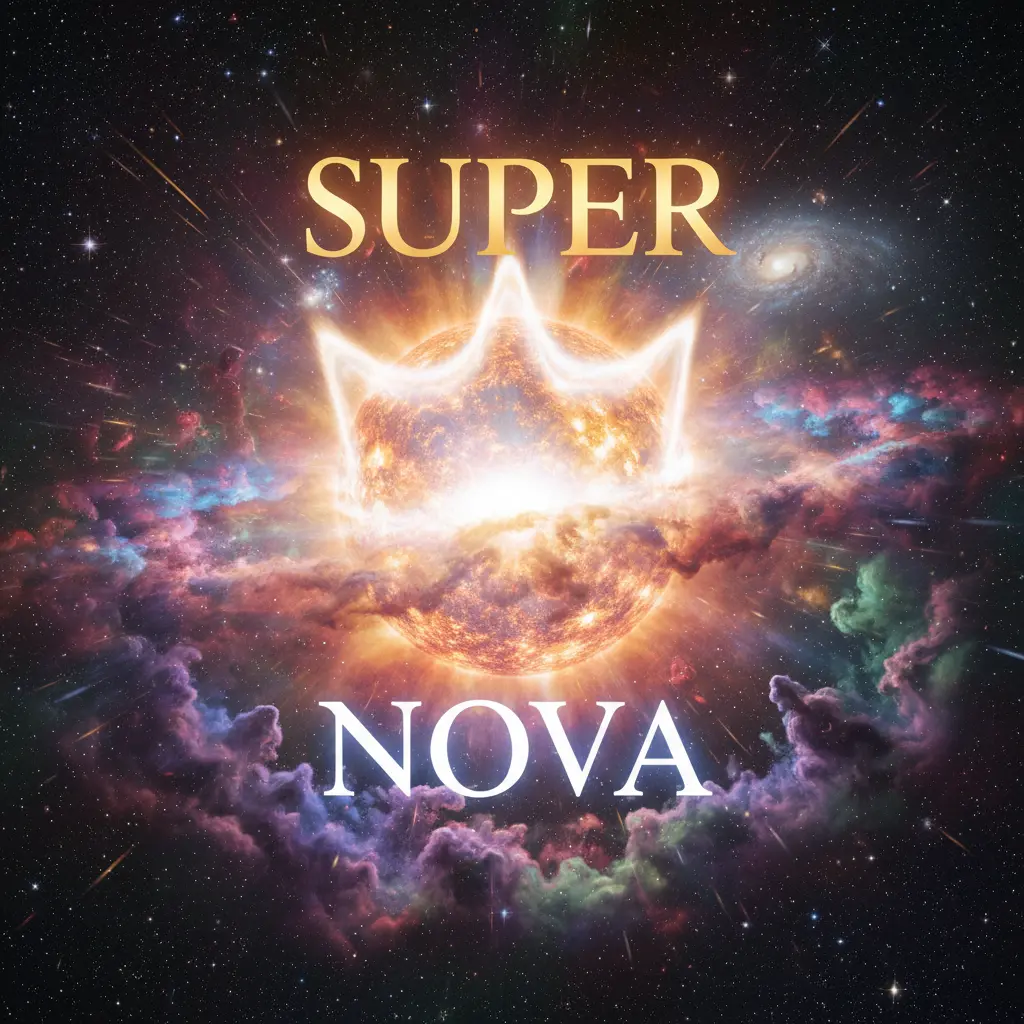
super- = above + nova = new. Originated from Latin, passed through Latin to Old French and then English. Picture a star exploding brilliantly, shining brightly 'above' as it is reborn in a more stunning form.
Note 1: These definitions and etymologies are not standard dictionary definitions, but extended explanations provided to help with memorization and understanding of the actual application of words. Through this background information, we strive to make words more vivid and easier to understand, and help you remember their meanings in real life.
Note 2: LexiTalk designs the learning flow around the linguistics principle of “Comprehensible Input.” When learners encounter material that is slightly above their level but still understandable from context, the brain naturally absorbs the language. That’s why we keep every word inside authentic contexts, using examples and associations to help you understand it and use it flexibly.
Read the FAQ explanation of Comprehensible InputSupernova is a powerful star explosion that briefly outshines an entire galaxy. The term covers two main processes: a massive star collapsing under its own gravity and rebounding in a brilliant flash, or a white dwarf exploding after accreting matter from a companion star. Either way, the event marks a dramatic end to stellar life and disperses material into space. For learners, imagine a star's light suddenly becoming overwhelming for a short time, followed by a fading glow as the debris radiates energy across the universe. The word evokes awe and scientific wonder.
English speakers often parse 'supernova' as a simple intensification (super + nova) without anchoring the meaning to an astronomical event. Learners may misread it as just a brighter star or confuse it with the more common sense of 'nova' as a repeating brightening. Emphasize the scientific context and typical classifications (Type Ia/II) to avoid generic usage errors.
Download LexiTalk app for personalized learning experience
Download AppCookies
We use cookies for essential site functions, analytics, and ads. You can accept, reject, or manage preferences. Privacy Policy