sweep - Master This Word
Master this word with our 5-step learning method – Learn English in English
Train English Through Brain Routes, Not Translation.
This page helps you stop memorizing isolated translations and start understanding a word through its shared mental image, native-style thinking, and practical training steps.
Master this word with our 5-step learning method – Learn English in English
Example sentences are the start of understanding. Don't rush to memorize. First feel how the word works in a sentence.
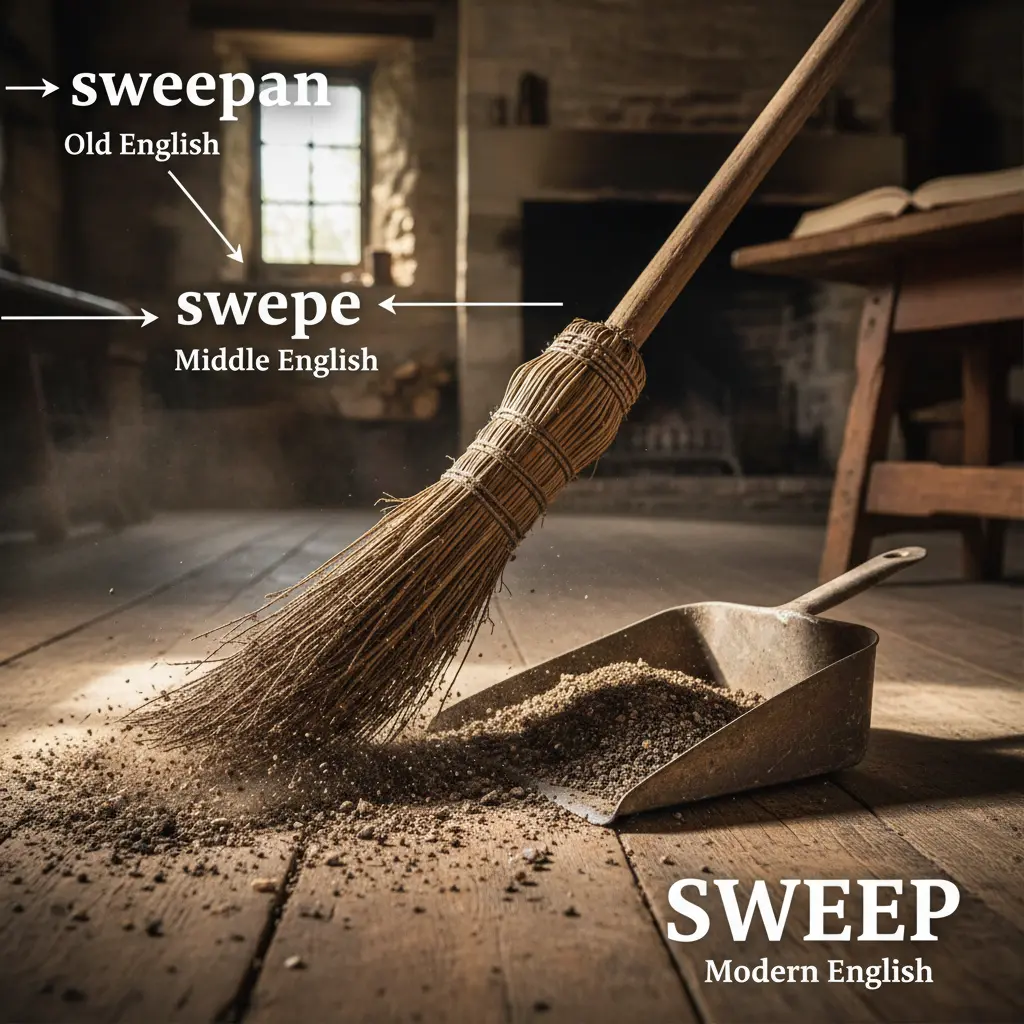
From Old English 'sweepan' (to sweep) + root 'sweep' (to move/clear). Historical origin: Old English → Middle English → Modern English. Memory image: Imagine a broom sweeping dirt into a dustpan.
Note 1: These definitions and etymologies are not standard dictionary definitions, but extended explanations provided to help with memorization and understanding of the actual application of words. Through this background information, we strive to make words more vivid and easier to understand, and help you remember their meanings in real life.
Note 2: LexiTalk designs the learning flow around the linguistics principle of “Comprehensible Input.” When learners encounter material that is slightly above their level but still understandable from context, the brain naturally absorbs the language. That’s why we keep every word inside authentic contexts, using examples and associations to help you understand it and use it flexibly.
Read the FAQ explanation of Comprehensible InputI grip the broom and push, pull, and set my stance as I begin to sweep. I move the brush along the floor, guiding dirt into a neat line while I adjust my pace and wrist. The effort shifts with every corner I reach, and I keep going, letting the motion decide what counts as clean. By the end, the room feels lighter, and the act itself carries a small win into the day's other tasks.
Sweep is a versatile verb that covers both practical action and figurative movement. In everyday use, you sweep a surface to remove dirt, dust, or debris, often with a broom or mop. You can sweep a room, sweep the floor, or sweep textures and patterns across a surface. The phrase sweep through means to move quickly and smoothly through an area, or to win all the available prizes or votes in a competition. In past tense, swept is used instead of sweep. Memory cue: imagine a broom drawing a clean, curved line as it passes over debris.
English distinguishes literal cleaning and figurative movement with clear phrasal patterns (sweep through, sweep up). Learners often overgeneralize to other verbs or misapply tense in irregular forms like swept. Remember that sweep is the base form; past tense is swept.
What is the meaning of the word 'sweep'?
In which sentence is the word 'sweep' used correctly?
Which word is similar to 'sweep'?
What is the opposite of 'sweep'?
In what real-life context would you use the word 'sweep'?
Download LexiTalk app for personalized learning experience
Download AppCookies
We use cookies for essential site functions, analytics, and ads. You can accept, reject, or manage preferences. Privacy Policy