tales - Master This Word
Master this word with our 5-step learning method – Learn English in English
Train English Through Brain Routes, Not Translation.
This page helps you stop memorizing isolated translations and start understanding a word through its shared mental image, native-style thinking, and practical training steps.
Master this word with our 5-step learning method – Learn English in English
Example sentences are the start of understanding. Don't rush to memorize. First feel how the word works in a sentence.
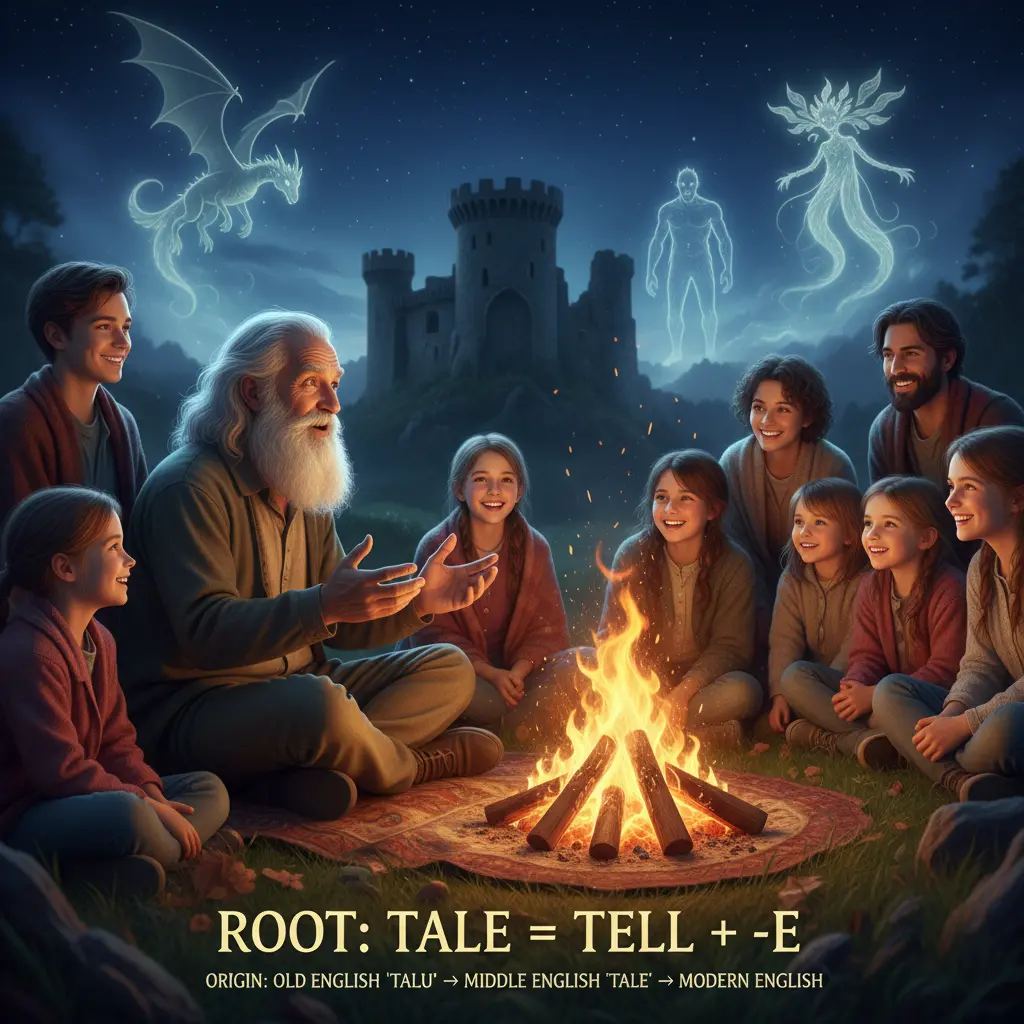
Root: tale = tell + -e. Origin: Old English 'talu' → Middle English 'tale' → Modern English. Memory image: Imagine a storyteller sitting by a fire, sharing an enchanting tale that captivates the audience's imagination.
Note 1: These definitions and etymologies are not standard dictionary definitions, but extended explanations provided to help with memorization and understanding of the actual application of words. Through this background information, we strive to make words more vivid and easier to understand, and help you remember their meanings in real life.
Note 2: LexiTalk designs the learning flow around the linguistics principle of “Comprehensible Input.” When learners encounter material that is slightly above their level but still understandable from context, the brain naturally absorbs the language. That’s why we keep every word inside authentic contexts, using examples and associations to help you understand it and use it flexibly.
Read the FAQ explanation of Comprehensible InputI press my palm to the spine and move the book toward me, letting the tale begin to breathe. I turn the page and listen as the narrator’s pace shifts, and I lean in to feel the scene waking up. A simple detail makes me adjust my focus, so the tale sits not as words but as a place I can walk through. By the end I keep the image steady, letting the story land as a personal moment of entertainment.
tale is a noun that means a narrative or story told for entertainment, or a report or account about events. It often implies a traditional or imaginative piece, such as legends, fairy tales, or tall stories that exaggerate for effect. A tale unfolds as a sequence of events with characters and a setting, and it can be humorous, cautionary, or wondrous. In literature and journalism the word can carry a sense of shaping the truth to convey a point of view. The etymology traces tale to tell plus the suffix -e, linking it to Old English talu. Memory image: imagine a storyteller by a crackling fire, weaving a vivid tale that draws listeners into a shared world.
tale often feels older or more literary than a plain story; learners may overuse it in casual talk or assume it only means a fairy tale.
What is the meaning of the word 'tales'?
Which sentence uses 'tales' correctly?
Which word is most similar to 'tales'?
What is the opposite of 'tales'?
Can you think of a real-life context where you might hear or tell tales?
English Learning Listening Content
Listen NowDownload LexiTalk app for personalized learning experience
Download AppCookies
We use cookies for essential site functions, analytics, and ads. You can accept, reject, or manage preferences. Privacy Policy