
tempestuous - Master This Word
Master this word with our 5-step learning method – Learn English in English
Train English Through Brain Routes, Not Translation.
This page helps you stop memorizing isolated translations and start understanding a word through its shared mental image, native-style thinking, and practical training steps.
Master this word with our 5-step learning method – Learn English in English
Example sentences are the start of understanding. Don't rush to memorize. First feel how the word works in a sentence.
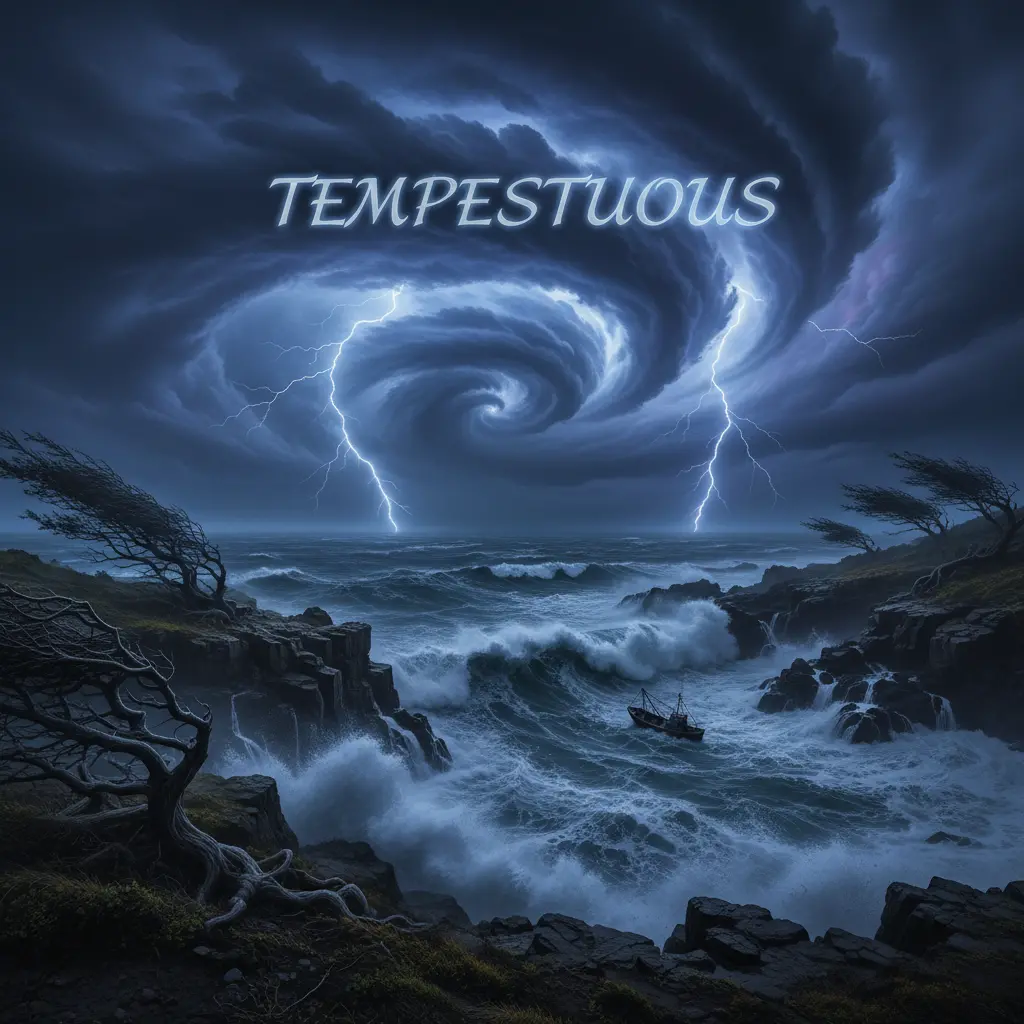
tempestuous = tempest + -uous. Historical origin: Latin 'tempestas' (storm) → Middle English 'tempest' → English. Memory image: Picture a raging storm, with fierce winds and roaring thunder, embodying the chaos and turbulence implied by 'tempestuous'.
Note 1: These definitions and etymologies are not standard dictionary definitions, but extended explanations provided to help with memorization and understanding of the actual application of words. Through this background information, we strive to make words more vivid and easier to understand, and help you remember their meanings in real life.
Note 2: LexiTalk designs the learning flow around the linguistics principle of “Comprehensible Input.” When learners encounter material that is slightly above their level but still understandable from context, the brain naturally absorbs the language. That’s why we keep every word inside authentic contexts, using examples and associations to help you understand it and use it flexibly.
Read the FAQ explanation of Comprehensible InputTempestuous is an adjective describing something marked by strong and turbulent emotions or weather. It can describe a stormy sky, a chaotic scene, or intense, conflicted feelings that surge and clash. In everyday use, it often appears in phrases like tempestuous relationship, tempestuous weather, or a tempestuous sea. The word has roots in tempest, from Latin tempestus meaning storm, with the suffix -uous indicating state of. The nuance of tempestuous suggests more drama and volatility than simply stormy; it emphasizes upheaval and passion rather than mere calm. Learners should note its formal register; in casual speech people might say stormy or turbulent instead. A memorable image is a raging storm that mirrors emotional turmoil and dramatic events.
Tempestuous combines storm imagery with emotional volatility, so learners should picture both weather and mood when remembering it. It often pairs with relationships or dramatic scenes in richer prose.
What is the meaning of 'tempestuous'?
Which of the following sentences uses 'tempestuous' correctly?
What is a synonym for 'tempestuous'?
What is an antonym for 'tempestuous'?
In what real-life context would you describe a situation as 'tempestuous'?
Download LexiTalk app for personalized learning experience
Download AppCookies
We use cookies for essential site functions, analytics, and ads. You can accept, reject, or manage preferences. Privacy Policy