terrorism - Master This Word
Master this word with our 5-step learning method – Learn English in English
Train English Through Brain Routes, Not Translation.
This page helps you stop memorizing isolated translations and start understanding a word through its shared mental image, native-style thinking, and practical training steps.
Master this word with our 5-step learning method – Learn English in English
Example sentences are the start of understanding. Don't rush to memorize. First feel how the word works in a sentence.
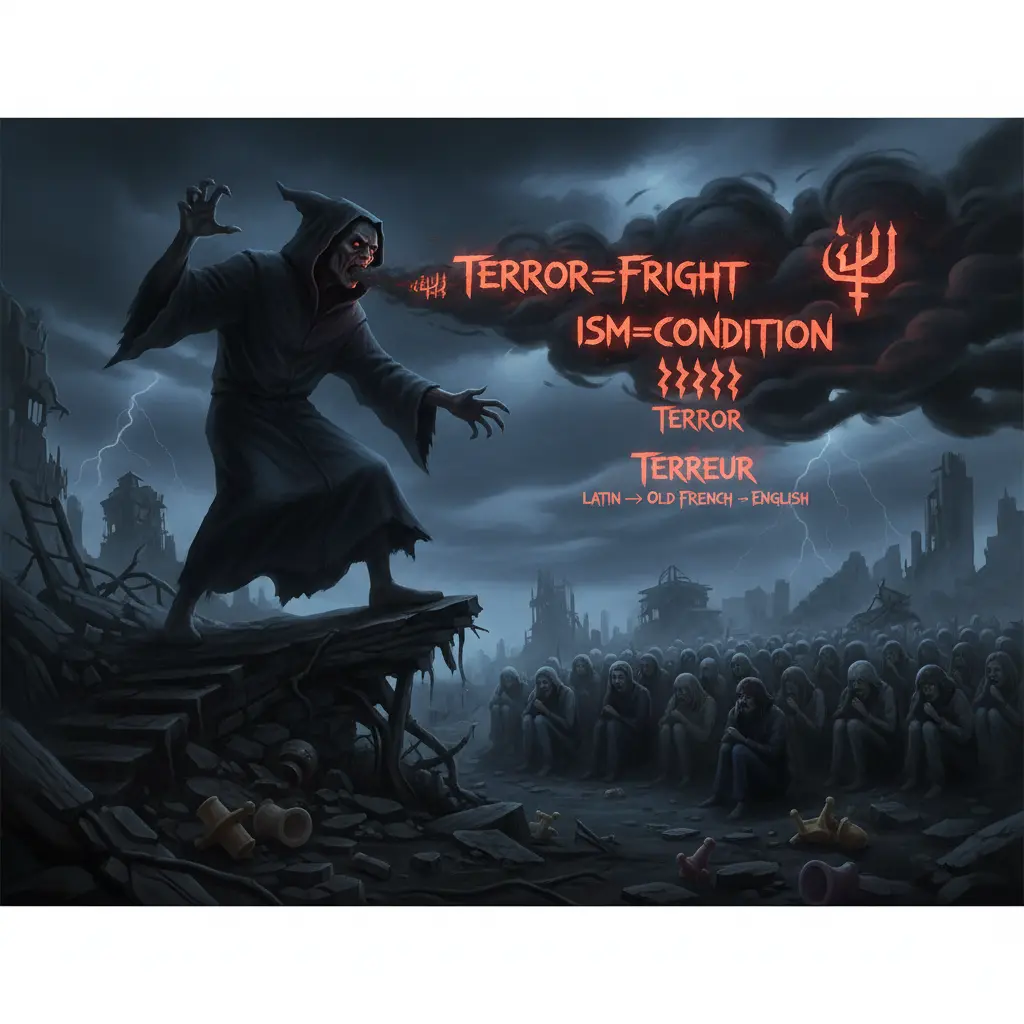
terro- = fright / terror, -ism = state or condition. Origin: Latin → Old French → English. Picture a shadowy figure causing fear to masses while chanting a political agenda, embodying the concept of terrorism, terrifying the innocent.
Note 1: These definitions and etymologies are not standard dictionary definitions, but extended explanations provided to help with memorization and understanding of the actual application of words. Through this background information, we strive to make words more vivid and easier to understand, and help you remember their meanings in real life.
Note 2: LexiTalk designs the learning flow around the linguistics principle of “Comprehensible Input.” When learners encounter material that is slightly above their level but still understandable from context, the brain naturally absorbs the language. That’s why we keep every word inside authentic contexts, using examples and associations to help you understand it and use it flexibly.
Read the FAQ explanation of Comprehensible InputI tighten my grip on the strap as the street crowd shifts and a murmur runs through the air. A siren blares, someone pushes forward, and I pull my coat closer to contain the chill of fear. I adjust my pace, keep close to a friend, and feel the tension rise with every step I take. The moment shows how fear can be used to push a crowd or a message, and I learn to move, decide, and respond in the same breath.
terrorism is the use of violence or the threat of violence designed to intimidate a population or coerce governments to change policy. It includes acts that create fear beyond the immediate victims and aims to achieve political, religious, or ideological goals. The term covers both spectacular attacks and long running campaigns by organized groups, as well as lone actors. People may distinguish between statesponsored violence and nonstate terrorism, though both disrupt ordinary life and challenge public safety, journalism, and civil liberties. In everyday use, the word often appears in debates about security measures, counterterrorism laws, and international cooperation.
Terrorism is a charged, policy-driven term in English; learners should recognize it often appears in debates about security and rights. It covers both group acts and lone actor threats, and it frequently collocates with counterterrorism, terrorism financing, and radicalization. Avoid treating all violence as terrorism, and note regional differences in definitions.
What is the meaning of the word 'terrorism'?
In what context would you use the word 'terrorism'?
Which of the following words is similar to 'terrorism'?
What is the opposite of 'terrorism'?
Can you think of a recent real-life example of 'terrorism'?
Download LexiTalk app for personalized learning experience
Download AppCookies
We use cookies for essential site functions, analytics, and ads. You can accept, reject, or manage preferences. Privacy Policy