traditional - Master This Word
Master this word with our 5-step learning method – Learn English in English
Train English Through Brain Routes, Not Translation.
This page helps you stop memorizing isolated translations and start understanding a word through its shared mental image, native-style thinking, and practical training steps.
Master this word with our 5-step learning method – Learn English in English
Example sentences are the start of understanding. Don't rush to memorize. First feel how the word works in a sentence.
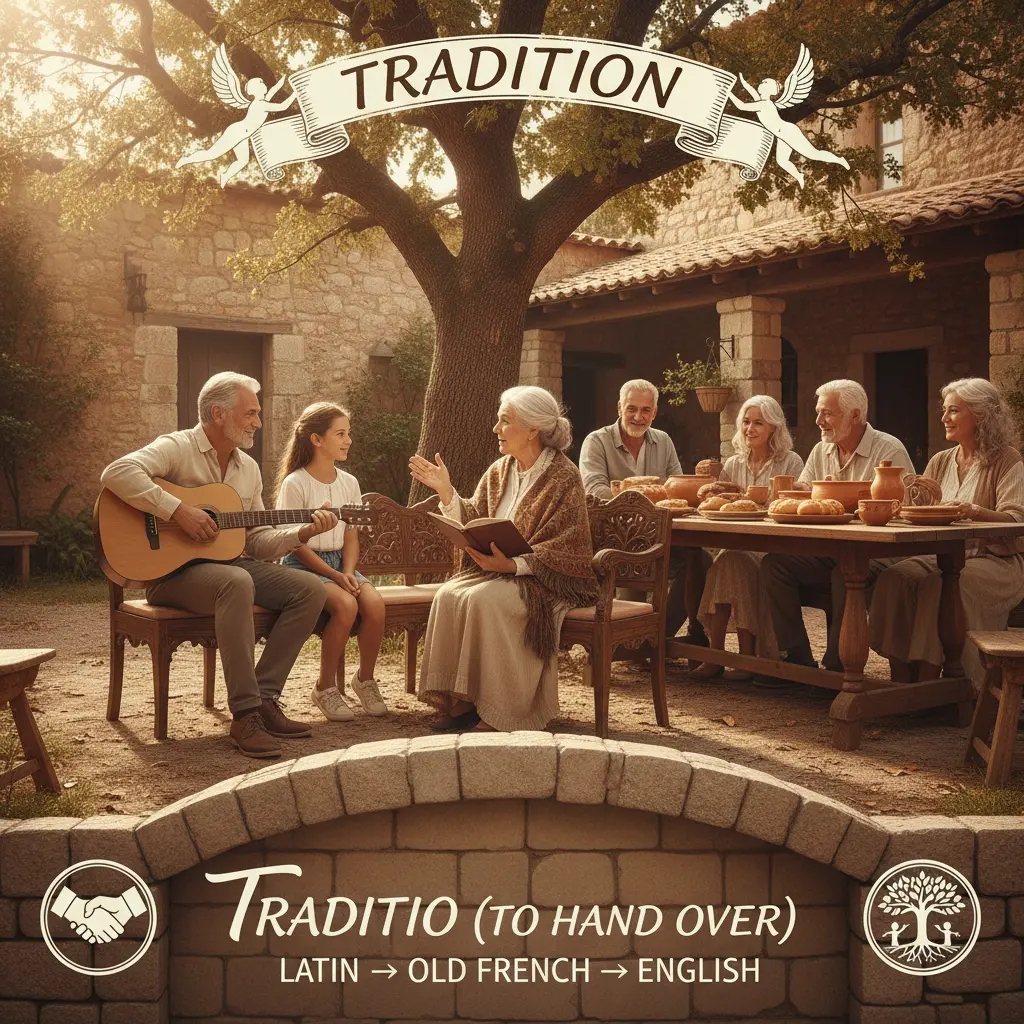
tradition = traditio (to hand over) + -al (relating to); Historical origin: Latin → Old French → English. Memory image: Picture a family gathering where stories and customs are passed down through generations, symbolizing the handing down of traditions.
Note 1: These definitions and etymologies are not standard dictionary definitions, but extended explanations provided to help with memorization and understanding of the actual application of words. Through this background information, we strive to make words more vivid and easier to understand, and help you remember their meanings in real life.
Note 2: LexiTalk designs the learning flow around the linguistics principle of “Comprehensible Input.” When learners encounter material that is slightly above their level but still understandable from context, the brain naturally absorbs the language. That’s why we keep every word inside authentic contexts, using examples and associations to help you understand it and use it flexibly.
Read the FAQ explanation of Comprehensible InputI place my hand on the old wood table and feel the grain pull me into a familiar rhythm. I move the objects slightly, adjust the light, and hold steady as a quiet habit settles in. The actions push me to decide whether to keep the routine or let a small deviation emerge. As the pattern settles, the meaning of traditional grows from a lived practice, not a rule.
Traditional is an adverb used to describe actions that follow long-established customs or beliefs, or that honor cultural heritage. It often appears with phrases like in a traditional way or by traditional standards, and can refer to ceremonies, dress, foods, or practices passed down through generations. The word hints at continuity with the past, and learners should notice that it modifies the manner of doing something rather than implying old-fashionedness alone. The memory image is a family gathering where stories and customs are handed down through generations. Etymology comes from tradition, linked to handing over, which reinforces the sense of continuity and shared identity.
In English, traditional as an adverb tends to emphasize adherence to cultural norms and historical practices. Learners often confuse it with traditionally, which more directly marks the adverbial form; it can also sound overly formal in casual speech if overused.
What is the meaning of the word 'traditional'?
In which of the following sentences is 'traditional' used correctly?
What is a similar word to 'traditional'?
What is an opposite word to 'traditional'?
In what context would you use the word 'traditional'?
Download LexiTalk app for personalized learning experience
Download AppCookies
We use cookies for essential site functions, analytics, and ads. You can accept, reject, or manage preferences. Privacy Policy