tricks - Master This Word
Master this word with our 5-step learning method – Learn English in English
Train English Through Brain Routes, Not Translation.
This page helps you stop memorizing isolated translations and start understanding a word through its shared mental image, native-style thinking, and practical training steps.
Master this word with our 5-step learning method – Learn English in English
Example sentences are the start of understanding. Don't rush to memorize. First feel how the word works in a sentence.
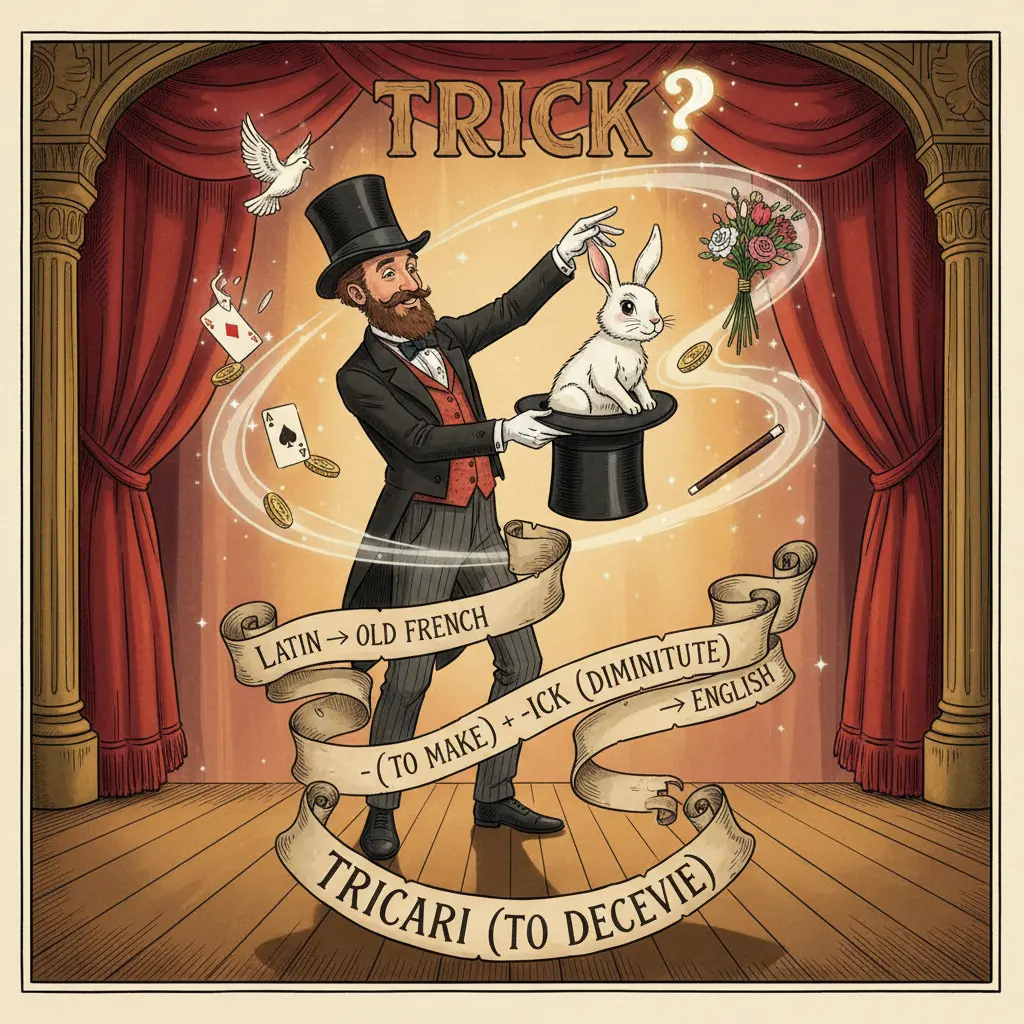
trick = tre- (to make) + -ick (diminutive) from Latin 'tricari' (to deceive). Origin: Latin → Old French → English. Visualize a magician pulling a rabbit out of a hat, illustrating deception and cleverness.
Note 1: These definitions and etymologies are not standard dictionary definitions, but extended explanations provided to help with memorization and understanding of the actual application of words. Through this background information, we strive to make words more vivid and easier to understand, and help you remember their meanings in real life.
Note 2: LexiTalk designs the learning flow around the linguistics principle of “Comprehensible Input.” When learners encounter material that is slightly above their level but still understandable from context, the brain naturally absorbs the language. That’s why we keep every word inside authentic contexts, using examples and associations to help you understand it and use it flexibly.
Read the FAQ explanation of Comprehensible InputFirst I curl my fingers around a small card and move it in a practiced arc. I watch the card change position, turn just enough to hide what I am doing, and I hold my breath for a beat as I push the moment forward. The room stays quiet while I pull a little surprise into view, and a smile grows as the audience shifts from doubt to delight. That sense of control clicks into place, a quiet decision to let the moment do the work, and I carry that feeling into other small, clever moves in life.
Trick is a versatile word in English that can be a noun or a verb. As a noun, it means a clever or cunning act or method, often aimed at gaining an advantage or surprising someone. As a verb, to trick someone is to deceive or mislead them, sometimes playfully, sometimes more seriously. The word also appears in phrases like 'to play a trick on someone', 'a magic trick', or 'the trick of the trade'. Learners should note the distinction between harmless pranks and unethical deception, and pay attention to collocations such as 'pull a trick', 'underhanded trick', or 'trick up one's sleeve'. The mental image is often magicians or clever ruses.
In English, trick carries a dual vibe: clever technique and potential deception. Learners often miss the playful nuance or confuse it with deceit in all contexts, so emphasize context and collocations.
English Learning Listening Content
Listen NowDownload LexiTalk app for personalized learning experience
Download AppCookies
We use cookies for essential site functions, analytics, and ads. You can accept, reject, or manage preferences. Privacy Policy