troops - Master This Word
Master this word with our 5-step learning method – Learn English in English
Train English Through Brain Routes, Not Translation.
This page helps you stop memorizing isolated translations and start understanding a word through its shared mental image, native-style thinking, and practical training steps.
Master this word with our 5-step learning method – Learn English in English
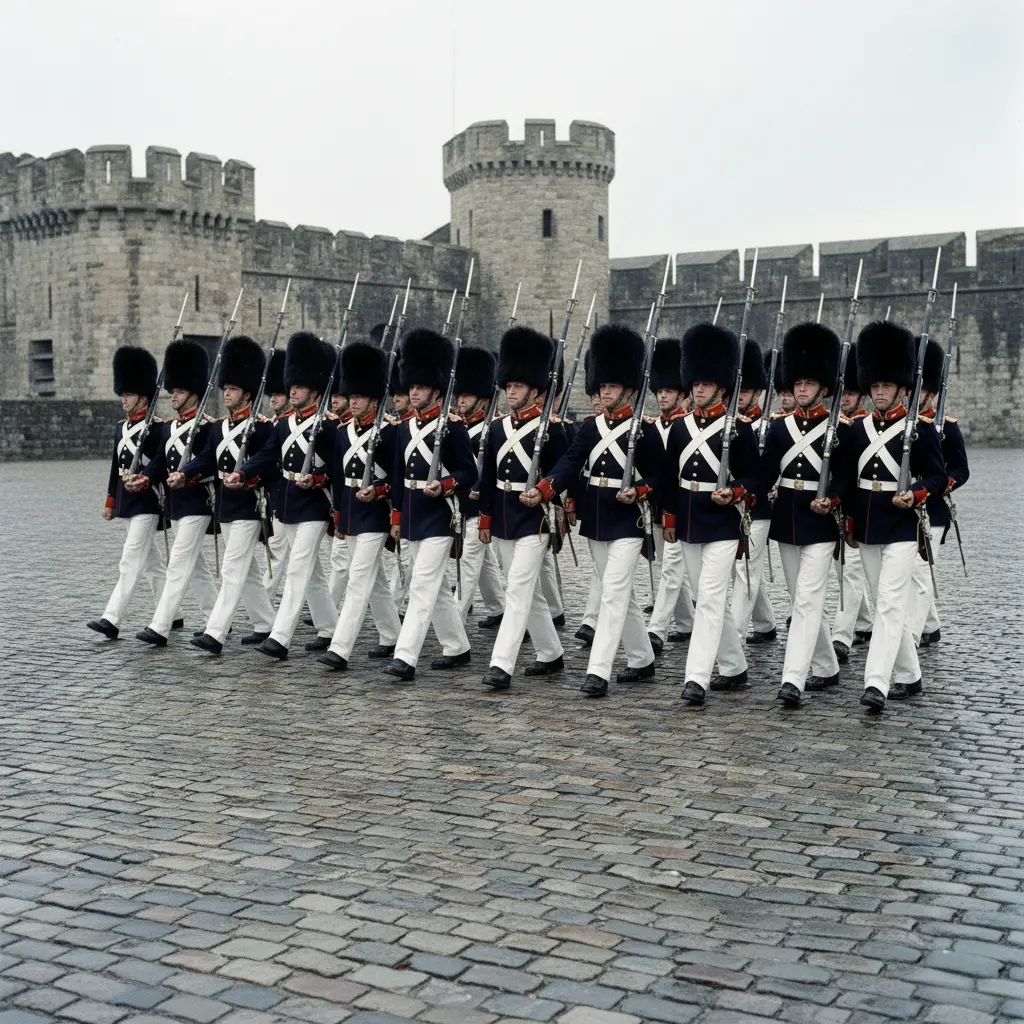
Example sentences are the start of understanding. Don't rush to memorize. First feel how the word works in a sentence.
troop = troupe (Old French) + group (from Latin 'turma'). Troop originally referred to a group of soldiers; think of soldiers marching together in formation, embodying unity and strength.
Note 1: These definitions and etymologies are not standard dictionary definitions, but extended explanations provided to help with memorization and understanding of the actual application of words. Through this background information, we strive to make words more vivid and easier to understand, and help you remember their meanings in real life.
Note 2: LexiTalk designs the learning flow around the linguistics principle of “Comprehensible Input.” When learners encounter material that is slightly above their level but still understandable from context, the brain naturally absorbs the language. That’s why we keep every word inside authentic contexts, using examples and associations to help you understand it and use it flexibly.
Read the FAQ explanation of Comprehensible InputI plant my feet, push my shoulders back, and set a pace with the crowd. We move in a steady column, each step adjusting to the one in front, a slow give-and-take that keeps us in step. The sense of a troop comes from the feel of hands on shoulders, from listening to the quiet turn of voices and the way we hold our silence together. It shifts from a single person to a living group, a move that means more than marching: it means belonging to a shared task.
Troop is most often used to mean a group of soldiers, but it can also refer to a gathering of people organized for a particular purpose, such as scouts, volunteers, or performers. As a verb, to troop means to move together in a group or to march in formation, often used of soldiers or children in a parade. The word has military origins but now appears in civilian contexts too, for example a troop of actors touring a town. Learners should notice that troops is the regular plural for more than one unit, while the singular troop treats any one unit. Common collocations include a troop of soldiers, civilian troops, or to troop along.
In English, troop spans both military units and nonmilitary groups, but learners often overgeneralize to 'crowd' or misread the verb sense. Keep straight the singular/plural forms and reserve the verb sense for formal contexts.
Download LexiTalk app for personalized learning experience
Download AppCookies
We use cookies for essential site functions, analytics, and ads. You can accept, reject, or manage preferences. Privacy Policy