
trounced - Master This Word
Master this word with our 5-step learning method – Learn English in English
Train English Through Brain Routes, Not Translation.
This page helps you stop memorizing isolated translations and start understanding a word through its shared mental image, native-style thinking, and practical training steps.
Master this word with our 5-step learning method – Learn English in English
Example sentences are the start of understanding. Don't rush to memorize. First feel how the word works in a sentence.
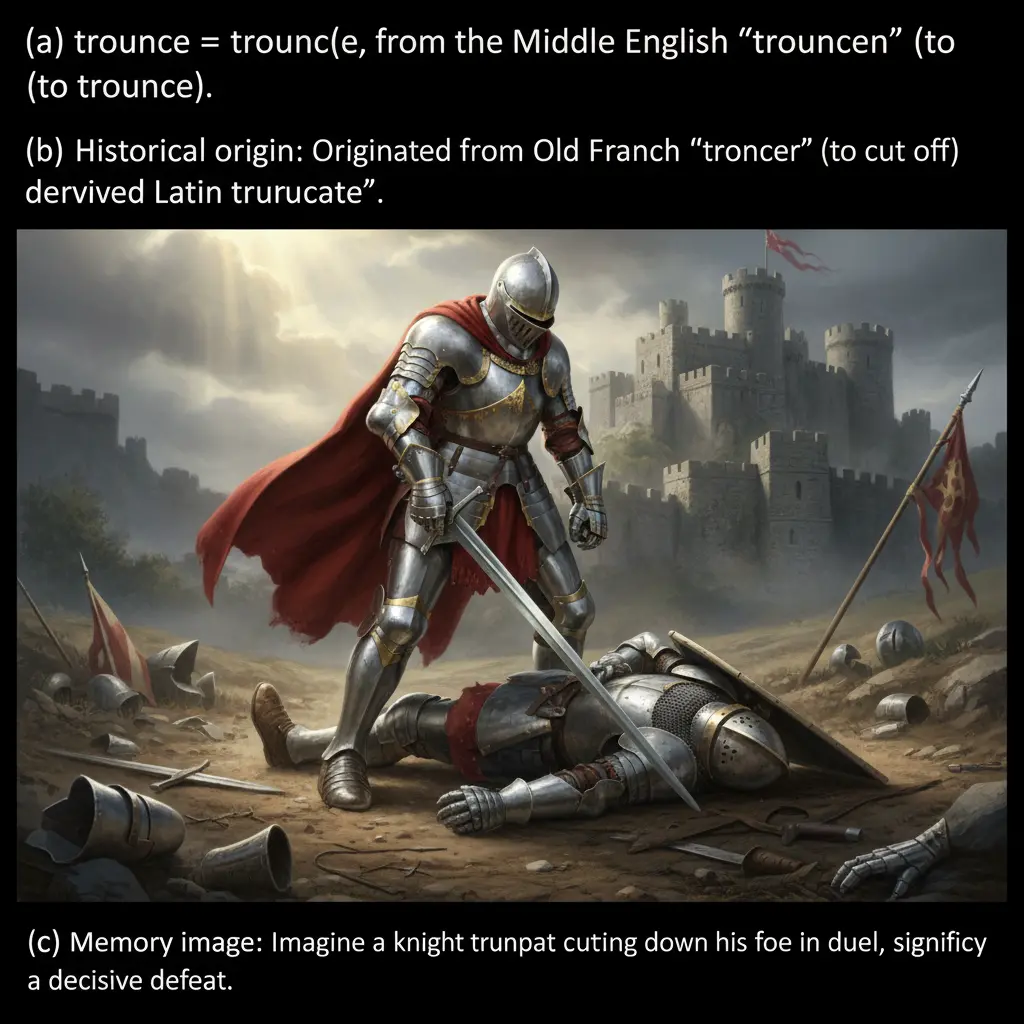
(a) trounce = trounc(e), from the Middle English "trouncen" (to trounce). (b) Historical origin: Originated from Old French "troncer" (to cut off) derived from Latin "truncate". (c) Memory image: Imagine a knight triumphantly cutting down his foe in a duel, signifying a decisive defeat.
Note 1: These definitions and etymologies are not standard dictionary definitions, but extended explanations provided to help with memorization and understanding of the actual application of words. Through this background information, we strive to make words more vivid and easier to understand, and help you remember their meanings in real life.
Note 2: LexiTalk designs the learning flow around the linguistics principle of “Comprehensible Input.” When learners encounter material that is slightly above their level but still understandable from context, the brain naturally absorbs the language. That’s why we keep every word inside authentic contexts, using examples and associations to help you understand it and use it flexibly.
Read the FAQ explanation of Comprehensible InputTo trounce someone is to defeat them decisively, often by a wide margin, or to criticize them harshly. The verb is commonly used in sports reports when a team wins by a large score, and in political or business coverage to describe an overwhelming rout. It can also apply to a sharp rebuke in speech or writing. Because the sense is strong and final, it usually carries a negative or forceful nuance, not just a routine victory. The etymology traces back to Middle English trouncen, from Old French troncer and Latin truncate, evoking the image of a knight cutting down a foe. Learners should distinguish trounce from merely beat or defeat, which can be milder, and reserve trounce for clear, decisive outcomes or harsh critiques.
For English speakers, trounce conveys a vivid, final win or harsh public critique; learners should notice its stronger, more aggressive tone than beat or defeat, and reserve it for clear, one-sided outcomes or sharp judgments.
Download LexiTalk app for personalized learning experience
Download AppCookies
We use cookies for essential site functions, analytics, and ads. You can accept, reject, or manage preferences. Privacy Policy