
typographical - Master This Word
Master this word with our 5-step learning method – Learn English in English
Train English Through Brain Routes, Not Translation.
This page helps you stop memorizing isolated translations and start understanding a word through its shared mental image, native-style thinking, and practical training steps.
Master this word with our 5-step learning method – Learn English in English
Example sentences are the start of understanding. Don't rush to memorize. First feel how the word works in a sentence.
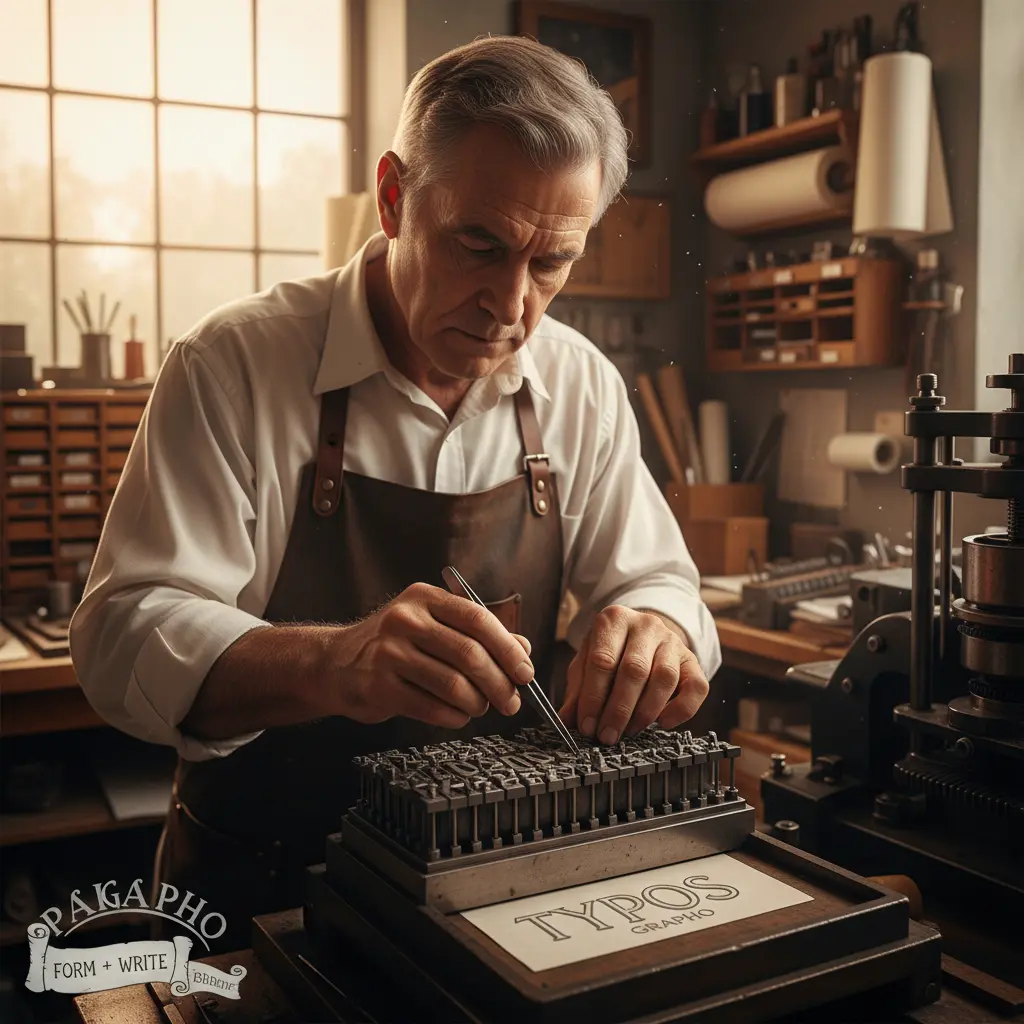
Root decomposition: 'typograph' (from Greek 'typos' meaning 'form' + 'grapho' meaning 'to write') + 'ical'. Historical origin: From Latin 'typographicus' via Old French to English. Memory image: Imagine a typographer carefully arranging letters on a printing press, each character a form that tells a visual story.
Note 1: These definitions and etymologies are not standard dictionary definitions, but extended explanations provided to help with memorization and understanding of the actual application of words. Through this background information, we strive to make words more vivid and easier to understand, and help you remember their meanings in real life.
Note 2: LexiTalk designs the learning flow around the linguistics principle of “Comprehensible Input.” When learners encounter material that is slightly above their level but still understandable from context, the brain naturally absorbs the language. That’s why we keep every word inside authentic contexts, using examples and associations to help you understand it and use it flexibly.
Read the FAQ explanation of Comprehensible InputTypographical describes anything related to the art and technique of setting text for print or display. It covers typefaces, spacing, margins, line length, and the overall visual arrangement that makes words legible and aesthetically pleasing. In practice, a typographical choice can change how a page feels—calm and traditional with serif fonts, or modern and bold with clean sans serifs. Writers and designers discuss typographical details when selecting fonts for books, magazines, websites, or signage, balancing readability with mood. When you see the word typographical, think of the craft that turns letters into a readable, visual story on a page.
In English, typography is often viewed as the craft-specific part of design, with a clear distinction between typography (the field) and typographical (an adjective). Learners often mix up typographical with typography or with typographic, and they may overgeneralize from font choices to layout decisions.
What is the meaning of 'typographical'?
Choose the correct usage of the word 'typographical' in a sentence.
Which word is most similar to 'typographical'?
What is the opposite of 'typographical'?
Can you think of an example of a real-life scenario where the term 'typographical' would be used?
Download LexiTalk app for personalized learning experience
Download AppCookies
We use cookies for essential site functions, analytics, and ads. You can accept, reject, or manage preferences. Privacy Policy