
tyrannical - Master This Word
Master this word with our 5-step learning method – Learn English in English
Train English Through Brain Routes, Not Translation.
This page helps you stop memorizing isolated translations and start understanding a word through its shared mental image, native-style thinking, and practical training steps.
Master this word with our 5-step learning method – Learn English in English
Example sentences are the start of understanding. Don't rush to memorize. First feel how the word works in a sentence.
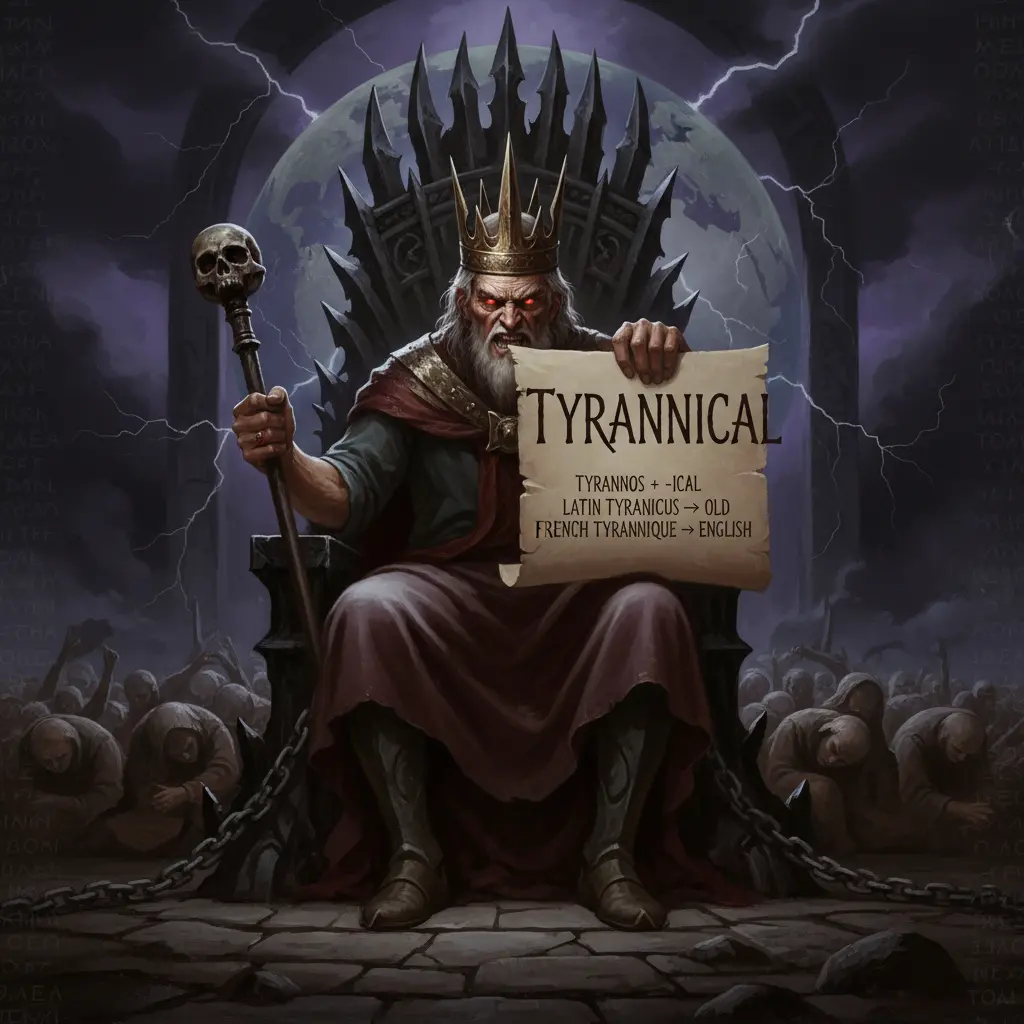
The word 'tyrannical' has the root decomposition from 'tyrant' (Greek: tyrranos) + '-ical' (suffix indicating pertaining to). Historically, it evolved from Latin 'tyrannicus' to Old French 'tyrannique' and entered English. To remember, picture a cruel king on a throne, demanding absolute loyalty and ruling with fear.
Note 1: These definitions and etymologies are not standard dictionary definitions, but extended explanations provided to help with memorization and understanding of the actual application of words. Through this background information, we strive to make words more vivid and easier to understand, and help you remember their meanings in real life.
Note 2: LexiTalk designs the learning flow around the linguistics principle of “Comprehensible Input.” When learners encounter material that is slightly above their level but still understandable from context, the brain naturally absorbs the language. That’s why we keep every word inside authentic contexts, using examples and associations to help you understand it and use it flexibly.
Read the FAQ explanation of Comprehensible InputTyrannical describes power that is oppressive and absolute, typically referring to rulers, regimes, or leaders who demand obedience through fear. It implies systematic control and harsh punishment of dissent, not merely strictness. Common collocations include tyrannical rule, tyrannical regime, and tyrannical leadership. The word carries a strong negative judgment and is used for contexts where power is exercised cruelly or without checks. Etymology traces to tyrant (+ -ical), with Latin tyrannicus, Old French tyrannique, and entry into English through historical usage. A helpful image is a cruel king on a throne, ruling with fear and absolute loyalty demanded from subjects.
In English, tyranny is often framed as political oppression with clear power dynamics; learners tend to overgeneralize to any strict rule and may confuse tyrannical with simply strict leadership.
What is the definition of the word 'tyrannical'?
Which of the following sentences uses the word 'tyrannical' correctly?
Which word is most similar to 'tyrannical'?
What is the opposite of the word 'tyrannical'?
Can you provide an example of a real-life context where a 'tyrannical' approach might be used?
Download LexiTalk app for personalized learning experience
Download AppCookies
We use cookies for essential site functions, analytics, and ads. You can accept, reject, or manage preferences. Privacy Policy