
tyranny - Master This Word
Master this word with our 5-step learning method – Learn English in English
Train English Through Brain Routes, Not Translation.
This page helps you stop memorizing isolated translations and start understanding a word through its shared mental image, native-style thinking, and practical training steps.
Master this word with our 5-step learning method – Learn English in English
Example sentences are the start of understanding. Don't rush to memorize. First feel how the word works in a sentence.
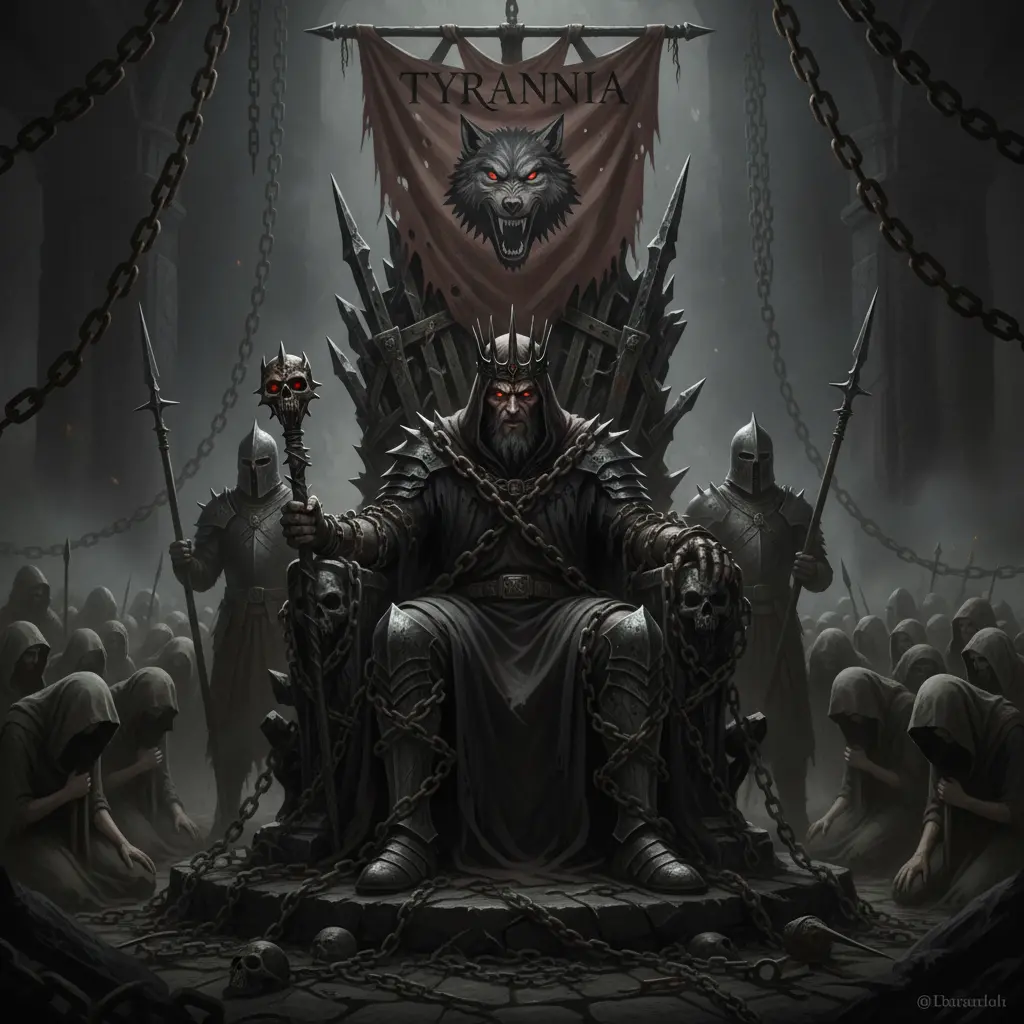
Latin tyrannia = tyranny (tyranny, oppressive rule); Root prefix: tyrannus = ruler, king. Imagine a king sitting on a throne adorned with chains, ruling with fear, creating an image of oppression.
Note 1: These definitions and etymologies are not standard dictionary definitions, but extended explanations provided to help with memorization and understanding of the actual application of words. Through this background information, we strive to make words more vivid and easier to understand, and help you remember their meanings in real life.
Note 2: LexiTalk designs the learning flow around the linguistics principle of “Comprehensible Input.” When learners encounter material that is slightly above their level but still understandable from context, the brain naturally absorbs the language. That’s why we keep every word inside authentic contexts, using examples and associations to help you understand it and use it flexibly.
Read the FAQ explanation of Comprehensible InputTyranny refers to cruel and oppressive government or rule, often exercised by a dictator or autocrat who wields power without checks. It can describe formal regimes as well as informal systems where fear, censorship, and punishment silence dissent. The word is frequently used in political discourse and historical contexts to condemn abuse of authority. Etymologically, it comes from Latin tyrannia and tyrannus, originally meaning 'ruler' or 'king', and the image of a king sitting on a throne adorned with chains emphasizes oppression. Learners should notice the political, system-wide weight of tyranny, not just harsh individual treatment. The related forms are tyrannical (adjective) and tyrannize (verb).
In English, tyranny is often framed as a political or systemic wrong, not just a single cruel act. Learners should grasp the nuance that tyranny can be institutional and long-lasting, and distinguish it from harsh but lawful governance. Common pitfalls include over-literalizing 'oppression' or conflating tyranny with heavy-handed management in ordinary organizations.
What is the meaning of the word 'tyranny'?
In which sentence is 'tyranny' used correctly?
Which word is a synonym for 'tyranny'?
In what situation would 'tyranny' most likely be used?
Can you provide an example of 'tyranny' in real life?
Download LexiTalk app for personalized learning experience
Download AppCookies
We use cookies for essential site functions, analytics, and ads. You can accept, reject, or manage preferences. Privacy Policy