uniform - Master This Word
Master this word with our 5-step learning method – Learn English in English
Train English Through Brain Routes, Not Translation.
This page helps you stop memorizing isolated translations and start understanding a word through its shared mental image, native-style thinking, and practical training steps.
Master this word with our 5-step learning method – Learn English in English
Example sentences are the start of understanding. Don't rush to memorize. First feel how the word works in a sentence.
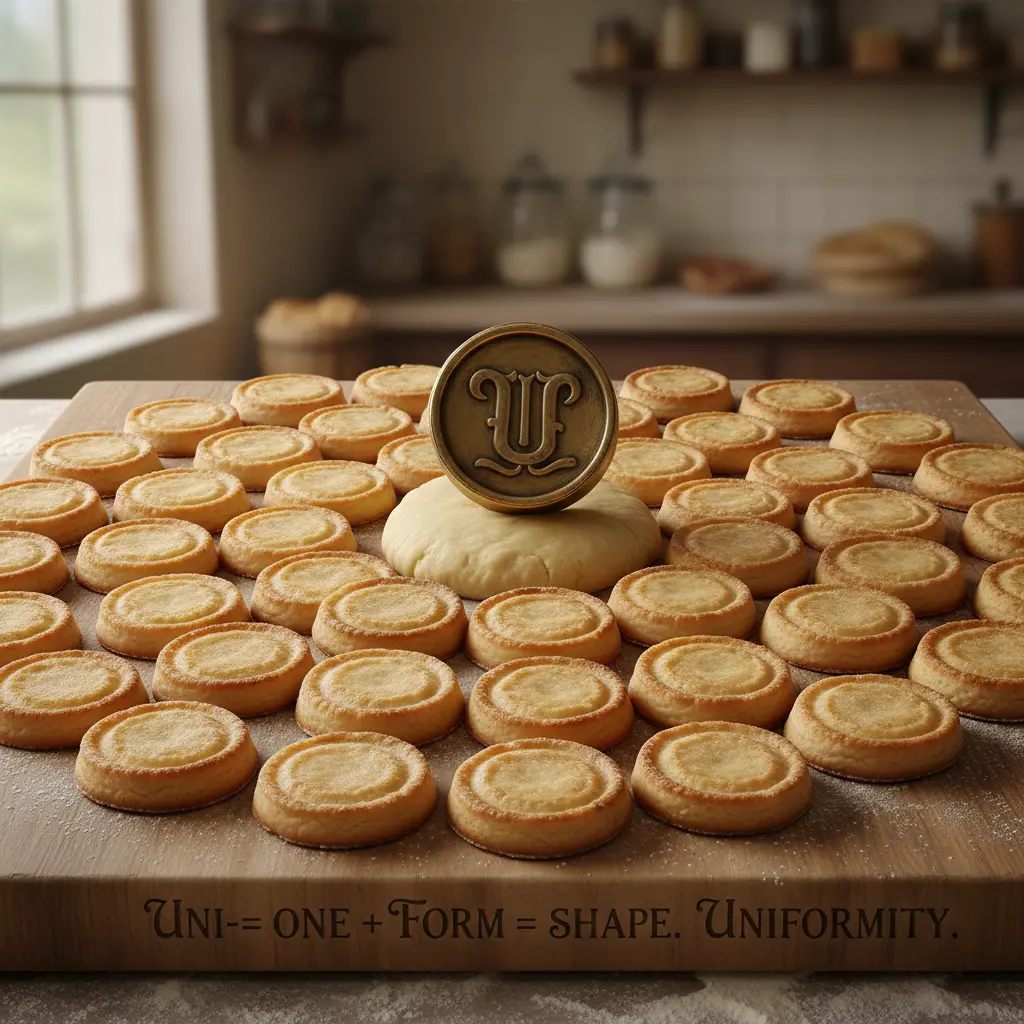
uni- = one + form = shape. Historical origin: Latin → Old French → English. Picture a perfectly formed cookie cut from a single mold, ensuring every piece looks the same, symbolizing uniformity.
Note 1: These definitions and etymologies are not standard dictionary definitions, but extended explanations provided to help with memorization and understanding of the actual application of words. Through this background information, we strive to make words more vivid and easier to understand, and help you remember their meanings in real life.
Note 2: LexiTalk designs the learning flow around the linguistics principle of “Comprehensible Input.” When learners encounter material that is slightly above their level but still understandable from context, the brain naturally absorbs the language. That’s why we keep every word inside authentic contexts, using examples and associations to help you understand it and use it flexibly.
Read the FAQ explanation of Comprehensible InputI set my shoulders, grab the mug, and push it along the counter in a slow, even motion. I move the mug in a steady straight line, then adjust my grip to keep the pace. The small effort feels like tuning a clock, simple yet precise. That rhythm spills into everyday steps, keeping work and words in a uniform, steady pace.
Uniform means doing something in a consistent, unvarying way across situations and repetitions. In English, it often pairs with adverbs like uniformly or phrases such as in a uniform manner to emphasize steadiness. Learners sometimes confuse uniform with its noun sense referring to clothing, or think it is interchangeable with 'same' in all contexts. The idea is sameness of method, not appearance or mood. You will see it in technical writing about standardized processes, quality control, and predictable behavior. Remember that when you want to stress how something is done, uniform points to method, while uniformly is the adverb that describes frequency or consistency.
English tends to separate the noun clothing sense from the abstract idea of consistency, so learners must ensure they choose uniform vs uniformly based on whether they talk about method or appearance.
What is the meaning of the word 'uniform'?
How is the word 'uniform' used in a sentence?
Which word is similar to 'uniform'?
What is the opposite of 'uniform'?
In what context would you expect to see people wearing uniforms?
Download LexiTalk app for personalized learning experience
Download AppCookies
We use cookies for essential site functions, analytics, and ads. You can accept, reject, or manage preferences. Privacy Policy