urban - Master This Word
Master this word with our 5-step learning method – Learn English in English
Train English Through Brain Routes, Not Translation.
This page helps you stop memorizing isolated translations and start understanding a word through its shared mental image, native-style thinking, and practical training steps.
Master this word with our 5-step learning method – Learn English in English
Example sentences are the start of understanding. Don't rush to memorize. First feel how the word works in a sentence.
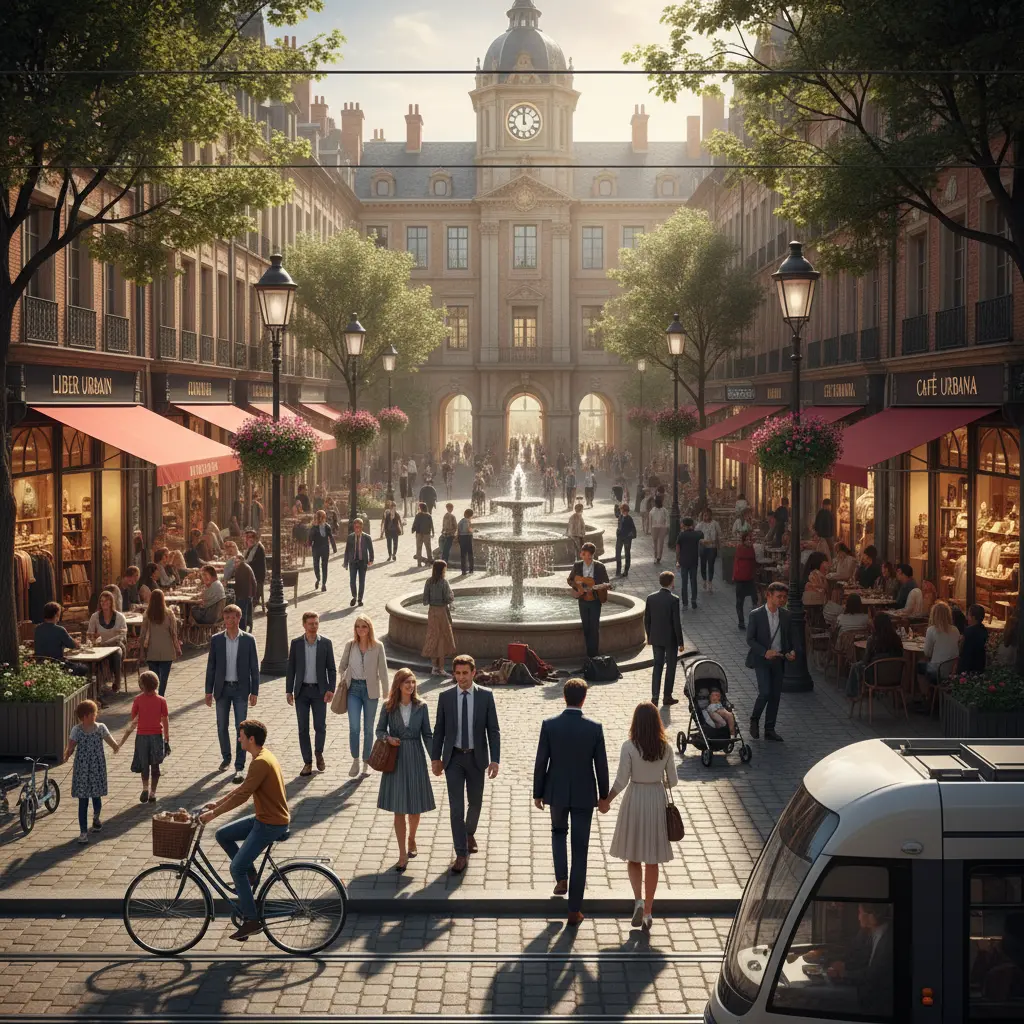
From Latin 'urbanus' (of the city) + '-an' (forming adjectives). Originated from Latin to Old French 'urbain' to English. Visualize a bustling city square with people, shops, and activity, representing city life.
Note 1: These definitions and etymologies are not standard dictionary definitions, but extended explanations provided to help with memorization and understanding of the actual application of words. Through this background information, we strive to make words more vivid and easier to understand, and help you remember their meanings in real life.
Note 2: LexiTalk designs the learning flow around the linguistics principle of “Comprehensible Input.” When learners encounter material that is slightly above their level but still understandable from context, the brain naturally absorbs the language. That’s why we keep every word inside authentic contexts, using examples and associations to help you understand it and use it flexibly.
Read the FAQ explanation of Comprehensible InputI push the door and step into the crowded street, feeling the city shove me along. People move, buses hiss, and a line of neon shivers as the street changes with every turn. I adjust my pace, hold my bag steady, and keep my eyes scanning for the next corner. The pulse of that moment—the dense blocks, the chatter, the sirens—makes urban feel like a living rhythm rather than a word.
Urban describes anything related to a city or town, especially its daily life, infrastructure, and population. It contrasts with rural or suburban settings and is often used to talk about urban planning, transport, housing, and services in dense areas. The word conveys ideas of crowds, tall buildings, and a fast pace, but it also signals issues common to city life, such as traffic, noise, and opportunity. You can describe neighborhoods, district characteristics, or the overall character of a city as urban. It can modify nouns like urban area, urban development, urban history, or urban culture, emphasizing the metropolitan feel rather than countryside calm.
English learners typically see urban as a broad city concept: places, life, and planning. They may mix it with ‘urbane’ (polished) or think it only means big metropolises. Pay attention to context—you can speak of an urban area or urban life in a small city too.
What is the meaning of the word 'urban'?
How is the word 'urban' used in a sentence?
Which of the following is a similar word to 'urban'?
What is an opposite word of 'urban'?
In what real-life context would you encounter the term 'urban'?
Download LexiTalk app for personalized learning experience
Download AppCookies
We use cookies for essential site functions, analytics, and ads. You can accept, reject, or manage preferences. Privacy Policy